Eat to Build Collagen — Protein + Vitamin C After Acne Scar Treatment
After acne scar treatment, the body needs raw materials to build collagen — protein and Vitamin C are the keys. Dr. Big recommends a realistic menu. Acne scar clinic Ratchathewi, near BTS.
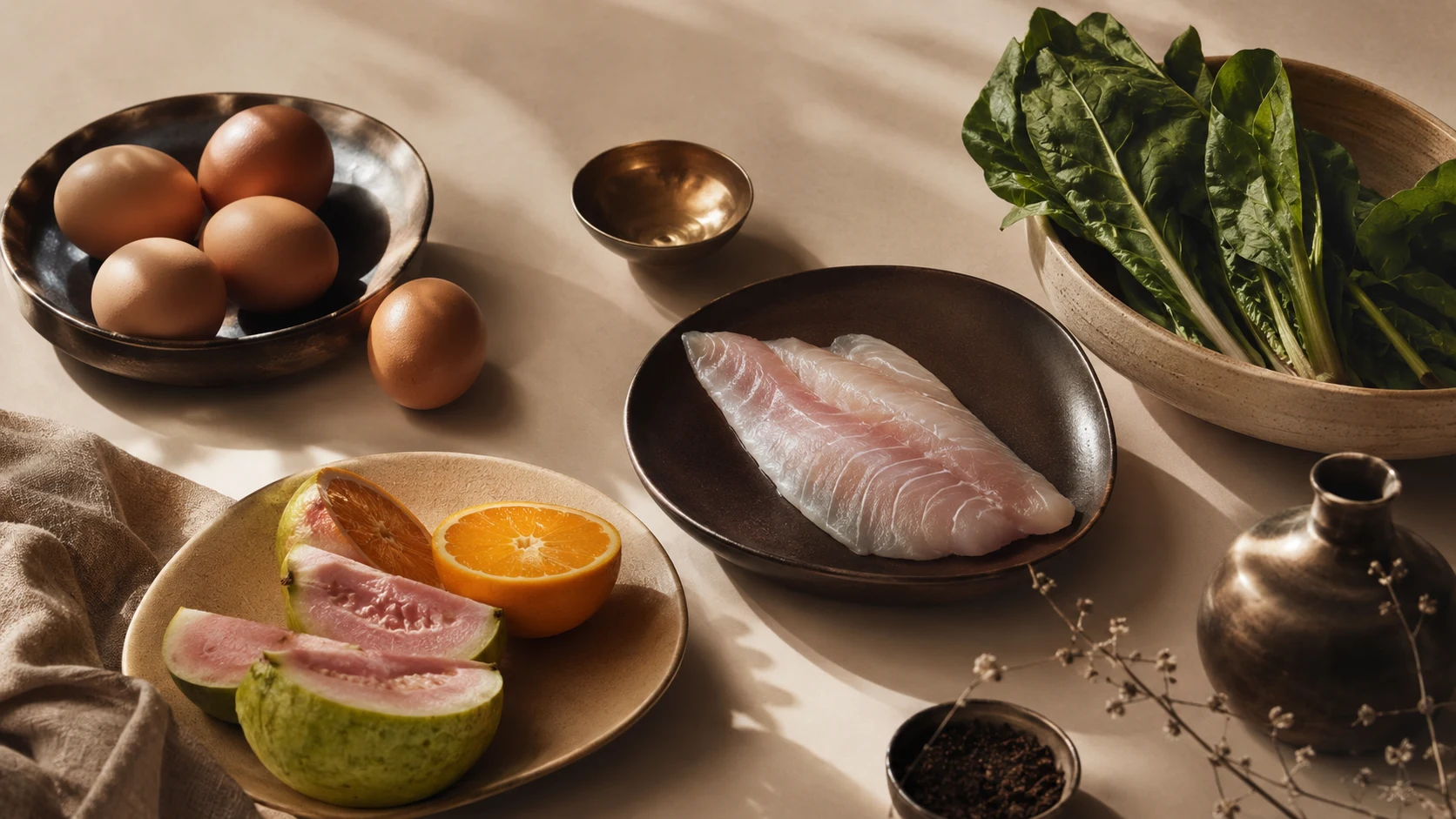
Quick answer: To help your skin rebuild collagen after acne scar treatment, focus on two foods: enough protein (about 1.2–1.6 g per kg body weight daily, spread across meals — eggs, fish, chicken, tofu) for the amino-acid “bricks,” and Vitamin C (~500–1,000 mg/day, mostly from fresh fruit like guava and orange) as the “linker.” Reduce sugar, alcohol and smoking, which break collagen down.
Many people invest in a good acne scar procedure but forget the easiest, cheapest thing — eating so the body has raw materials to build collagen.
Dr. Big likes to compare a procedure to hiring a builder for a house — but with no bricks or cement, the builder can’t build. Collagen is the same: without enough protein and Vitamin C, there’s nothing to fill the scar — no matter how good the procedure.
This article tells you what to eat, how much, and when — realistically for daily life.
Why protein and Vitamin C matter most
Collagen is a “structural protein” the body builds from:
- Amino acids (from protein you eat) — especially glycine and proline — the “bricks” forming collagen strands
- Vitamin C — the indispensable “linker”; without it the body can’t form strong collagen even with enough protein
This isn’t about expensive supplements — it’s ordinary food, eaten completely and sufficiently.
Protein — how much, what to eat
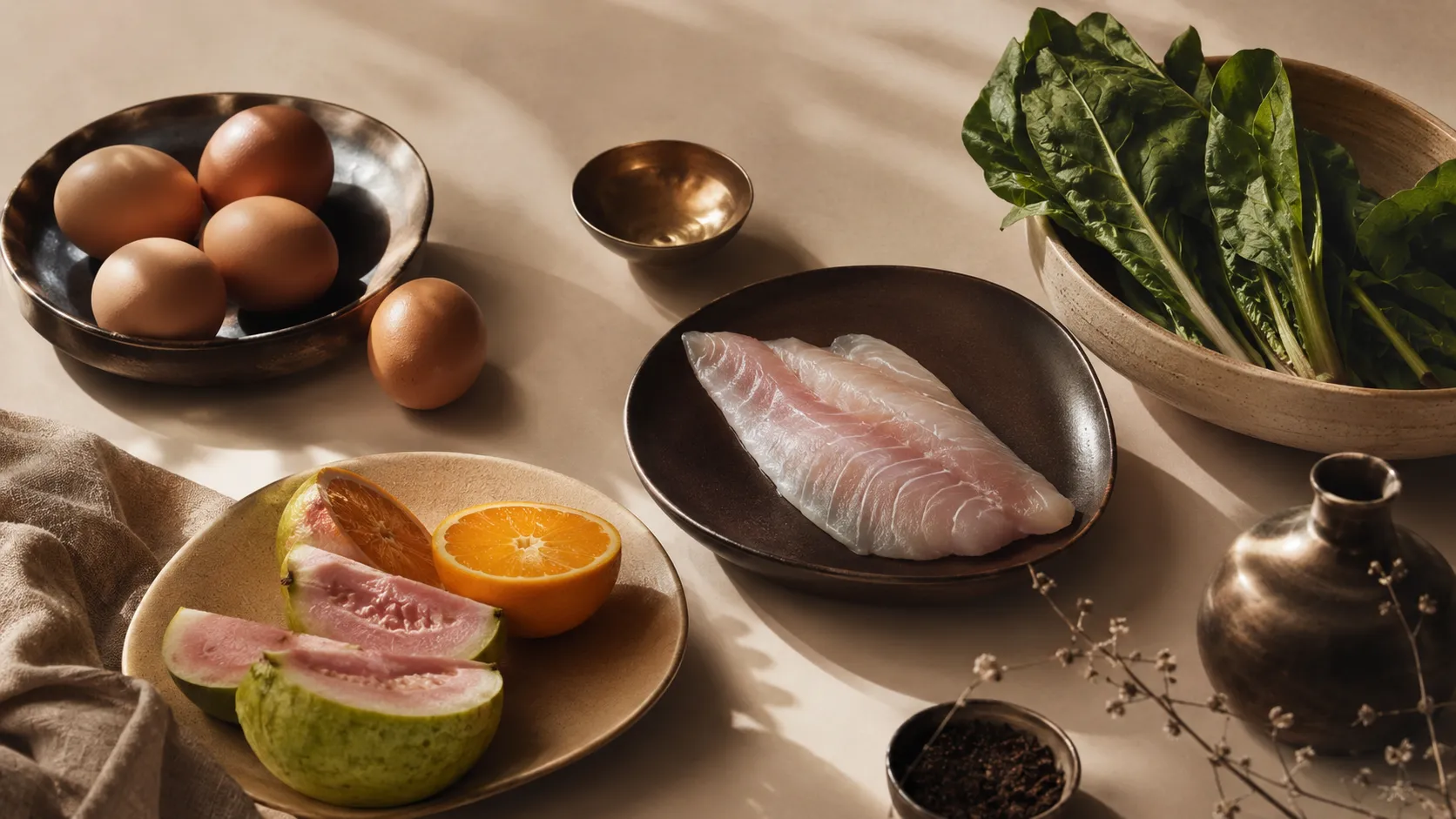
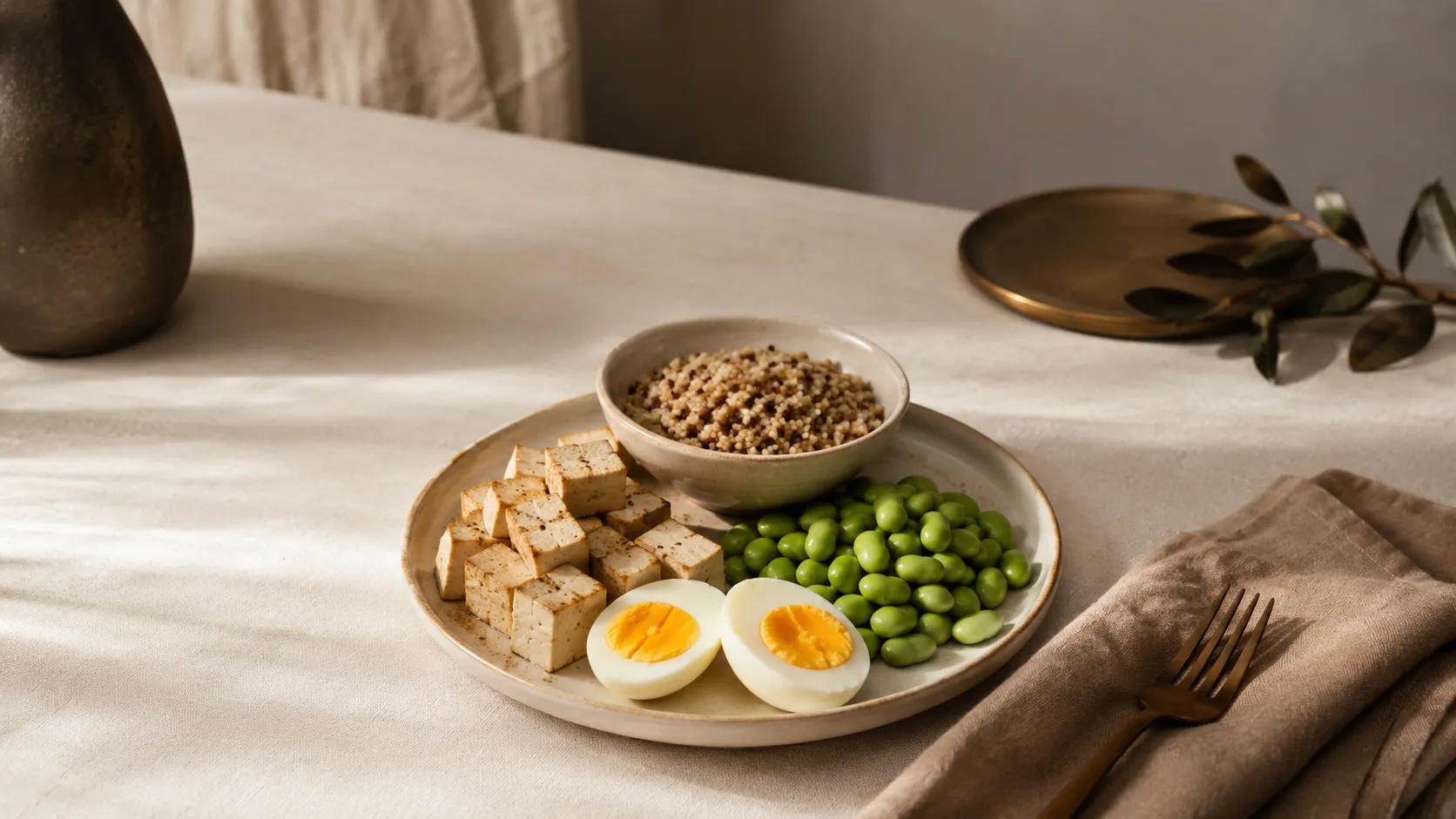
Recommended amount: during skin recovery, about 1.2–1.6 g per kg body weight per day — e.g. a 60 kg person needs ~75–95 g/day. Good sources (across Bangkok): eggs (high-quality, cheap — ~6 g each) · chicken breast, fish, lean meat · tofu, soy, beans (for vegetarians) · milk, Greek yogurt · bone broth (natural collagen peptides). Dr. Big’s tip: spread protein across every meal, not all at dinner — the body absorbs and builds collagen better.
Vitamin C — how much, from where
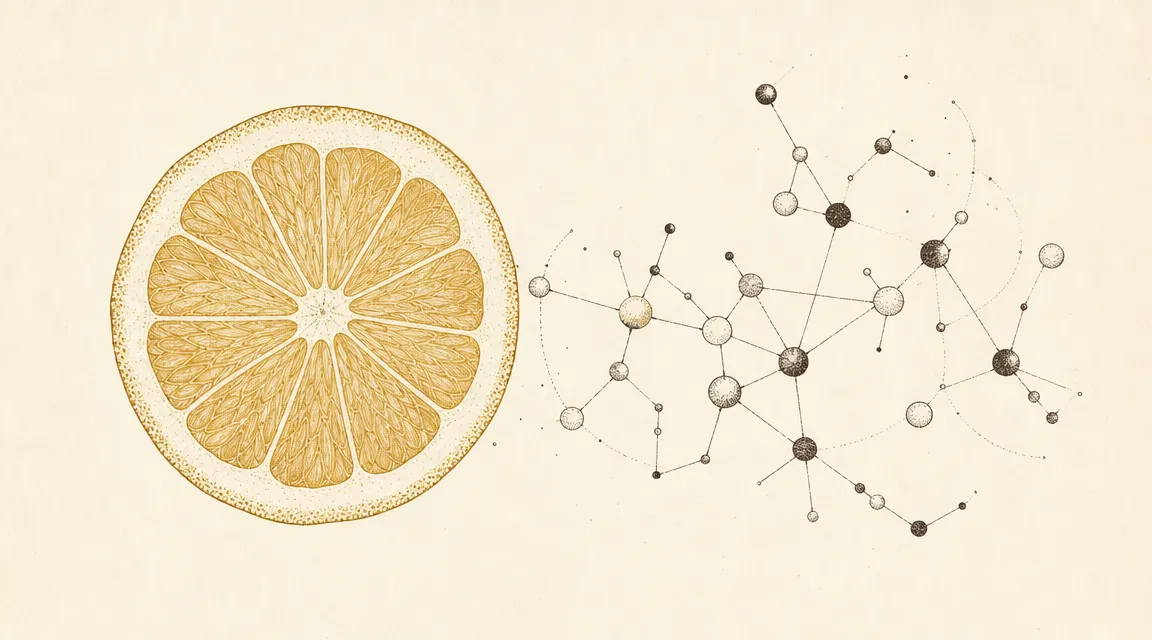
Recommended amount: during recovery, ~500–1,000 mg/day, mainly from food, supplemented if you don’t eat enough fruit. Good sources (easy Thai fruit): guava (the highest Vitamin C of Thai fruits) · Indian gooseberry, orange, lime · bell pepper, broccoli (vegetables too) · kiwi, strawberry. Tip: Vitamin C breaks down with heat — fresh fruit beats cooked — and the body absorbs it gradually, so spread it across the day rather than all at once.
A sample day during skin recovery
- Morning: 2 eggs + half a guava
- Lunch: rice + chicken breast/fish + vegetables with bell pepper, broccoli
- Afternoon: Greek yogurt or 1 orange
- Evening: tofu/lean meat + vegetables
- Water throughout the day
No need to be exact — just protein every meal and 1–2 Vitamin C fruits daily.
What to reduce during recovery
High sugar (causes glycation that destroys collagen) · heavy alcohol (disrupts vitamin absorption and repair) · smoking (the worst — reduces blood flow to skin, badly impairing collagen).
Frequently asked questions
Q: Can collagen powder replace this? A: It helps somewhat, but the body digests it into amino acids anyway — ordinary protein + enough Vitamin C matters more, no need for pricey products.
Q: Do I need Vitamin C tablets? A: Not if you eat enough fruit daily; if not, 500–1,000 mg/day is safe.
Q: When should I start? A: From before the procedure and throughout the 4–8 weeks collagen is forming — the most important window.
Q: If I eat well but don’t get the procedure, will scars shallow on their own? A: Food improves skin health, but scars with tethering bands need a procedure too — read Do acne scars heal on their own.
Q: Where can I ask about aftercare? A: At Clarity Clinic Ratchathewi, near BTS, easy to reach from Siam, Phaya Thai, all of Bangkok — message LINE to chat with Dr. Big.
Summary
The procedure opens the chance for skin to repair, but the “raw materials” to fill scars come from what you eat — protein is the bricks, Vitamin C is the linker. Eating enough of both is the cheapest, most worthwhile homework of acne scar treatment.
Contact:
- LINE: @clarityclinic — send a photo of your acne scars for Dr. Big to review
- Location: Spring Tower, B Floor · Ratchathewi, near BTS (Siam, Phaya Thai, all Bangkok)
- Free 30-minute consult with Dr. Big in person
- Price 5,000 baht/session including all main procedures · pay per session, no course packages
Read next:
- Why wait 4–8 weeks between sessions
- Do acne scars heal on their own
- Who heals acne scars — Doctor 30%, Patient 70%
References
Outcomes vary by individual; this article is educational, not a substitute for in-person medical assessment.