Do 7-Eleven Creams Really Treat Acne Scars — An Honest Answer
How far do convenience-store creams and serums treat acne scars? Dr. Big reviews the real ingredients and which creams help — and which are just marketing.
Quick answer: 7-Eleven creams help only to a limited degree. Evidence-backed ingredients like Retinol, Niacinamide, AHA/BHA and Vitamin C fade dark marks and refine surface texture, but they work in the epidermis and can’t reach or rebuild the deep scar structure — so they improve scar depth only ~10–20%. Use them to support in-clinic treatment, not replace it.
“Can a 7-Eleven cream treat acne scars?” — a question Dr. Big gets constantly on Clarity’s LINE.
The short answer is to some degree — but not to the degree the ads claim. This article reviews popular convenience-store creams honestly — which help, which are just marketing, and how to use them best.
“Acne scar creams” — ads vs reality
Thai ads say things like “reduces scars in 14 days,” “scar-filling serum,” “filler in a cream.” Reality:
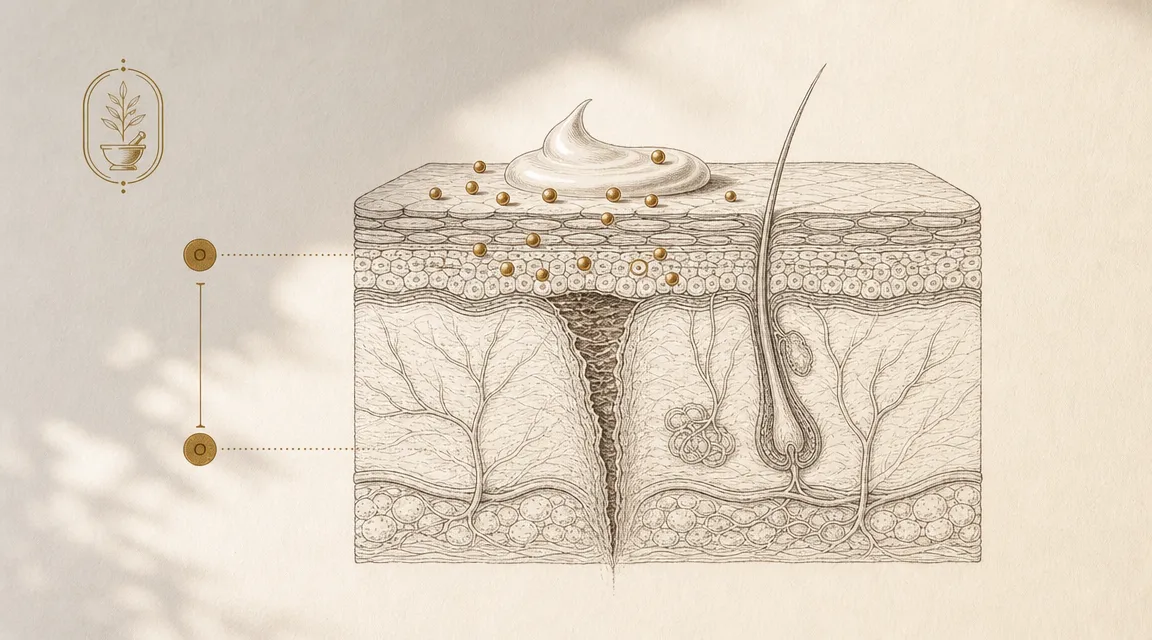
- The surface is hard to penetrate — most creams reach only the epidermis (0.05–0.1 mm)
- Scars are 5–20× deeper — in the dermis and sub-dermal, 0.5–2 mm
- Molecules over 500 daltons barely penetrate — the “scar-filling” peptides/growth factors claimed are too large
Cream works in a different layer than the problem — why people apply for years and scars stay the same.
Ingredients with real evidence
Convenience stores carry research-backed ingredients — but each works in only 1–2 ways:
Retinol — increases cell turnover, refines surface texture and rough scar edges · doesn’t reach the dermis or fill the base · 0.1–0.5%, start 2×/week at night. Niacinamide — reduces inflammation, prevents new acne, evens tone · no effect on scar structure · 5–10% serum, morning/night. AHA / BHA — exfoliates, temporary smoothing, fades pigment · doesn’t reach scars · AHA 5–10% or BHA 1–2%, 2–3×/week. Vitamin C — reduces base dark marks, slightly boosts surface collagen, antioxidant · not deep enough for dermal collagen · 10–20% L-AA in the morning before sunscreen.
”Just marketing” ingredients
Beware these on the tube — mostly ineffective on scars:
- “Filler in a Bottle” — usually HA + glycerin for temporary plumping, gone in hours
- “Collagen Boost Cream” — topical hydrolyzed collagen is too large to penetrate; any effect is from the retinol/peptide mixed in
- “Stem Cell Cream” — growth factors that degrade fast, mostly marketing
- “Snail Mucin / EGF” — mild barrier repair, no scar-structure effect
Creams the doctor recommends during treatment
Home creams supplement in-clinic treatment — easy from any drugstore: Daily: SPF50+ morning (most important!) · ceramide moisturizer · Niacinamide 5–10%. After 2 weeks post-procedure: Vitamin C 15%+ morning · Retinol 0.3% at night (start 2×/week). Occasional: AHA/BHA toner 2–3×/week.
70% of the result comes from home care — consistent application shows long-term results.
Creams to avoid
DIY concentrated acids (someone bought TCA 80% online and burned their skin into new scars — TCA CROSS must be done in-clinic by a doctor only) · cheap hydroquinone (uneven tone, long-term side effects) · herbal peeling creams (damage the barrier, more scars) · steroid creams (thin the skin, lose structure long-term).
Realistic expectations
Using good creams consistently for 6–12 months: dark marks 60–80% better · overall texture 30–50% better · scar depth 10–20% better. For more, you need in-clinic procedures that work in the deep layer.
Cream only vs clinic
Cream only (1 year): 3,000–15,000 baht · ~10–20% for scars. Clinic 6 sessions (1 year): 30,000 baht at Clarity · 60–80%. Clinic + home creams: ~35,000 baht/year · 70–85%.
This is why Clarity recommends both together — not one or the other.
Frequently asked questions
Q: Which Retinol cream (e.g. Differin) is best? A: Differin 0.1% (Adapalene) is a gentle usable retinoid — but still works at the surface.
Q: Will a good Vitamin C serum shallow my scars? A: It clearly helps dark marks, but scar structure barely changes.
Q: Are Japanese/Korean creams better? A: Not necessarily — what matters is the active ingredient, not the country.
Q: Is a 3,000+ baht cream better than a 300 baht one? A: Some yes, some no — look at the active ingredient, not the price.
Q: Can I use creams before clinic treatment? A: Yes, recommended to prep the skin — but stop retinol 1 week before a procedure.
Summary
Convenience-store creams: ✅ help dark marks (Vitamin C, Niacinamide) · ✅ slight texture help (Retinol, AHA) · ✅ prevent new acne · ❌ don’t fill scar structure · ❌ don’t build deep collagen. Use creams as a supplement to in-clinic treatment — not a replacement. At Clarity we don’t sell creams; we focus on in-clinic treatment that works on the right layer.
Contact:
- LINE: @clarityclinic — send a photo of your acne scars for Dr. Big to review
- Location: Spring Tower, B Floor · Ratchathewi, near BTS (Siam, Phaya Thai, all Bangkok)
- Free 30-minute consult with Dr. Big in person
- Price 5,000 baht/session including all main procedures · pay per session, no course packages
Read next:
References
Outcomes vary by individual; this article is educational, not a substitute for in-person medical assessment.