Why Acne Scars Look the Same at First — Collagen Needs 4–8 Weeks
After acne scar treatment the scars do not get shallower right away, because new collagen needs 4–8 weeks to firm up. Dr. Big explains the real timeline, near BTS.

Quick answer: Acne scars do not get shallower right after laser or microneedle RF, because the body has to build new collagen and then firm it up (collagen type III → type I), which takes roughly 4–8 weeks. Scars that look unchanged in the first weeks are normal and do not mean the treatment failed. Subcision only releases the fibrous bands, so new collagen or filling has to come in to support the scar.
The question Dr. Big hears most after treatment is “Doctor, it has been a week and my scars look exactly the same. Why?”
I understand the feeling. You have been through the procedure and you want to see the result straight away. But the biology of skin is this: scars get shallower “after” the new collagen is strong enough, and that takes 4–8 weeks, not on the day of treatment.
Once you understand this timeline you will not lose heart halfway, and you will not mistake it for “the treatment didn’t work”.
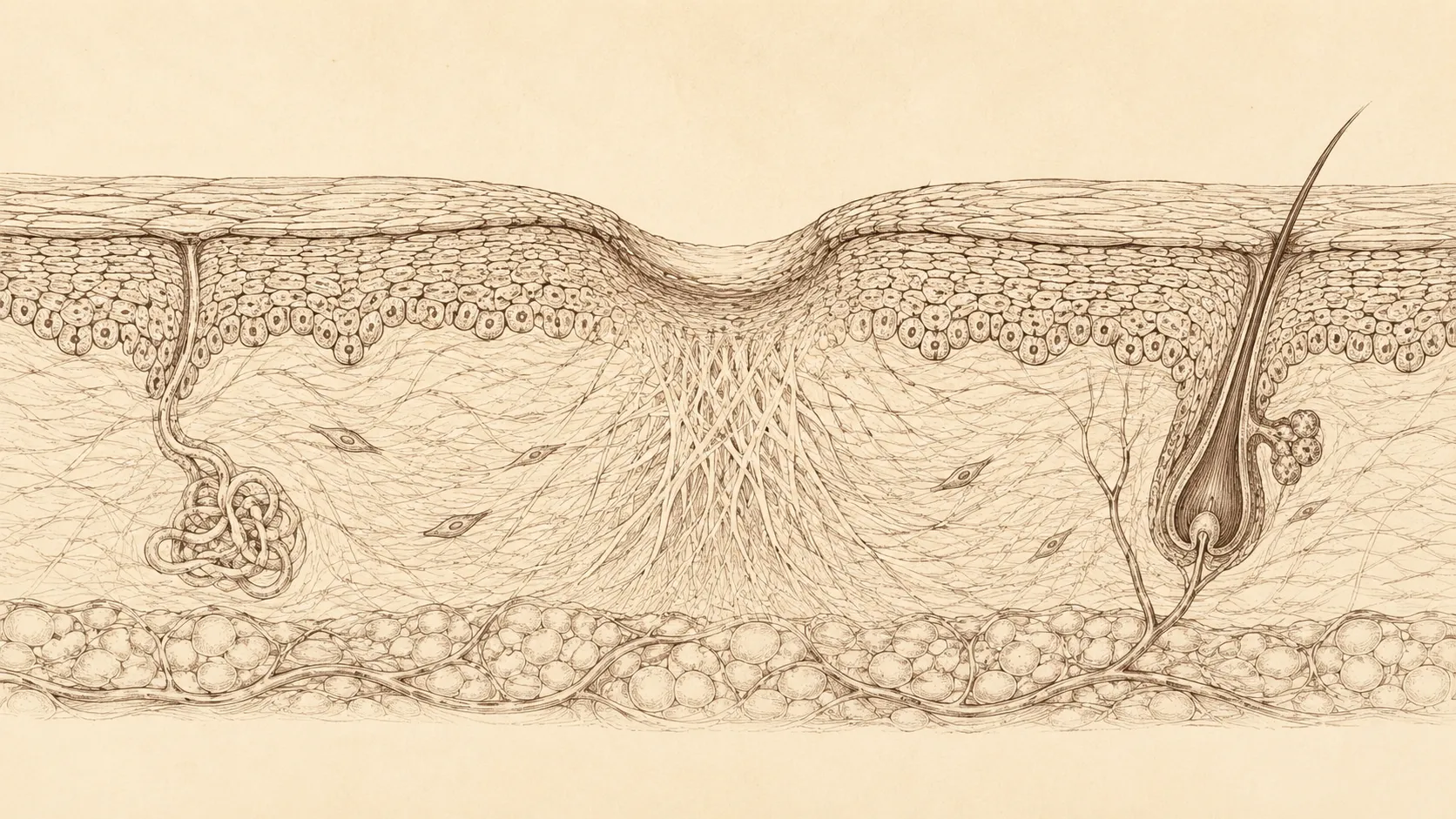
What happens under the skin on the day of treatment
On the day, I choose what to do according to each person’s scars, and not everyone needs every step. When several are done, the order is:
- TCA CROSS goes first, because once the skin swells you can no longer see the bottom of the scar.
- Er:YAG full beam to shave the scar edges, done before Subcision for the same reason.
- Subcision with an 18G cannula and tumescent, releasing the fibrous bands that hold the base of the scar down, like cutting the string that ties a piece of cloth so it can relax.
- CO2 after the bands are released, because I want as much contraction as possible. This is my intent and my own observation, not a research result.
- Shallow fractional Er:YAG across the area to stimulate new skin.
The laser only stimulates. It signals the body to “repair here”, and your body is the one that builds the collagen.
On that day the new collagen has not formed yet. What you see is skin swollen from the stimulation, which can make the scars “look shallower for a while”, and once the swelling settles they seem to be back where they started. This is where many people get confused and discouraged.
New collagen is built in stages, not in one day
The body repairs with collagen in 3 phases:
Phase 1: inflammation (days 0–3)
The body sends cells to clear the treated area. You will see swelling and redness. There is no collagen yet.
Phase 2: rebuilding (weeks 1–4)
Fibroblast cells start making type III collagen, which is still “soft” and disorganized. The scars begin to change, but the eye can barely see it.
Phase 3: remodeling and firming up (weeks 4–8 and beyond)
Type III collagen is gradually replaced by type I collagen, which is strong and well aligned. This is when scars really become shallower, and it is why you have to wait 4–8 weeks.
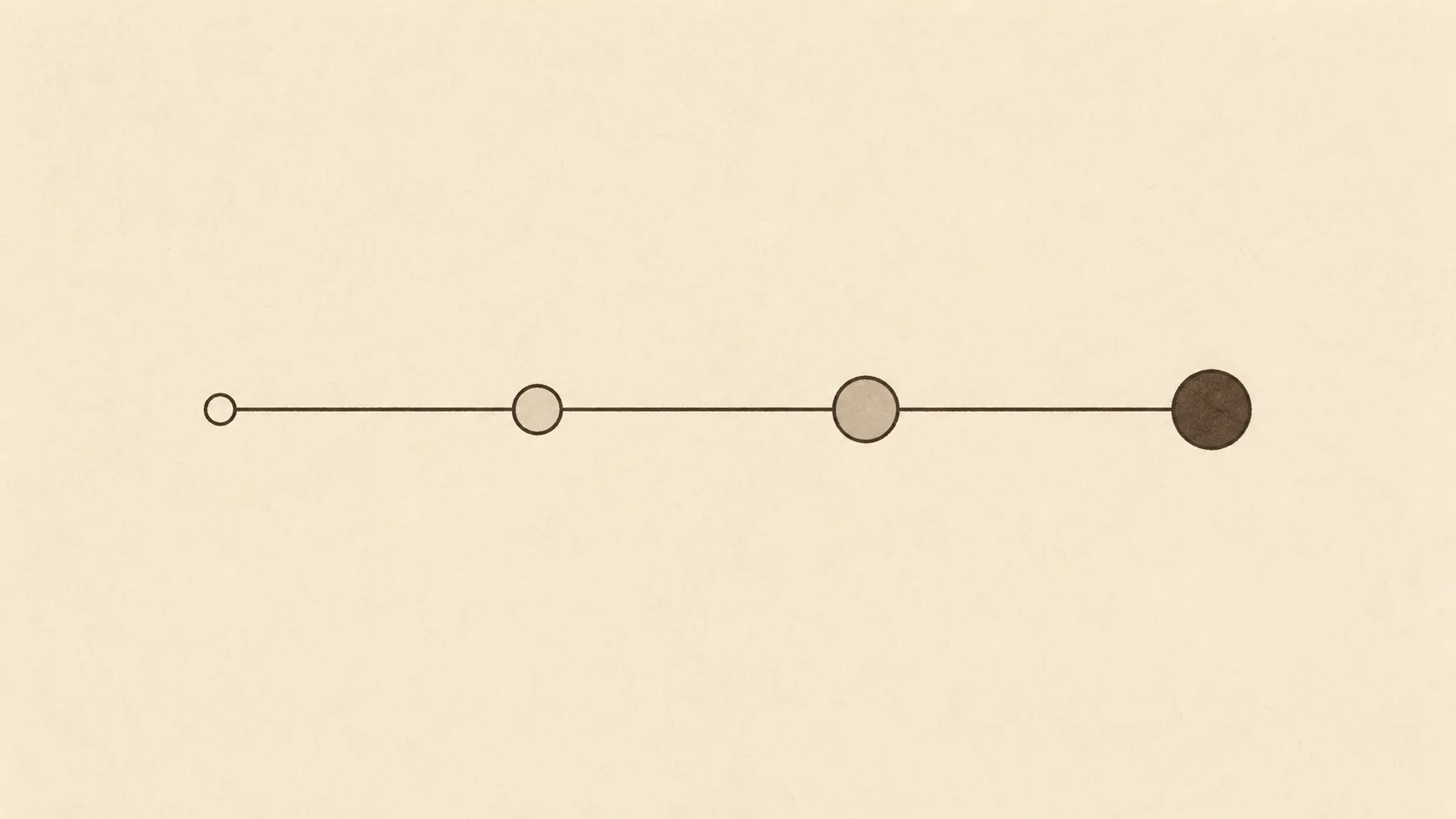
The timeline to expect (after the first session)
- Weeks 1–2: The swelling settles and the scars look the same as before. This is normal. Do not lose heart yet.
- Weeks 3–4: The scar edges start to soften and dark marks begin to fade.
- Weeks 4–6: You start to see scars getting shallower, subtly.
- Weeks 6–8: The result of the first session becomes clearer. This is the right moment for the next session.
Results build up over several sessions, and how much each person gains is different.
Why sessions should be 4–8 weeks apart
If you repeat too soon, the collagen from the last round is not strong enough yet, and stimulating again disturbs what is there instead of building on it. Giving phase 3 time to work is why Dr. Big books sessions 4–8 weeks apart. It is not to get you to come in more often.
What you can do to help collagen get stronger
These 4–8 weeks are when taking care of yourself matters most:
- Eat enough protein and vitamin C. They are the direct raw materials of collagen.
- Wear sunscreen every day. UV damages the collagen that is being built.
- Sleep enough. The body repairs skin during deep sleep.
- Drink plenty of water, and avoid smoking and heavy drinking.
Frequently asked questions
Q: How many days after Subcision do I see results? A: Most people start to see clear change around weeks 4–6, and more clearly at 6–8 weeks, not within a few days. Subcision is usually done together with filling or laser.
Q: It has been 2 weeks and my scars look the same. Is that abnormal? A: No. That is normal for the collagen timeline. The phase that makes scars shallower only starts working from week 4 onward.
Q: Will doing it more often make it improve faster? A: No. Doing it too often disturbs the collagen from the last round. Waiting 4–8 weeks gives the collagen time to get strong.
Q: Why do my scars look shallower right after treatment? A: What you see right away is usually swelling, which makes the scars look shallower for a while. Once the swelling goes down they return to how they were. The real result has to wait for collagen, and Dr. Big prefers to tell you this honestly.
Q: Where can I consult about Subcision? A: At Clarity Clinic, Ratchathewi, near BTS, an easy trip from Siam, Phaya Thai and across Bangkok. You can send photos by LINE first for Dr. Big to assess.
Summary
Acne scars do not become shallower on the day of treatment. They change gradually over the next 4–8 weeks, as new collagen firms up in your body. Understanding this timeline keeps you from losing heart halfway and lets you look after yourself at the moments that matter.
Contact:
- Add us on LINE @clarityclinic to send photos of your scars to Dr. Big first and ask which program suits your scars
- Location: Spring Tower, floor B · Ratchathewi, near BTS (easy from Siam, Phaya Thai and across Bangkok)
- Free 30-minute consultation with Dr. Big in person
Read next:
- What is Subcision — releasing the fibrous bands under acne scars
- Doctor and patient — who does what in acne scar treatment
- Protein and vitamin C — how to eat so your skin builds collagen
References
Outcomes vary by individual; this article is educational, not a substitute for in-person medical assessment.
- Orentreich DS, Orentreich N. Subcutaneous incisionless (subcision) surgery for the correction of depressed scars and wrinkles. Dermatol Surg. 1995. PubMed
- Jacob CI, Dover JS, Kaminer MS. Acne scarring: a classification system and review of treatment options. J Am Acad Dermatol. 2001. PubMed
- Gozali MV, Zhou B. Effective treatments of atrophic acne scars. J Clin Aesthet Dermatol. 2015. PubMed
Read the full overview: Acne scar treatment: the complete guide