Acne Scars: The Complete Guide — Causes, Types, Treatments, and Real Costs
Understand acne scars fully — what causes them, the types, what treats them, and real costs in Thailand. A guide from Dr. Big, Clarity Clinic Ratchathewi.
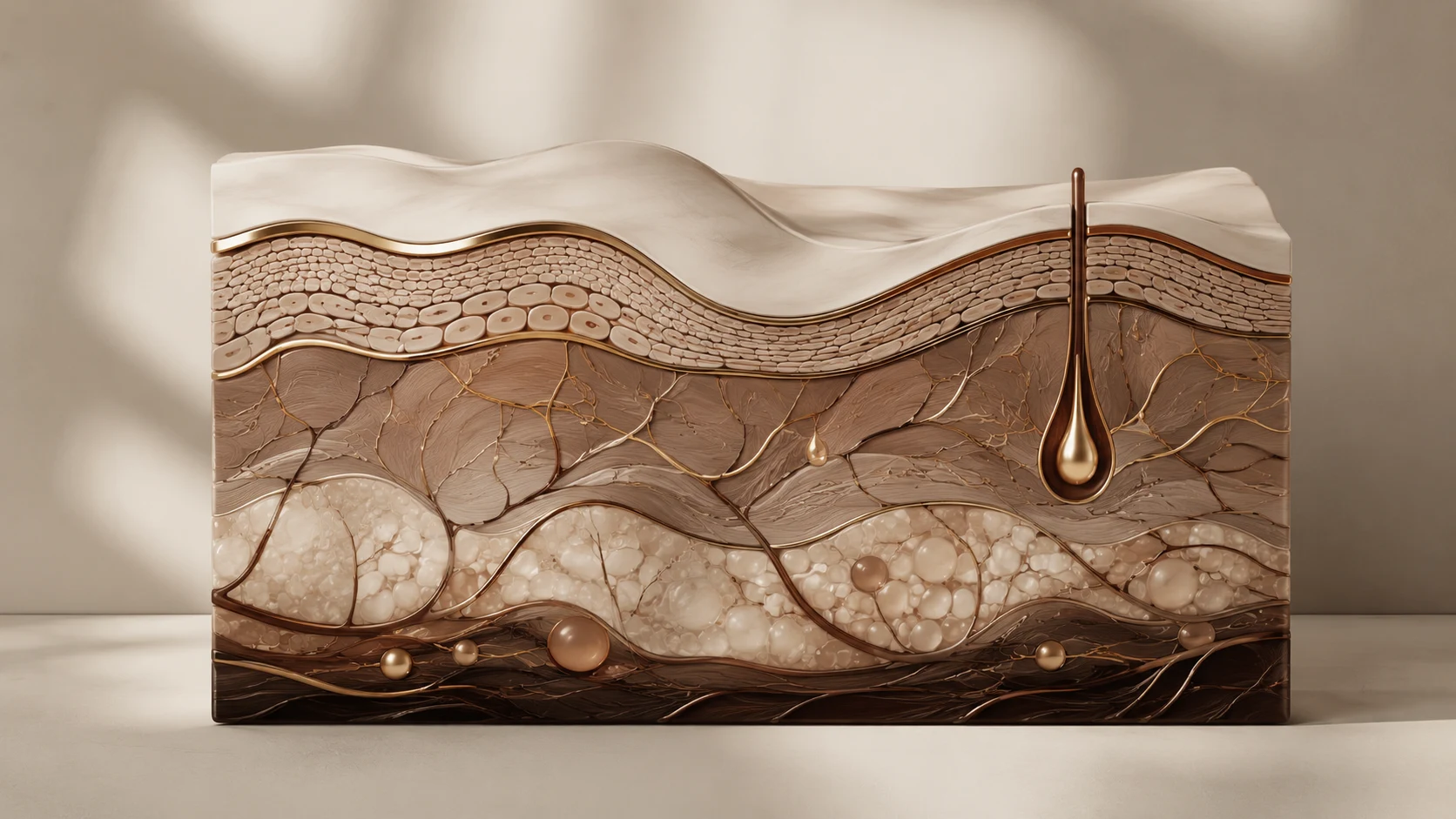
3D SKIN MODEL
How deep each treatment works
Quick answer: Acne scars are atrophic marks left when deep inflammatory acne damages the dermis, and they come in three main types — Ice Pick, Box, and Rolling. They can’t be fixed by creams alone, but combining in-clinic techniques (Subcision, MNRF, Ablative Fractional Laser, Picolaser) across each skin layer makes acne scars improve ~60–80% over 3–6 sessions. At Clarity the price is 5,000 THB per session for all techniques, pay per session with no course packages.
Acne scars are permanent marks left on the skin after inflammatory acne heals. Millions of people deal with them, and they’re “harder to treat than most people think” — because acne scars form in a layer of skin deeper than the acne itself.
This is the complete guide Dr. Big wrote so patients understand the problem from the root — how acne scars form, the types, which methods treat them, and the real costs in Thailand. Before you decide on treatment, read to the end so you can choose the clinic and method best suited to your case.
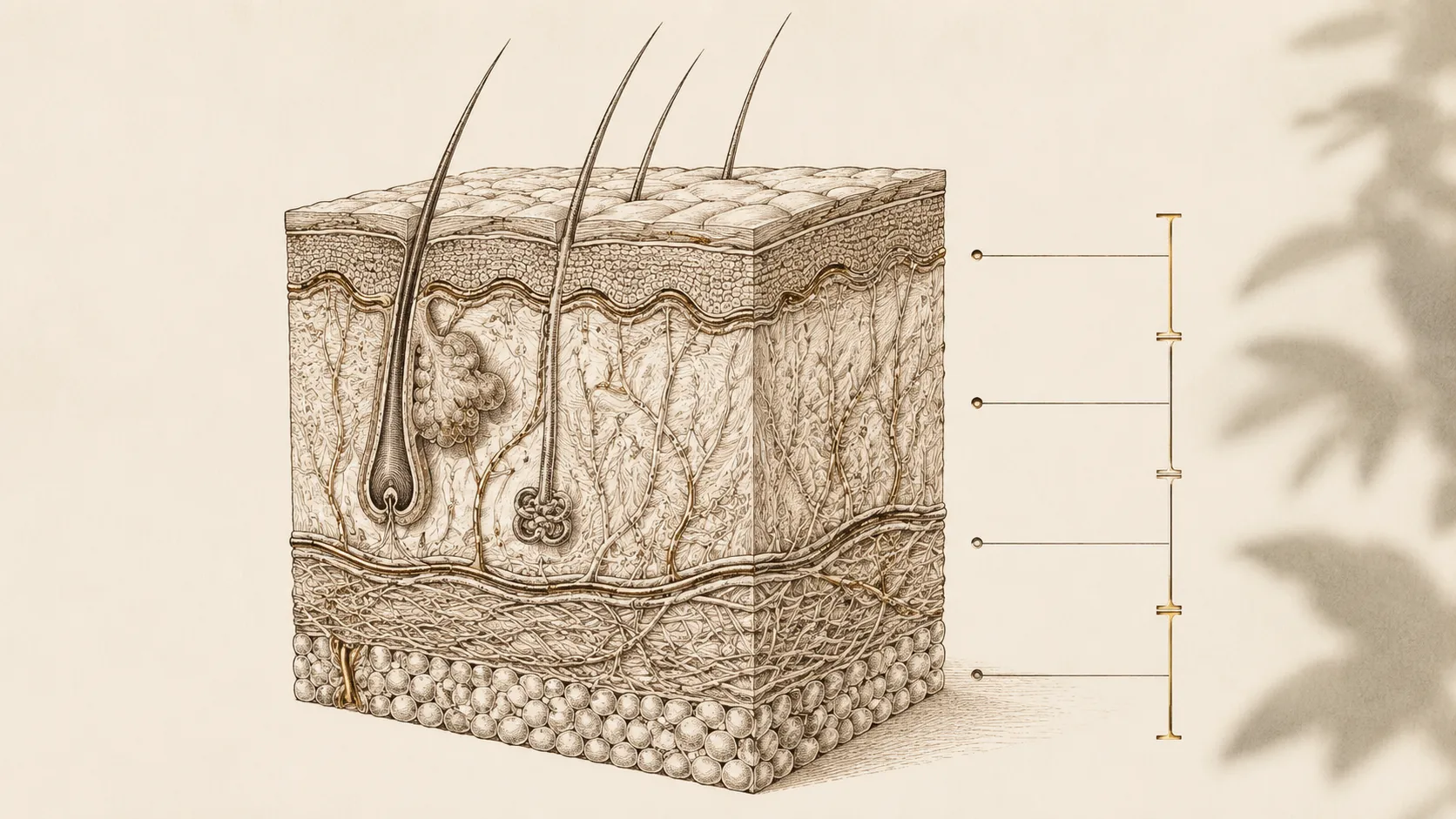
What causes acne scars?
Acne scars come from inflammatory acne that goes deep enough to damage the structure of the dermis. Once the lesion heals, the body can’t rebuild collagen fully the way it was — leaving a depression instead.
The actual process is:
- Severe inflammatory acne such as cysts or deep nodules
- Inflammation triggers collagen-destroying enzymes deep under the skin
- As the acne subsides, the body can’t replace the lost tissue in time
- A groove or pit remains permanently
Factors that make scarring more likely:
- Picking acne yourself — ruptures the follicle wall and spreads inflammation deeper
- Severe acne left untreated — letting inflammation persist
- Genetics — some people react to inflammation more strongly
- Age — younger skin has faster collagen turnover but may not recover in time with chronic acne
Acne scars differ from raised scars — they’re atrophic scars, meaning they sink in, not stick out.
How many types of acne scars are there?
Dermatology divides acne scars into 3 main types by shape and depth:
1. Ice Pick Scar
Deep, narrow, and sharp like an ice-pick puncture — under 2 mm wide but reaching the lower dermis. This is the hardest type to treat because ordinary lasers can’t reach the base; it often needs special techniques like TCA CROSS or punch excision.
2. Box Scar
Flat base with straight walls, like a square box — 2–4 mm wide, about 0.1–0.5 mm deep. Common on the cheeks and temples — treatable with Ablative Fractional Laser combined with Subcision.
3. Rolling Scar
A wave-like, dished base with soft edges — 4–5 mm wide or more. Its hallmark is fibrous bands tethering the skin down into a depression. The most effective treatment is Subcision (releasing the bands) combined with MNRF to stimulate collagen.
| Type | Size | Depth | Main treatment |
|---|---|---|---|
| Ice Pick | <2 mm | Very deep | TCA CROSS · Ablative Laser |
| Box | 2–4 mm | Shallow–medium | Ablative Fractional · Subcision |
| Rolling | >4 mm | Medium–deep | Subcision · MNRF |
In reality, most people have several types mixed on one face, which is why several techniques are needed to address each area precisely.
For a more detailed breakdown, read Acne Scar Types — Rolling · Box · Ice Pick, how to tell.
Can you treat acne scars yourself?
The short answer is not to the degree you’d hope.
Acne scars sit in the dermis, which most topical creams and serums can’t reach. Creams with ingredients like Retinol, Vitamin C, and AHA/BHA help the surface (reduce dark marks, slightly refine texture) but can’t rebuild the lost structure beneath the skin.
Creams and DIY only get you to “looks a bit better” — not “the scars are genuinely shallower.”
If you’re still considering trying it yourself first, read Can you treat acne scars at home — creams, serums, DIY, how real are the results.
In-clinic acne scar treatments
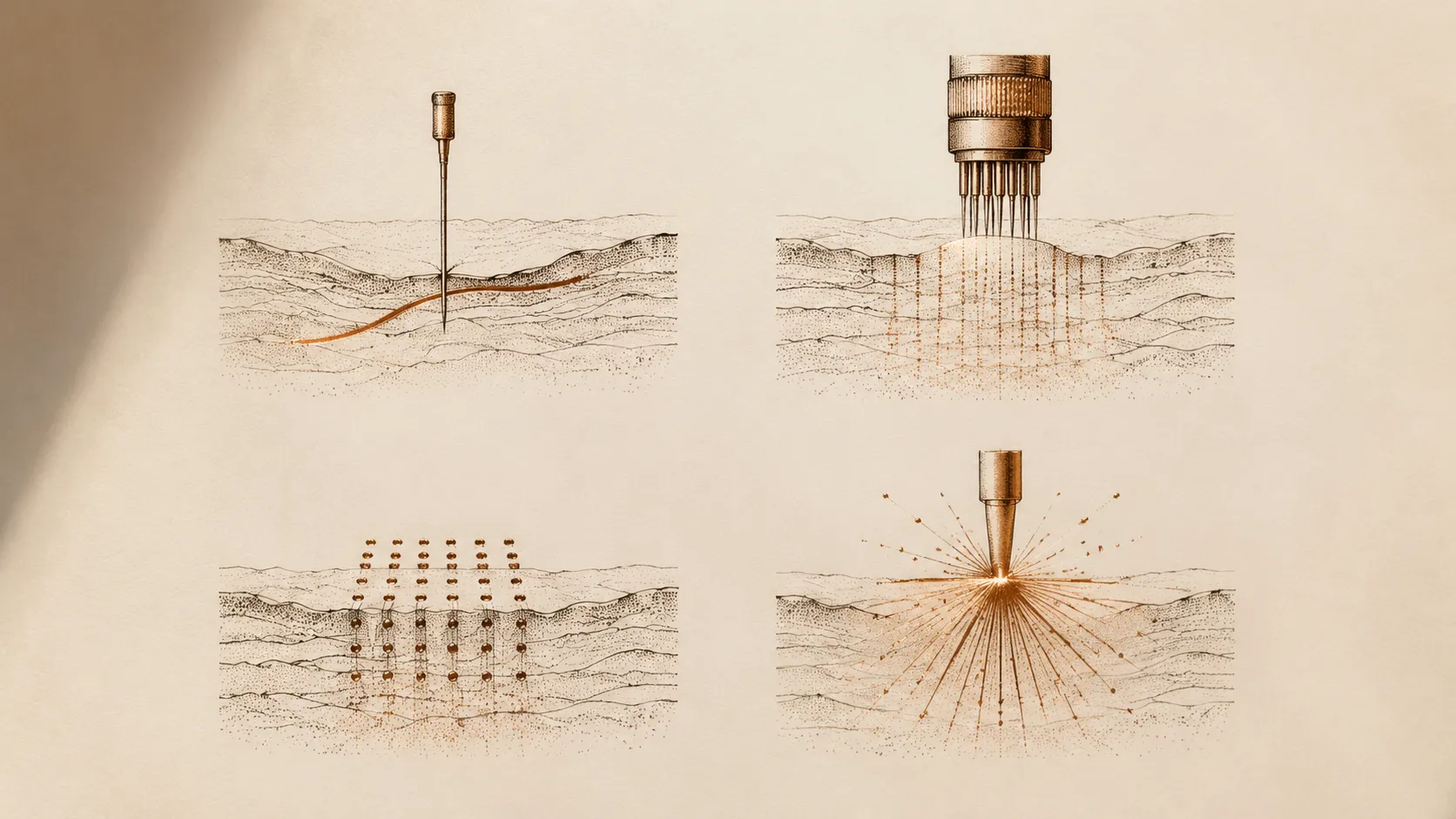
Dermatologists use 4 main techniques, each working on a “different skin layer.” The gold standard for acne scars is combining several techniques — not one device for everything.
Subcision — releasing fibrous bands
A special needle (such as a cannula or Nokor) is inserted under the skin to cut the fibrous bands tethering the scar into a depression. Best for rolling scars — this is a technique that “ordinary lasers can’t do,” because lasers work at the surface and can’t release tissue beneath the skin.
Read the detail at What is Subcision — releasing fibrous bands to treat acne scars.
MNRF (Microneedle RF)
Tiny needles deliver radiofrequency into the dermis to stimulate new collagen — ideal for replacing lost collagen. Often done right after Subcision so the released area fills in with fresh collagen.
Ablative Fractional Laser (CO₂, ER:YAG)
A laser that “ablates the surface” in tiny columns so the body repairs and builds new skin — refining surface texture and scar edges, especially box scars. Downtime is about 5–7 days.
Picolaser
A very fast laser used to address pigment that accompanies acne scars — it doesn’t directly raise the scar but reduces post-acne dark marks at the scar base, leaving the skin looking smoother and more even.
Compare lasers at How many acne scar lasers are there — Pico · CO₂ · ER:YAG · MNRF.
Why use several techniques in one session?
Acne scars sit across several skin layers — each needs a different tool:
- Surface (Epidermis) — Ablative Fractional refines texture
- Pigment layer (Basal Epidermis) — Picolaser reduces dark marks
- Collagen layer (Dermis) — MNRF stimulates new collagen
- Fibrous layer (Sub-dermal) — Subcision releases bands
Treating just one layer leaves the result incomplete — e.g. Subcision alone makes the scar temporarily shallower but the edges stay sharp; Ablative Laser alone smooths the surface but the scar stays deep because the bands remain.
At Clarity Clinic we design the program to cover every layer in one session — see the acne scar treatment program.
What treatment really costs
Current market prices in Thailand (referencing Bangkok clinics):
- Subcision alone — 3,000–8,000 baht/session
- MNRF alone — 5,000–15,000 baht/session
- Ablative Fractional Laser — 8,000–25,000 baht/session
- Picolaser — 5,000–18,000 baht/session
- A combined program of all 4 — 15,000–35,000 baht/session and up
At Clarity Clinic the price is 5,000 baht per session, including every technique in one session — no first-visit consult fee, no course lock-in, pay per session. See the pricing page.
Number of sessions and timeline
Treating acne scars needs time for the body to build collagen — the biology of collagen formation takes 4–8 weeks per cycle, so:
- Typical number of sessions: 4–6
- Spacing between sessions: 4–8 weeks
- Clear results start at session: 2–3
- Full result: 4–6 months after the last session
30% of the result comes from the procedure, the other 70% from consistent self-care.
This is the philosophy Dr. Big tells every patient from day one — no matter how good the device, if the patient doesn’t care for their skin consistently and recovers improperly or returns late, the result won’t be what it should be.
How to choose a clinic without regret
7 key things to check before deciding:
- The doctor plans it personally — not staff doing the consult
- Has every layer’s procedure — laser-only without Subcision can’t treat completely
- The website price = the real price — beware “starting from…” and surprises in the room
- No forced course packages — a “50% off” big course often means the base price was inflated
- Has real case photos — see them in the Results section
- The doctor’s medical license — verifiable license number
- Answers questions honestly at the consult — if they’re vague about how much improvement, be careful
Read the detail at How to choose an acne scar clinic — 7-point checklist.
How to care for skin afterward
Aftercare is the most important part of a good result — skin needs time to recover and build new collagen:
- Day 1–3: Redness, swelling, use a cold compress, apply aftercare cream every 2 hours
- Day 3–7: Skin starts to peel, new cells emerge — never pick the scabs
- Week 2–4: Moisturizer + SPF50 sunscreen every day
- Week 4–8: Collagen builds visibly, skin starts to smooth
- Ongoing: Avoid strong sun, don’t pick new acne, take Vitamin C and drink plenty of water
Frequently asked questions
Q: Do acne scars go away completely? A: Existing acne scars don’t disappear 100%, but they improve by 60–80% depending on type and depth — read How much can acne scars improve and How much does one session improve acne scars.
Q: Can they come back after treatment? A: Treated scars don’t “come back,” but new inflammatory acne in the same spot can create new scars — read How to treat inflammatory acne to prevent it.
Q: Does treatment hurt? A: Numbing cream is applied every time; you feel it but it’s not very painful — Subcision feels like a needle pressing under the skin, while Laser/MNRF feels like tiny pinpricks. Read the pain level per procedure at Does acne scar treatment hurt.
Q: How many days off do I need? A: Skin is red for 3–5 days afterward; some return to work with makeup the next day — for strong Ablative Laser, you may need 5–7 days. Read the full timeline at How long does acne scar treatment take.
Q: How many sessions to see results? A: 3–6 sessions, 4–8 weeks apart, for a total 60–80% improvement. Details at Subcision: how many sessions to see results.
Q: When is the best time — what age, what season? A: 20–35 is best; the rainy and cool seasons suit better than the hot season. Read When is the best time to treat acne scars for timing before a big event.
Q: Can I claim it on social security? A: No — acne scars are a cosmetic procedure. Read your payment options (0% installments, monthly budgeting) at Do acne scars get covered by insurance.
Q: Can men do it? A: Yes, and very well — men’s skin responds to collagen faster than women’s at the same age.
Q: Where’s a good acne scar clinic near BTS? A: Clarity Clinic Ratchathewi, a 1-minute walk from BTS Ratchathewi — read Acne scar clinic near BTS · Acne scar clinic Ratchathewi · Acne scar treatment Siam · Acne scar treatment Phaya Thai.
Summary
Acne scars are treatable if you choose the right technique for each skin layer + a doctor who understands + the patient’s consistency — no single device covers every layer.
If you’ve read this far and want Dr. Big to assess your case first:
- Send a photo of your acne scars via LINE — the doctor assesses for free (read Where to get a free acne scar consult)
- Or book a free 30-minute consult at the Ratchathewi clinic
At Clarity the price is 5,000 baht per session, all techniques in one — no course lock-in, no surprises in the room.
Read the technique-specific articles:
- Subcision — releasing fibrous bands under the scar
- TCA Cross for ice pick acne scars
- Filler vs Subcision for acne scars
- MNRF vs Ablative Laser
- Rejuran for acne scars
References
Outcomes vary by individual; this article is educational, not a substitute for in-person medical assessment.