What Causes Acne Scars — The Reasons Many People Don't Know
What causes acne scars, why some people get many and others few — genetics, hormones, behavior, and how to prevent more scars from forming. Dr. Big explains the science.
3D SKIN MODEL
How acne becomes a scar
Quick answer: Acne scars form when severe inflammatory acne disrupts the skin’s wound-healing process. The main drivers are deep or prolonged inflammation, squeezing pimples, genetics, and the age acne strikes. Most existing scars don’t fade on their own, but in-clinic treatment can improve them ~60–80%.
Lots of people get acne — so why do some heal smoothly while others end up with scars? This question matters because — understanding the cause = preventing more from forming.
In this article Dr. Big explains both the biological causes and the behaviors that make scars form more easily — so you know what to avoid, and when to start caring for your skin.
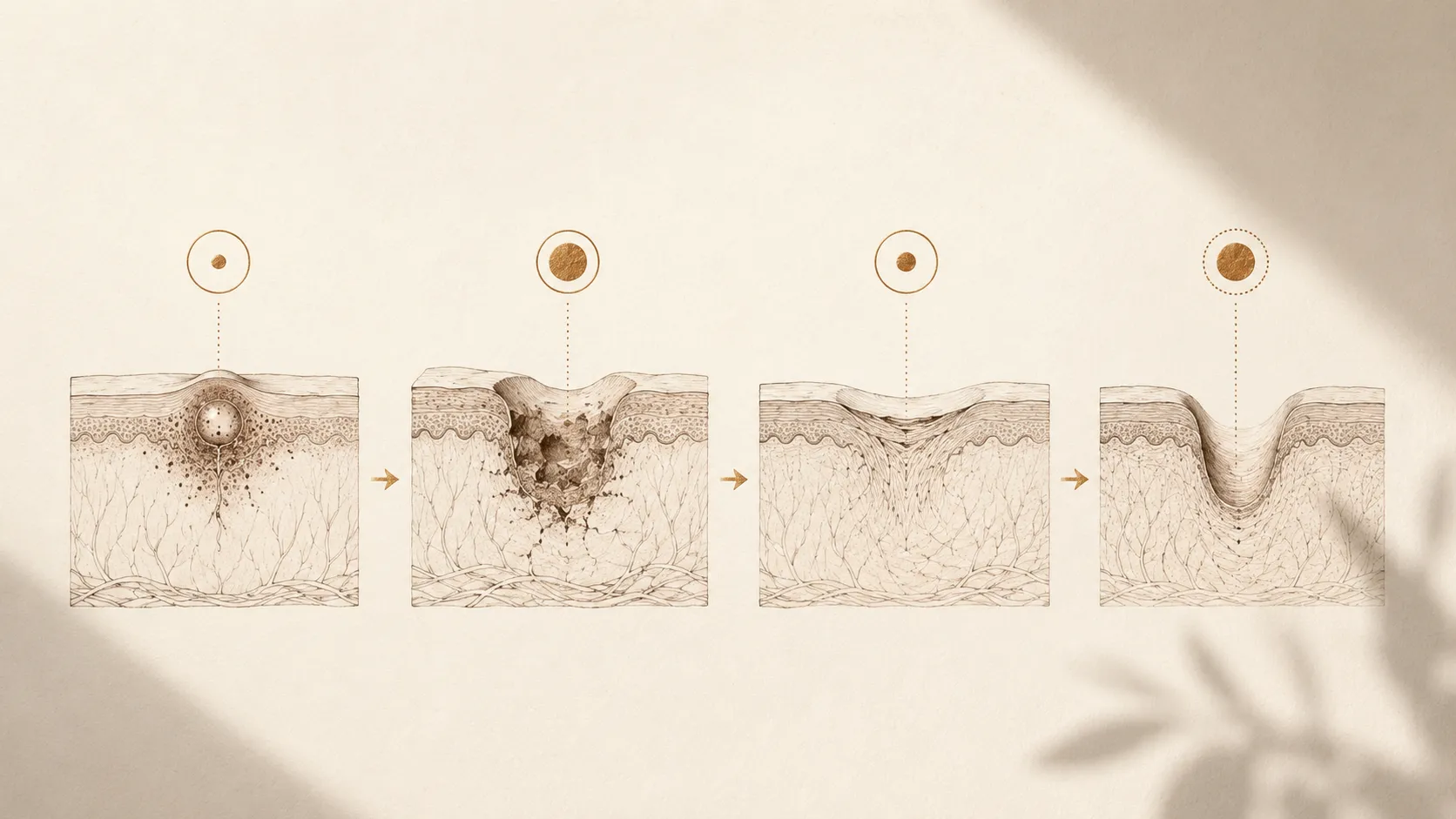
The main causes of acne scars
Acne scars come from an incomplete wound-healing process in the skin after severe inflammatory acne — there are 5 main factors:
1. Severity of the inflammation
The deeper and more severe the inflammatory acne, the higher the chance of scarring:
- Comedones (clogged pores) — don’t cause scars
- Small papules — 10–20% chance of scarring
- Pustules (with pus) — 30–50% chance
- Cystic acne — 70–90% chance
- Deep nodules — almost 100% scar
2. How long the acne stays inflamed
Acne inflamed for more than 2 weeks has 2–3× the scarring risk of acne that clears within a week.
This is why “treating acne fast” matters — less inflammation time = lower scarring risk.
3. Squeezing pimples yourself
This is the cause Dr. Big sees most often in heavily-scarred cases:
- Squeezing ruptures the pore wall
- Inflammation spreads sideways
- The area where scar tissue will form gets wider
Clearing 1 pimple can create 3 scars around it.
4. Genetics
In some people, fibroblasts respond to inflammation more strongly than others — forming scar tissue more easily and severely.
If your parents or siblings have many scars, you’re at higher risk too.
5. The age severe acne strikes
Severe acne in the teens (13–18) tends to cause more scarring than acne at 20+, because:
- Hormonal swings make acne chronic
- A stronger inflammatory immune response
- More pimple-squeezing at that age
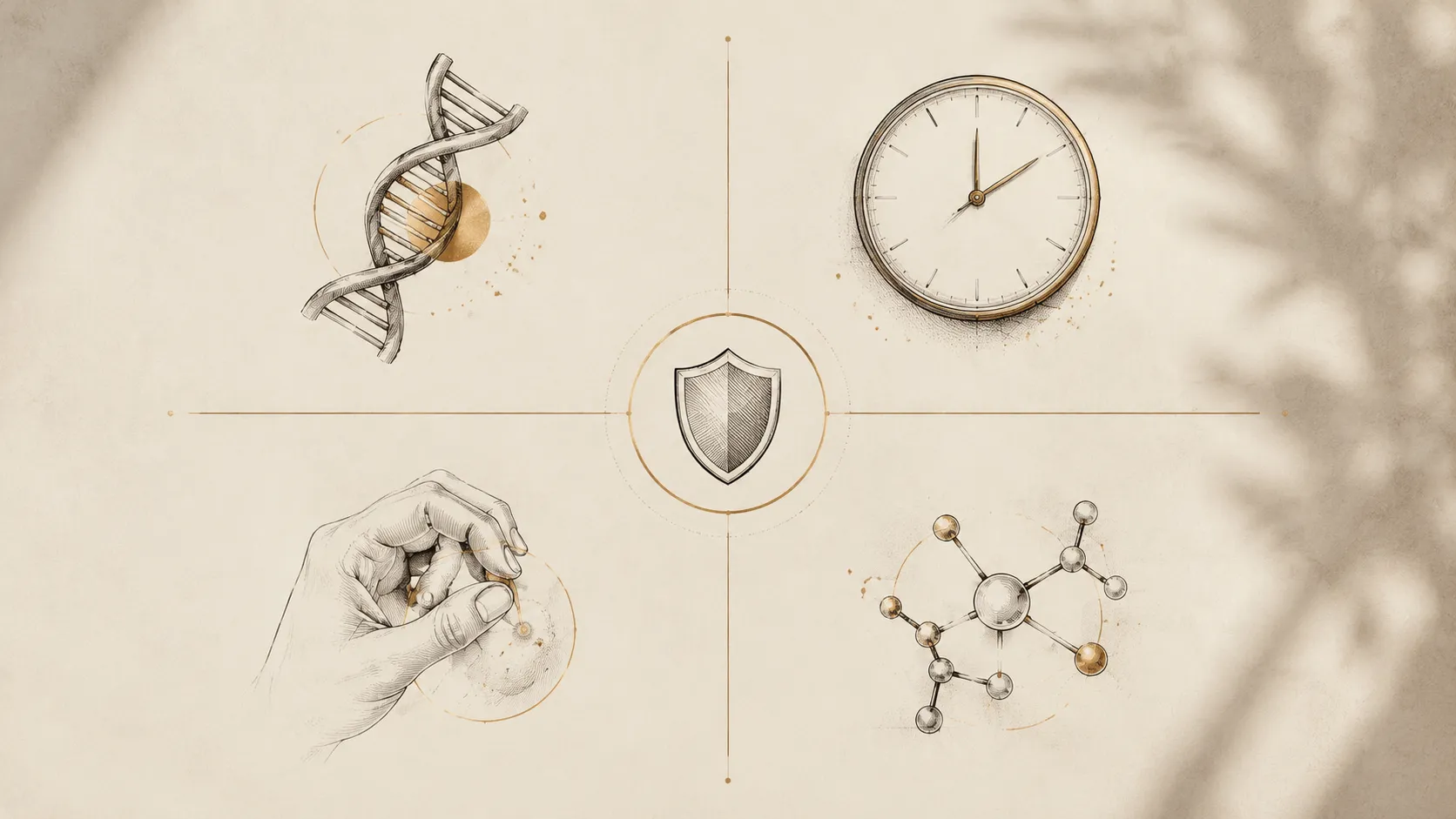
Factors that make acne chronic (and cause more scarring)
Hormones
- High androgens → overactive sebaceous glands → clogged pores
- Women 25+ with PCOS or high stress — chronic hormonal acne
Stress
- High cortisol → lowered immunity → prolonged inflammation
- Increases sebum production
Diet
- Sugar and high-glycemic foods — spike insulin → higher androgens → more acne
- Milk and dairy — may trigger acne in some people
- Not a single rule for everyone — observe yourself
Wrong skincare
- Pore-clogging (comedogenic) products
- Too much acid → damaged barrier → acne flares
- Washing the face too harshly
Too little sleep / unbalanced lifestyle
- Reduces collagen synthesis
- Increases inflammation
Behaviors that create more scars
❌ Squeezing pimples
- Spreads inflammation
- Increases the depth of the scar that forms
❌ Picking scabs
- Makes the wound bigger
- Lengthens healing
❌ Putting irritating things on acne
- Harsh scrubbing
- Honey/lemon/toothpaste on pimples
- Damages the barrier and prolongs inflammation
❌ Skipping sunscreen
- UV destroys collagen
- Slows dark-mark fading
- Increases the chance of shallow scarring
❌ Neglecting your body from the inside
- Too little sleep, stress, poor diet
- Increases system-wide inflammation
How to prevent more scars from forming
If you still get occasional inflammatory acne — do this:
1. Treat acne fast
- One inflamed pimple — use BPO or salicylic acid immediately
- If it doesn’t improve in 5–7 days — see a doctor
- Goal: shorten inflammation time as much as possible
2. Don’t squeeze
- Use an ice pack to reduce inflammation
- Let the head come up on its own
- If it must be extracted — have a doctor do it in clinic
3. Use sunscreen every day
- SPF50+ to block UV
- Reduces post-acne dark marks
- Protects the collagen you have
4. Suitable skincare
- Salicylic acid 0.5–2% (BHA) — reduces clogging
- Niacinamide 5–10% — reduces inflammation
- Retinoid (start gentle) — boosts cell turnover
5. Care from the inside
- Sleep 7–8 hours
- Reduce stress
- Avoid sugar and high-glycemic foods
- Drink 2 liters of water a day
6. Treat hormonal acne if present
- Talk to a dermatologist or gynecologist
- Isotretinoin (Roaccutane) for severe cases
- Hormonal medication such as spironolactone
Once scars start forming — what do you do?
Within the first 6 months
- Skin is still remodeling — retinol + vitamin C can help somewhat
- Apply to the affected spots
- Some very shallow scars may disappear
- But most stabilize after 6 months
After 6 months
- Scars are stable — creams help little
- Start considering in-clinic treatment
- The earlier you treat (ages 25–35), the better the collagen response
Who’s most at risk of acne scars?
High-risk group
- Family history of acne scars
- Severe acne in the teens
- A habit of squeezing pimples
- Fair skin (post-acne dark marks stand out, making scars look more obvious)
- Hormonal imbalance (PCOS)
Moderate-risk group
- Occasional chronic acne
- No sunscreen
- High stress
Low-risk group
- No severe acne
- Doesn’t squeeze pimples
- Uses sunscreen consistently
- No family history of scars
Frequently asked questions
Q: If I have acne, will I definitely get scars? A: Not necessarily — it depends on severity and behavior.
Q: Do whiteheads cause scars? A: Rarely — non-inflamed clogged pores usually don’t scar.
Q: If I stop getting acne, will my scars go away? A: They don’t go away on their own — but at least no new ones form.
Q: Can wrong skincare cause scars? A: Indirectly yes — skincare that flares acne raises the chance of scarring.
Q: Does taking collagen prevent scars? A: No — ingested collagen is digested into amino acids; it doesn’t directly build good scar tissue.
Summary
Acne scars come from:
- Severe inflammatory acne
- Squeezing pimples
- Genetics
- Prolonged inflammation
- Behavior and environment
Prevent more from forming by:
- Treating acne fast
- Not squeezing
- Using sunscreen
- Caring from the inside
For scars you already have — creams only help partially. In-clinic treatment using several techniques across skin layers works better.
At Clarity Clinic — an acne scar program covering every layer at 5,000 baht per session, no packages, no surprises. Most patients see a 60–80% improvement.
Want Dr. Big to assess your case first?
- Send a photo via LINE — free
- Or a free 30-minute consult
Read next:
- How much does one session improve acne scars
- How long does acne scar treatment take
- How much can acne scars improve — 60–80%
- Acne scars: the complete guide
References
Outcomes vary by individual; this article is educational, not a substitute for in-person medical assessment.