Acne Scar Types — Rolling · Box · Ice Pick: How to Tell and Treat Each
How to identify your acne scar type — Rolling, Box, Ice Pick: how they differ, what treats each, and why knowing matters before choosing a doctor. Dr. Big explains.
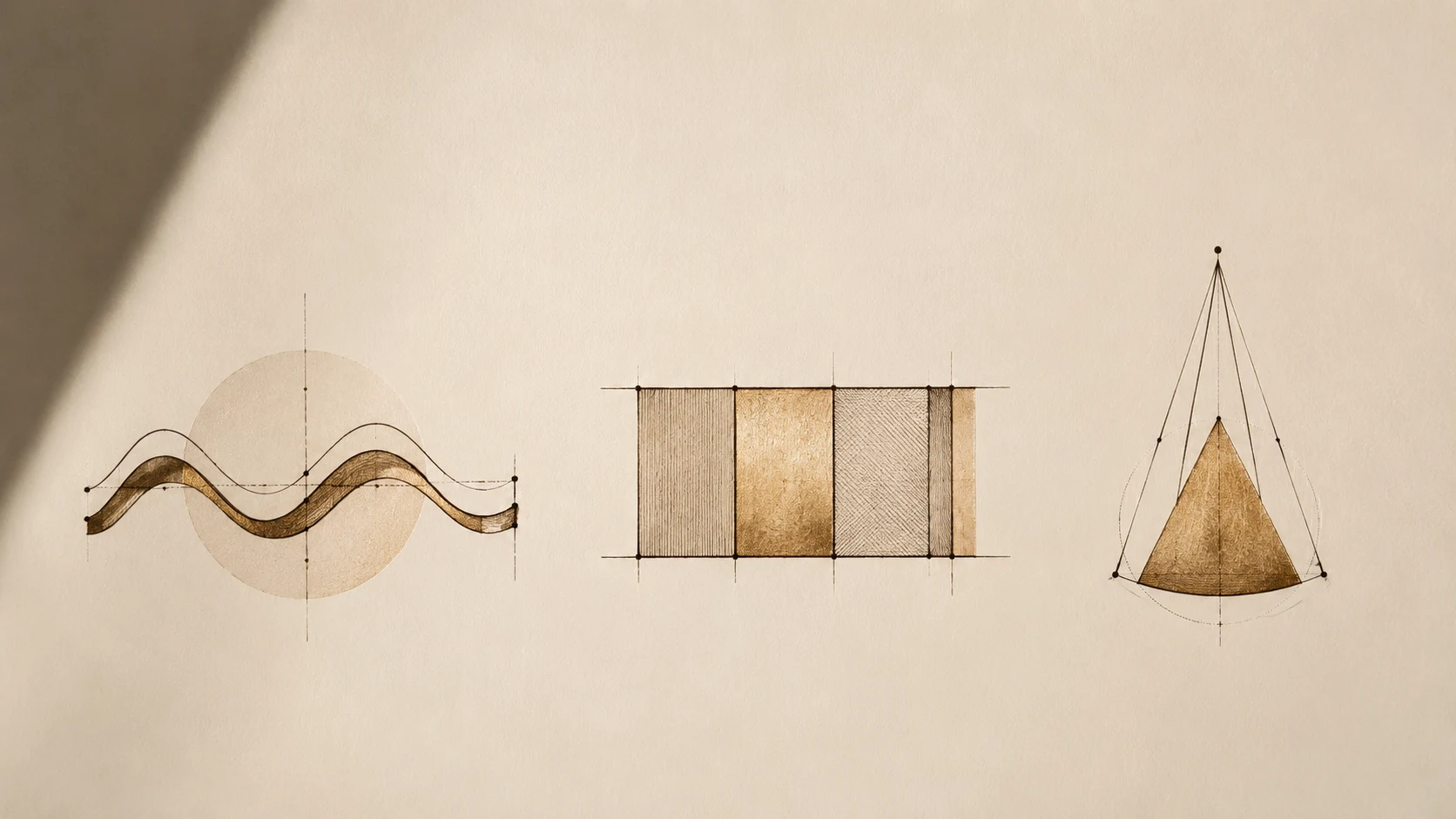
3D SKIN MODEL
Types of acne scars
Quick answer: The three main acne scar types are Rolling (wave-like, band-tethered — best treated with Subcision), Box (square with straight walls — best with Ablative Fractional Laser), and Ice Pick (narrow and deep — best with TCA CROSS). Most faces have a mix, so identifying your type first decides the technique; matched to the right method, acne scars improve ~60–80%.
Before deciding to treat acne scars, the first thing to know is — which type do you have?
Each type needs a different technique. Treat the wrong type and you waste money with little result. Dr. Big teaches you how to read your own scars and what treats each.
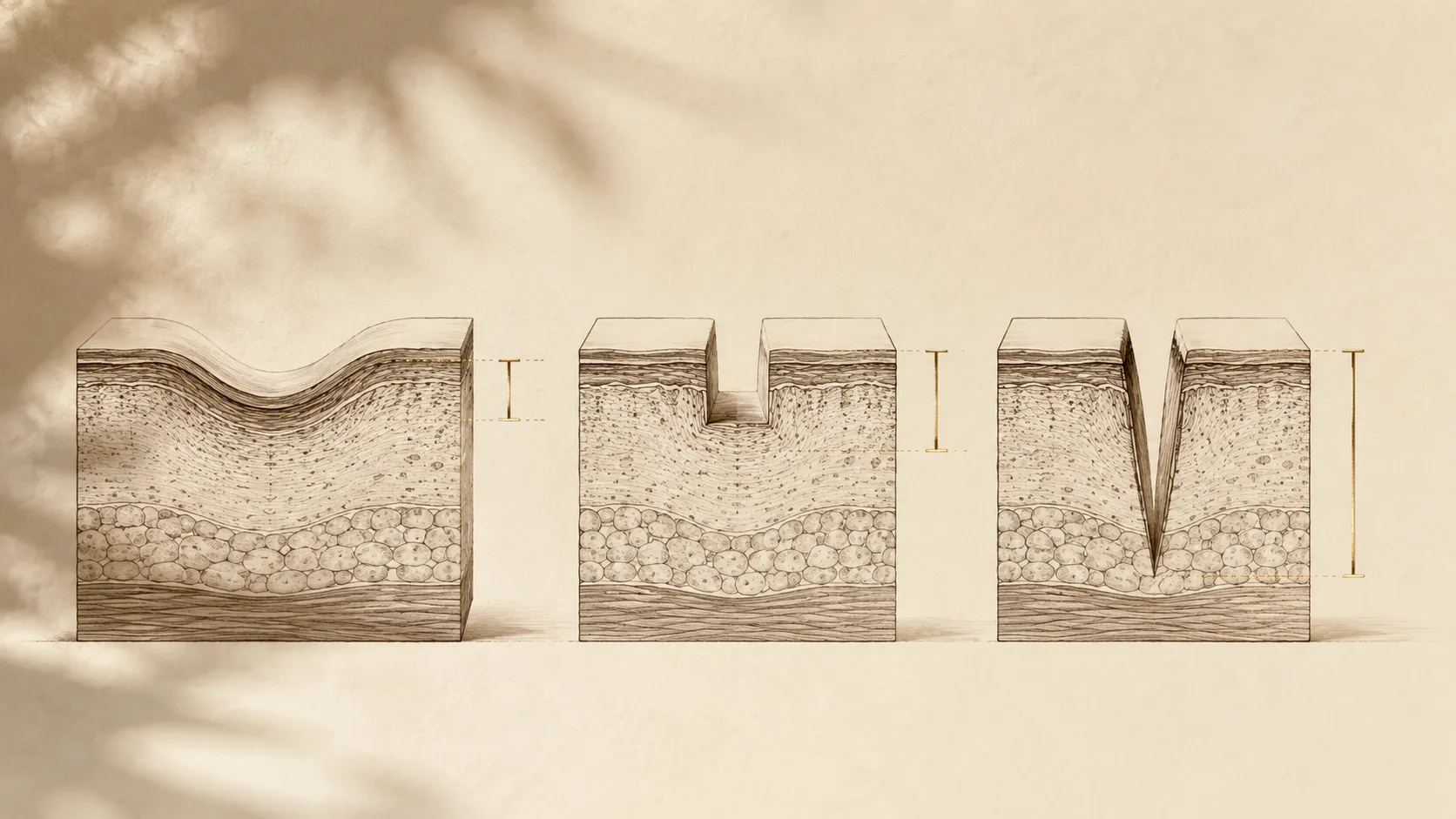
The 3 main acne scar types
Dermatology categorizes acne scars by shape and depth:
- Rolling Scar — wave-like depression
- Box Scar — square with straight walls
- Ice Pick Scar — narrow, sharp, deep
In reality, most people have more than one mixed on one face.
1. Rolling Scar
Features: wave-like curve · 4–5 mm+ wide · medium depth (~0.5–1 mm) · soft sloping edges · common on cheeks, temples. How to spot: from the side, you see “waves” up and down — visible in angled light, less in flat light. Special cause: fibrous bands (fibrosis) pulling the skin down — not just thin skin. Best treatment: Subcision (releasing bands) is the core — without releasing, the skin gets pulled back down. Plan: 1) Subcision · 2) MNRF · 3) Ablative Fractional Laser.
Read more: What is Subcision.
2. Box Scar
Features: square with straight walls · 2–4 mm wide · shallow–medium (0.1–0.5 mm) · sharp straight edges · common on cheeks, temples, chin. How to spot: head-on you see a “square box” — edges like a knife cut, flat base. Best treatment: Ablative Fractional Laser (CO₂ or ER:YAG) to refine the base texture and soften the edges. Plan: 1) Ablative Fractional (several rounds) · 2) Subcision if bands present · 3) MNRF.
Read more: How many acne scar lasers are there.
3. Ice Pick Scar
Features: a small deep hole like an ice-pick puncture · <2 mm wide · very deep (reaching dermal–subdermal) · very sharp, near-vertical edges · common on lower cheeks, temples, nose. How to spot: close up in a magnifier, a small hole — sometimes dark at the base. Why it’s hardest: too deep for ordinary Fractional Laser · too narrow for a Subcision needle · dense fibrous tissue at the base. Best treatment: TCA CROSS — concentrated TCA (50–100%) applied into the hole to destroy the dense tissue and trigger new tissue from the base. Plan: 1) TCA CROSS every 4–8 weeks × 3–6 rounds · 2) Ablative Fractional in between · 3) MNRF around · 4) Punch excision for very large ice picks.
At Clarity, TCA CROSS is a supplemental technique in ice-pick-heavy cases — the 5,000 baht program includes TCA CROSS in the sessions it’s needed.
How to read your own scar type
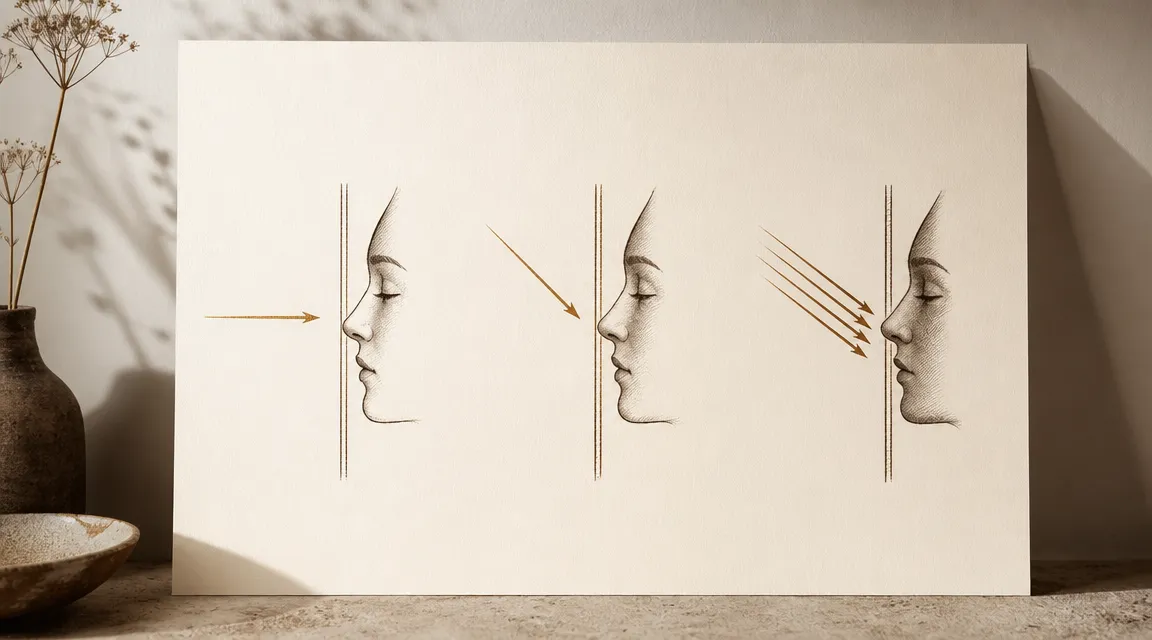
Step 1: Angled light — waves = likely Rolling · sharp boxes = likely Box. Step 2: Stretch the skin — if the scar disappears/reduces = likely Rolling (band-pulled) · if it stays = likely Box or Ice Pick. Step 3: Measure — <2 mm deep = Ice Pick · 2–4 mm sharp = Box · >4 mm soft = Rolling. Step 4: Send a photo — if unsure, send a photo via Clarity LINE for a free assessment.
Treatment summary
| Type | Main technique | Supplement | Sessions |
|---|---|---|---|
| Rolling | Subcision | MNRF + Ablative | 4–6 |
| Box | Ablative Fractional | Subcision + MNRF | 4–6 |
| Ice Pick | TCA CROSS | Ablative + Punch | 3–6 |
The common reality: mixed scars
80% of patients have mixed types — cheeks Rolling + Ice Pick, temples Box + Rolling, chin Box only. This is why Clarity does several techniques in one session — addressing every type on the face at once.
Frequently asked questions
Q: Is it hard to identify the type myself? A: Clear cases yes, but mixed cases need a doctor with angled light + a magnifier.
Q: Can the type change? A: No — the base shape stays, but may look “softer” after treatment.
Q: Which type is easiest to treat? A: Rolling — Subcision releases bands fairly clearly.
Q: Which is hardest? A: Ice Pick — hard to reach, but treatable with consistent TCA CROSS.
Q: Do prices differ by type? A: At Clarity, one price, 5,000 baht, covers every type.
Summary
Knowing your scar type is the most important first step — it dictates the technique. Reading it yourself is good; if unsure, a doctor’s assessment is safest. At Clarity we assess scar type in a free 30-min consult with a Trica3D Scan baseline.
Contact:
- LINE: @clarityclinic — send a photo of your acne scars for Dr. Big to review
- Location: Spring Tower, B Floor · Ratchathewi, near BTS (Siam, Phaya Thai, all Bangkok)
- Free 30-minute consult with Dr. Big in person
- Price 5,000 baht/session including all main procedures · pay per session, no course packages
Read next:
References
Outcomes vary by individual; this article is educational, not a substitute for in-person medical assessment.