Real Case: How Dr. Big Reshapes a Deep Boxcar Scar
A real deep boxcar scar session in four steps: TCA, Erbium YAG edge resurfacing, 18G cannula subcision and Fractional CO2, and why that order.
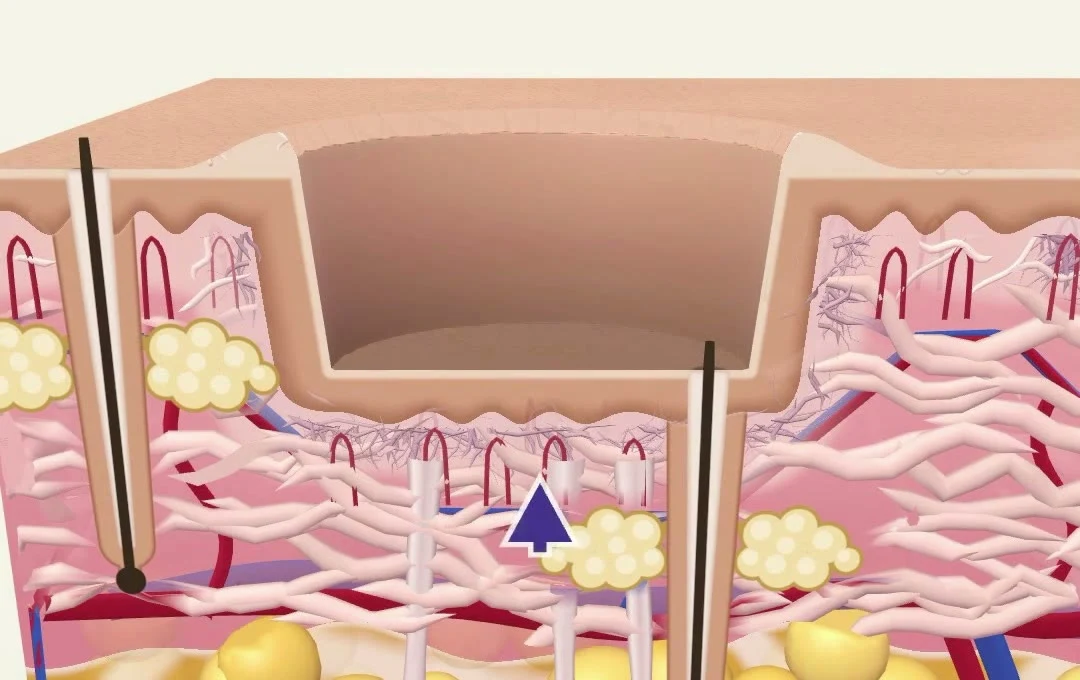
Quick answer: A deep boxcar scar has to be treated from above and from below at the same time. In this case I did four steps on one day. First, TCA applied into each scar so the floor builds new collagen. Second, full ablative Erbium YAG to shave the scar’s rim from a cliff into a slope. Third, an 18G cannula to cut the fibrous bands holding the scar down. Last, high-energy Fractional CO2 to tighten the skin around the scar.
This is a real patient with deep boxcar scars on their third visit. I want to show what each step is for, and why the order matters.
Why does a deep boxcar scar need an ablative laser?
The core of reshaping a scar is an ablative laser that actually removes tissue. Pico laser and Microneedle RF are non-ablative: they stimulate the skin but do not remove tissue, so they cannot change the shape of the scar. For the differences between scar types, see types of acne scars.
Step 1: TCA to lift the scar floor
I use a syringe to place TCA into each scar one by one, so the healthy skin around it is spared. This patient is on a third visit, so I raised the strength step by step; the stronger the acid, the more precise it has to be. The acid prompts the scar floor to make new collagen and slowly push up. More in TCA CROSS for acne scars.
Step 2: Erbium YAG turns the rim from a cliff into a slope
A boxcar scar has a steep rim, like a cliff. Even when collagen lifts the floor, that steep edge can stay. So I use full ablative Erbium YAG to shave the rim down little by little, turning the cliff into a slope.
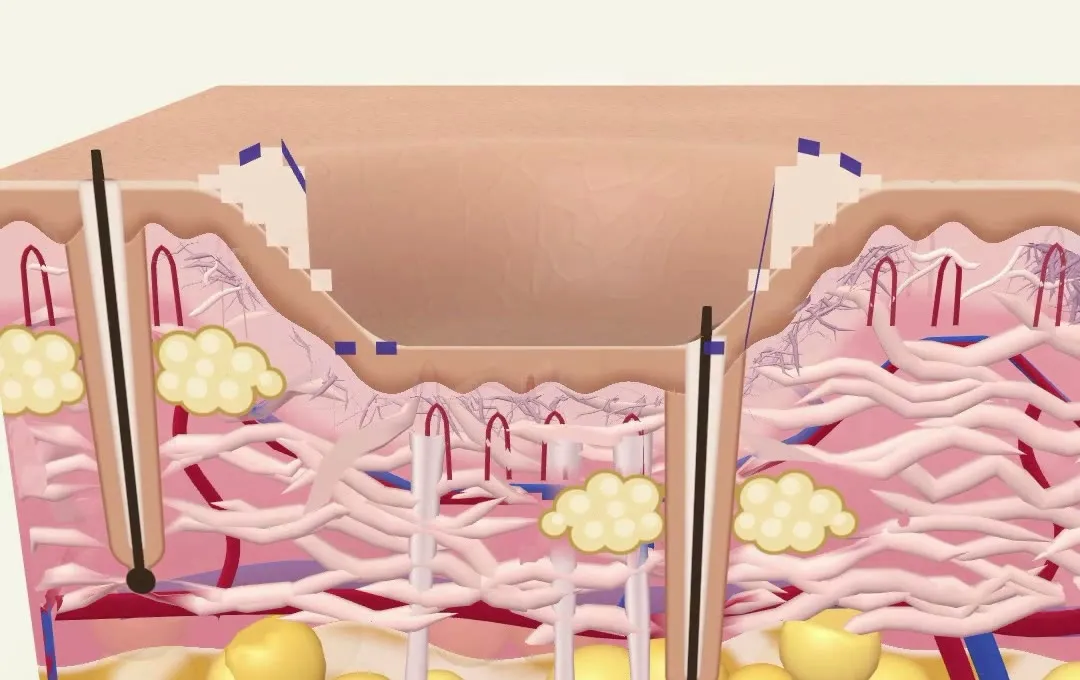
Lowering the rim reduces the height difference between the rim and the floor. Put simply, I adjust the edge from above and help the floor recover from below. I choose Erbium YAG because it removes skin in fine layers and generally leaves less heat behind than CO2, so the slope of the edge can be shaped precisely.
Step 3: cutting the bands with an 18G cannula
The first two steps only work on the upper skin. What really holds a deep boxcar scar down sits deeper: fibrous bands. I cut them with the largest cannula, 18G, and go back to any scar that still tethers. More in deep boxcar scar treatment.
Step 4: Fractional CO2 always comes last
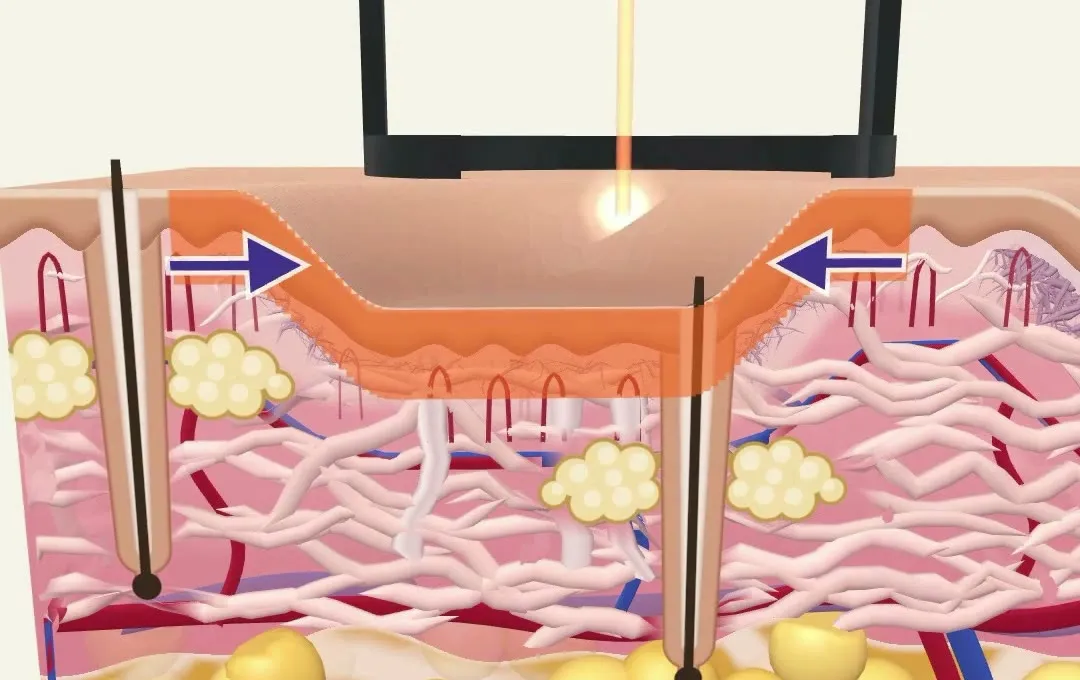
Unlike Erbium, CO2 puts a lot of heat into the skin. The heat makes collagen contract and the tissue draw together, so the skin around the scar tightens. With no bands pulling from below, the skin can contract fully. That is why CO2 is always my last step.
Should you worry about dark marks afterwards?
This time I raised the energy further, to help the scars fill faster. Stimulating the skin this strongly can leave temporary dark marks. There is no need to fear them: dark and red marks can be treated and fade on their own within 3–6 months. Making an acne scar shallower is much harder.
If you have deep boxcar scars, message us on LINE @clarityclinic with a photo and I will take a look. Watch the original clip on TikTok or Instagram, and see other treatment approaches on our results page.
Frequently asked questions
Q: Why shave the edge of a boxcar scar? A: Its edge is steep like a cliff. Even if the floor rises, the steep edge can remain. Shaving it into a slope reduces the height difference.
Q: Why Erbium YAG for the edge instead of CO2? A: Erbium YAG removes skin in fine layers and generally leaves less heat behind than CO2, so the slope can be shaped precisely.
Q: Why is CO2 the last step? A: CO2 heat makes collagen contract and tightens the skin around the scar. Cutting the bands first lets the skin contract fully, with nothing pulling it down.
Q: Can Pico laser or Microneedle RF reshape a deep boxcar scar? A: Both are non-ablative. They stimulate the skin but do not remove tissue, so they cannot change the scar’s shape.
References
- Jacob CI, Dover JS, Kaminer MS. Acne scarring: a classification system and review of treatment options. J Am Acad Dermatol. 2001. PubMed
- Lee JB, et al. Focal treatment of acne scars with trichloroacetic acid: chemical reconstruction of skin scars method. Dermatol Surg. 2002. PubMed
- Orentreich DS, Orentreich N. Subcutaneous incisionless (subcision) surgery for the correction of depressed scars and wrinkles. Dermatol Surg. 1995. PubMed
- Hession MT, Graber EM. Atrophic acne scarring: a review of treatment options. J Clin Aesthet Dermatol. 2015. PMC
Outcomes vary by individual; this article is educational, not a substitute for in-person medical assessment.
Read the full overview: Acne scar treatment: the complete guide