Deep Boxcar Scars: How I Treat Each Part in One Session
How Dr. Big treats deep boxcar scars: depth first, punch excision when too deep, otherwise TCA CROSS, Er:YAG, subcision and fractional CO2 in one session.
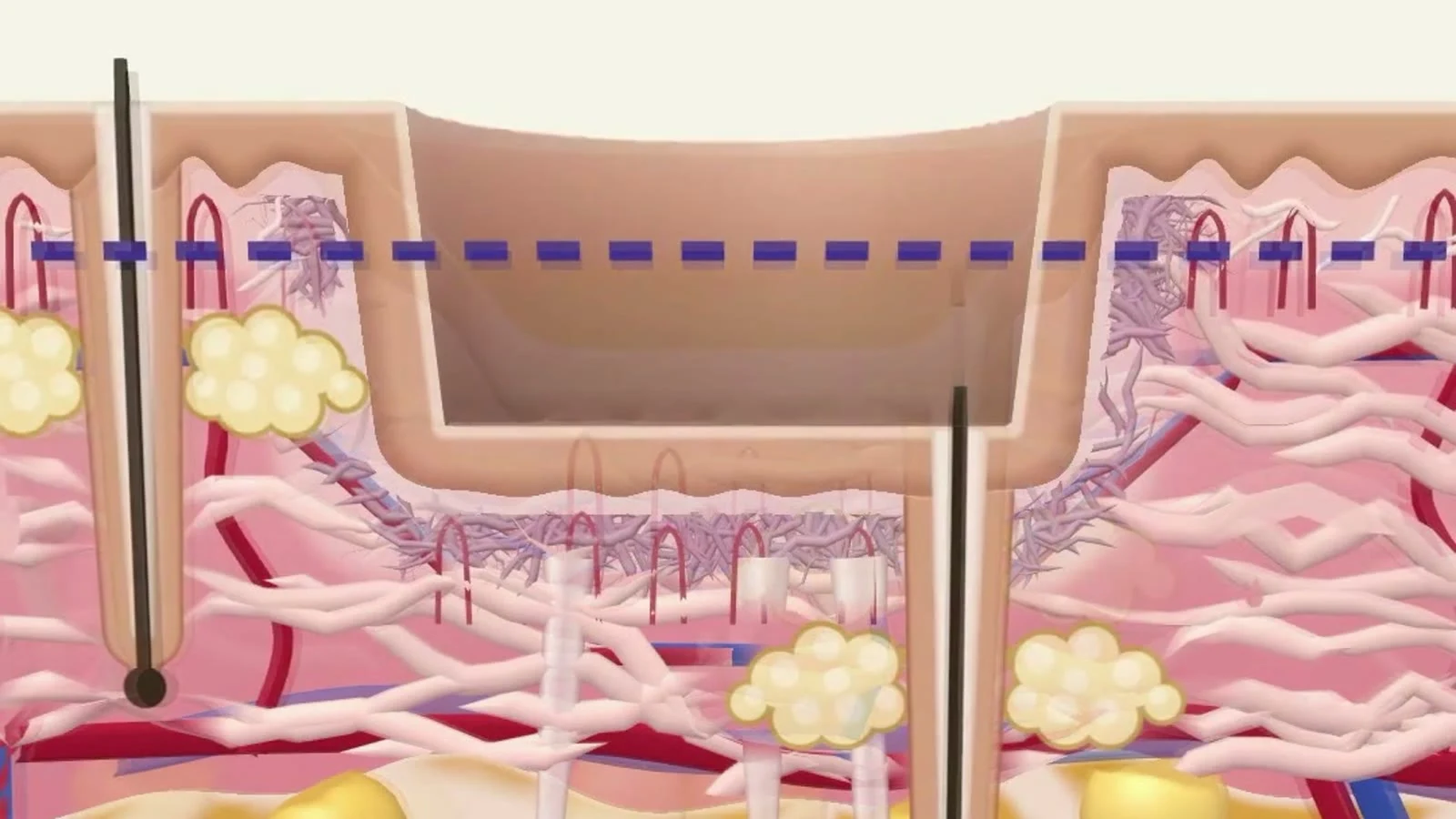
Quick answer: With a deep boxcar scar, I first check how deep it goes. If it is so deep that TCA or lasers cannot lift it, I do a punch excision, cutting the scar out and stitching it closed. If it is still at a depth that can be treated, I work on each part of the scar in the same session with TCA CROSS, Er:YAG, subcision and fractional CO2, repeat that over several sessions until the scars are shallower, and only then resurface the whole area.
Boxcar scars have sharp edges and flat floors. When light falls across them, the edge casts a clear shadow, and the deeper the scar, the darker the shadow. Many people have already had several laser sessions: their skin looks better overall, but the deep boxcar scars are still in the same place. In this article I explain how I plan scars like these and why each step comes in this order.
Why do I check the depth of a boxcar scar first?
Because depth decides which method can reach the floor of the scar. A very deep, narrow boxcar scar reaches down into the lower dermis, deeper than TCA or lasers can safely work. However many times it is treated, the floor will not come up.
For scars like this I do a punch excision: a round punch tool the size of the scar cuts out the scar with its floor and walls, and the wound is stitched closed. The scar becomes a fine stitch line that sits level with the skin. Boxcar scars that are deep but still within reach of TCA and lasers I do not cut out; I fix the structure of the scar instead.
If you are not sure whether your scars are boxcar, ice pick or rolling scars, read The 3 types of acne scars, and for how depth changes the plan, read Deep vs shallow acne scars.
How do I treat a boxcar scar that can still be lifted?
A deep boxcar scar has more than one problem. The floor sits low, the edge is sharp, and fibrous bands hold the floor down from below. One method cannot fix all of that, so I treat each part, in the same session.
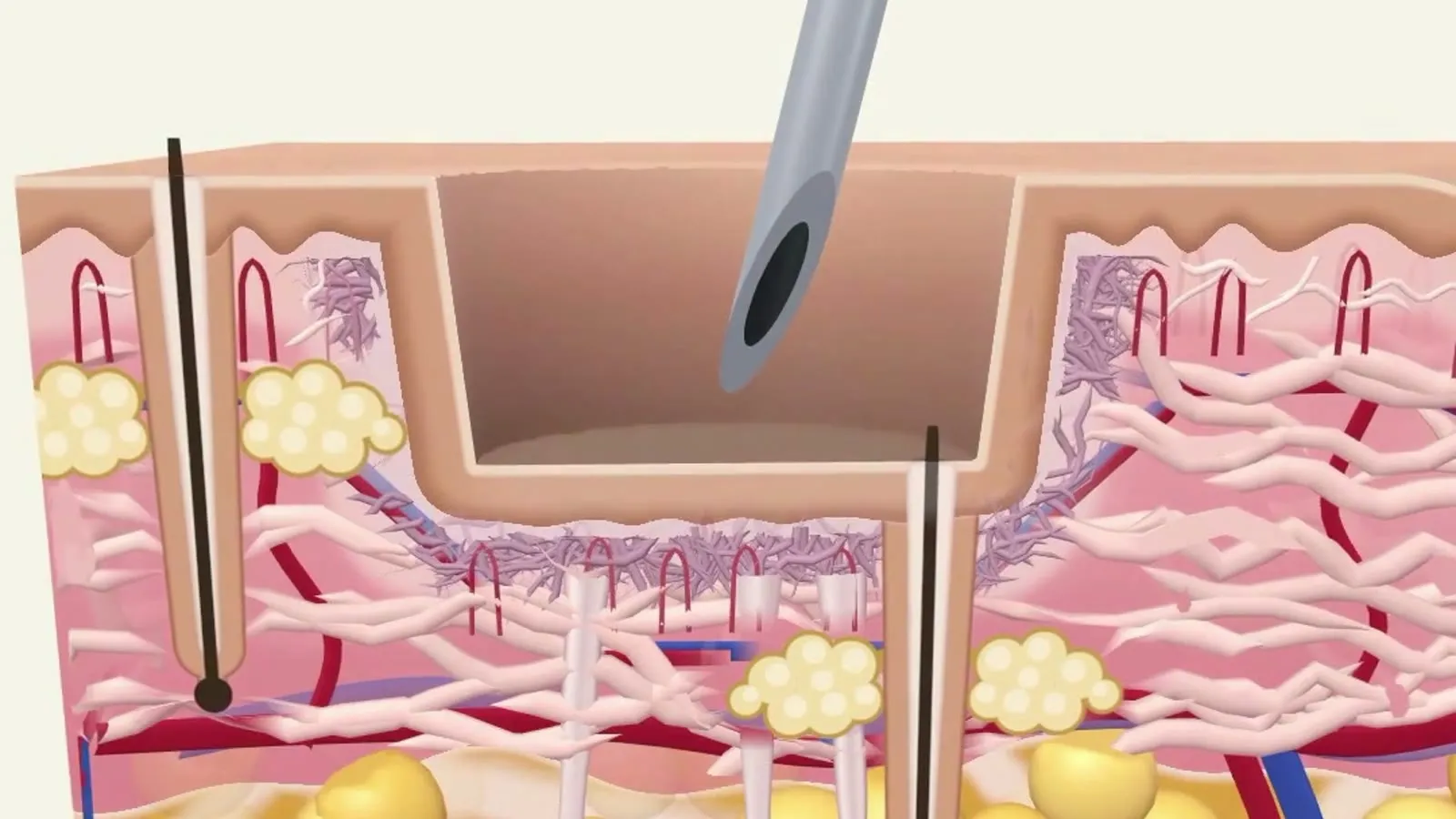
- TCA CROSS on the scar floor. I place concentrated acid only inside the scar so collagen slowly builds up from below and the floor becomes shallower bit by bit. Read more in TCA CROSS for acne scars.
- Er:YAG on the scar edge. The Er:YAG laser shaves the sharp edge into a gentle slope, so the shadow at the edge softens.
- Subcision to release the fibrous bands. I pass a needle or cannula under the scar to release the bands holding the floor down, so the floor is free to rise. Read more in Subcision explained.
- Fractional CO2 to finish. The laser makes tiny columns across the area; the heat tightens the skin and builds new collagen.
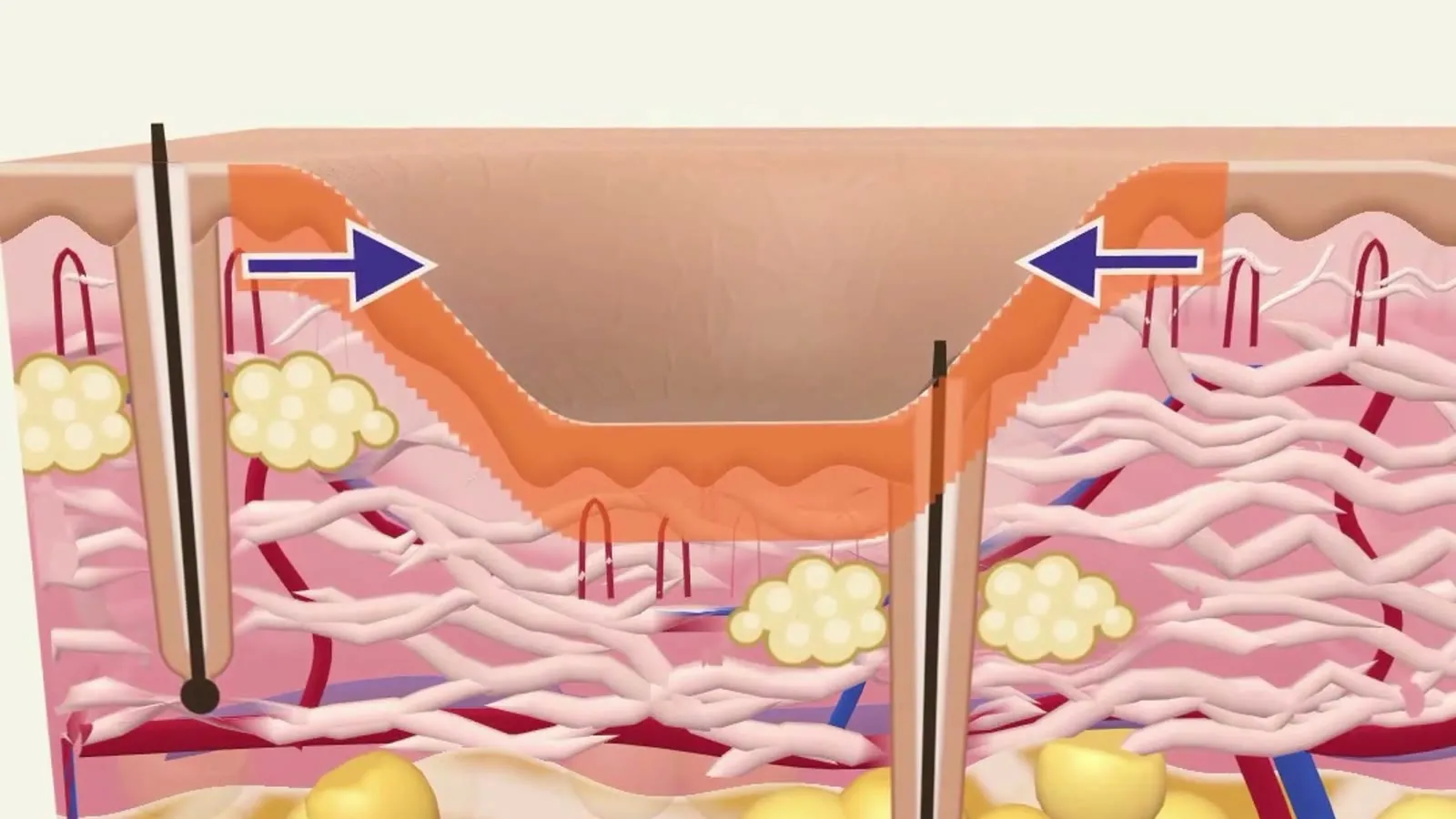
Why release the fibrous bands before CO2?
Because if the bands still hold the floor down, the skin cannot tighten fully. Once the bands are released, the skin around the scar can tighten as much as possible, so the scar’s structure can change as much as possible in that session. This order is why I do every step on the same day rather than one method at a time.
I explained why I combine several methods like this in Deep boxcar and ice pick scars: why I went back to old school, and how the laser types differ in Acne scar laser types.
How many sessions, and when do I resurface the whole area?
I repeat sessions until every boxcar scar is shallower than the mid dermis. The number of sessions is different for each person, depending on how deep the deepest scar on the face is.
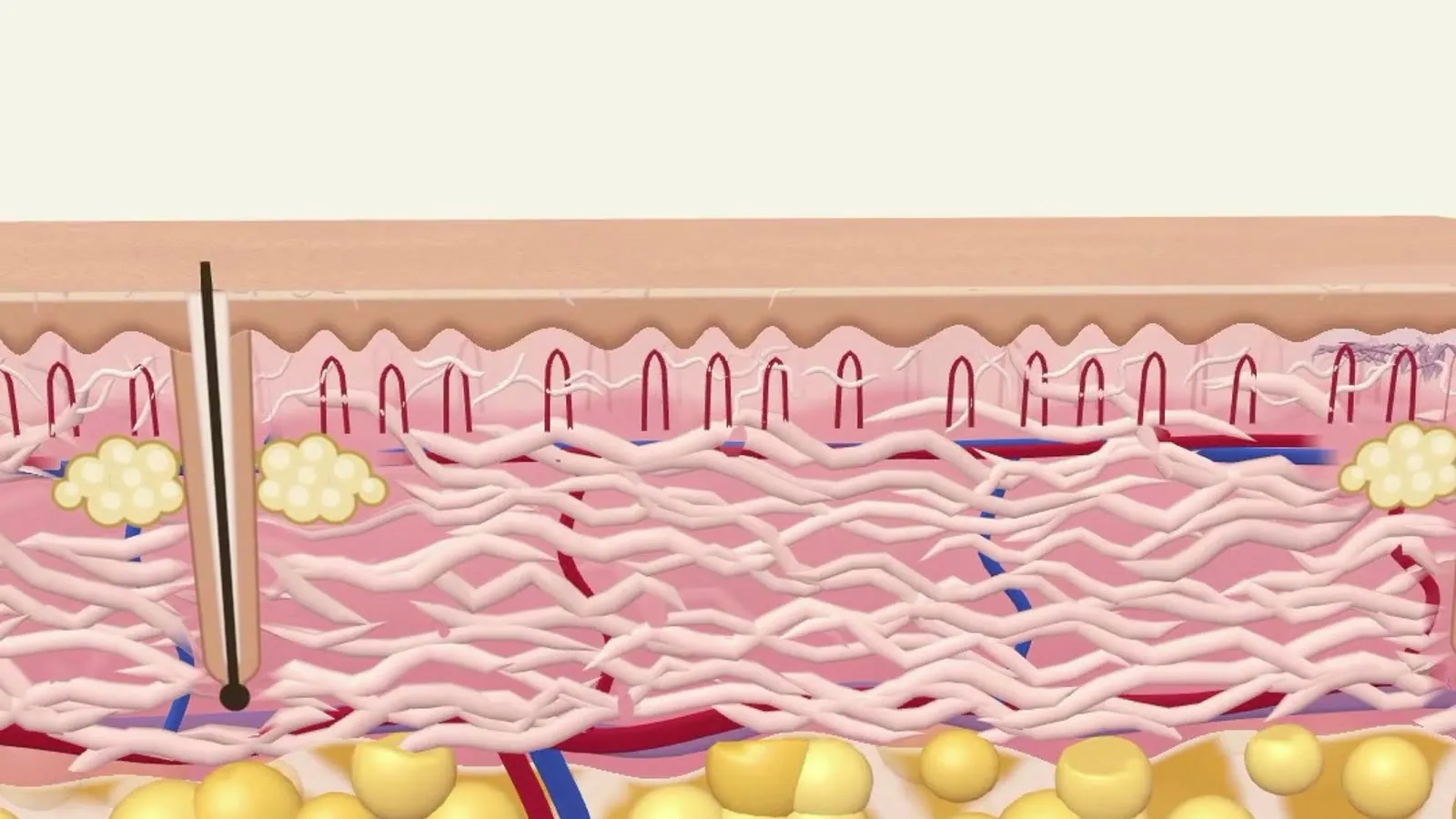
Once the scars reach that level, I resurface the whole area so the skin becomes smoother and even as one surface. I wait for the scars to become shallower first because if the whole face is resurfaced while the scars are still deep, resurfacing cannot reach the scar floors and the scars stay.
What are the risks after treatment?
You should know beforehand that this approach has risks. After treatment the skin shows temporary marks for a while, and some people may develop dark marks, especially people with darker skin. During that time you need to avoid the sun, use sunscreen and care for your skin as I advise. Most dark marks fade gradually.
For skin care during this time, read Sunscreen after acne scar treatment, and for how dark marks differ from scars, read Post-acne dark marks vs acne scars.
Results are not the same for everyone; they depend on how deep the scars are, skin colour and aftercare. You can see examples of treatment approaches on the results page.
If you are not sure how deep your boxcar scars are, message us on LINE @clarityclinic and send photos, and I will help assess them. You can watch the original clip on TikTok and Instagram
FAQ
Q: Can deep boxcar scars be treated with laser alone? A: If a scar is very deep, the laser cannot reach its floor, and I consider punch excision. For scars that can still be lifted, I combine lasers with TCA CROSS and subcision, because each method fixes a different part of the scar.
Q: What is punch excision? A: A round punch tool the size of the scar cuts out the scar with its floor and walls, and the wound is stitched closed. It is used for deep, narrow boxcar scars and ice pick scars with deep floors.
Q: Why not resurface the whole face from the first session? A: If the scars are still deeper than the mid dermis, resurfacing cannot reach their floors. I make the scars shallower first, then resurface the whole area.
Q: Will I get dark marks after treatment? A: Some people may, especially people with darker skin. Avoid the sun and follow my aftercare advice; most dark marks fade gradually.
References
Outcomes vary by individual; this article is educational, not a substitute for in-person medical assessment.
- Jacob CI, Dover JS, Kaminer MS. Acne scarring: a classification system and review of treatment options. J Am Acad Dermatol. 2001. PubMed
- Lee JB, et al. Focal treatment of acne scars with trichloroacetic acid: chemical reconstruction of skin scars method. Dermatol Surg. 2002. PubMed
- Orentreich DS, Orentreich N. Subcutaneous incisionless (subcision) surgery for the correction of depressed scars and wrinkles. Dermatol Surg. 1995. PubMed
- Fractional laser study in Thai phototype IV skin and dark marks after treatment. PubMed
Read the full overview: Acne scar treatment: the complete guide