Microneedle RF and Acne Scars That Stay Deep When You Pull the Cheek
If an acne scar stays deep when you pull the cheek, the problem is often its edge. Why microneedle RF alone may not be enough, and where Er:YAG and CO2 help.
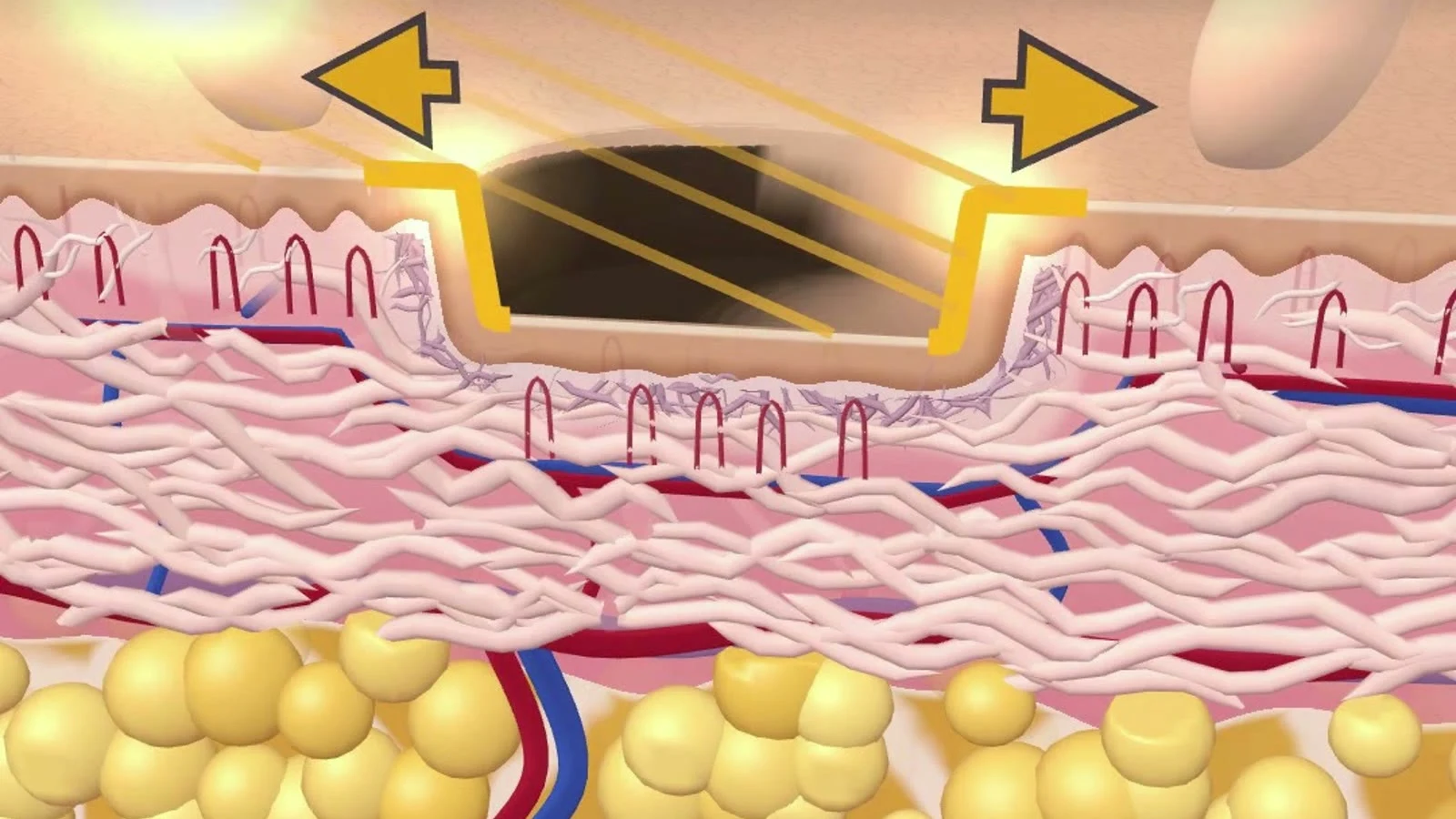
Quick answer: If you pull your cheek and the scar does not get shallower, it is often a boxcar scar with a sharp edge, so the main problem is the edge. Microneedle RF can build collagen and add volume underneath, but it does not change how steep the edge is. I use an ablative laser such as Er:YAG or CO2 to smooth the rim of the scar as well.
Many patients ask me why, after microneedle RF, some scars still look obvious. The answer is usually not the number of sessions or the machine. It is the shape of the scar, because each device works at a different position.
This article expands on my clip about what pulling the cheek can tell us, why the edge of a scar matters, and how to plan treatment when a scar does not get shallower on pulling.
What does it tell you if the scar gets shallower when you pull the cheek?
A simple way to try it: stand in a mirror with good light and gently pull the skin beside the scar outward with your fingers.
- It gets shallower. This is most often a rolling scar. These scars are wide with sloping edges, and dermatology references describe their edges as flattening out when the skin is stretched.
- It stays the same. This is usually a deep boxcar scar with a sharp edge, steep walls and a flat floor.
This is only a first observation, not a diagnosis. One area of skin often has several scar types mixed together, and a narrow boxcar scar is hard to tell apart from an ice pick scar, even for doctors, who need to look carefully. If you want to get to know each scar shape first, read types of acne scars.
Why does the edge make a scar look obvious?
A boxcar scar is like a box pressed into the skin. The floor is flat and the walls stand steep like a cliff, so the corner between normal skin and the wall is angular.
Think of a cliff when light comes from the side. A steep edge casts a shadow along the rim. Your face works the same way: when light hits it, the shadow at the edge makes the scar stand out, even if the scar is not very deep.
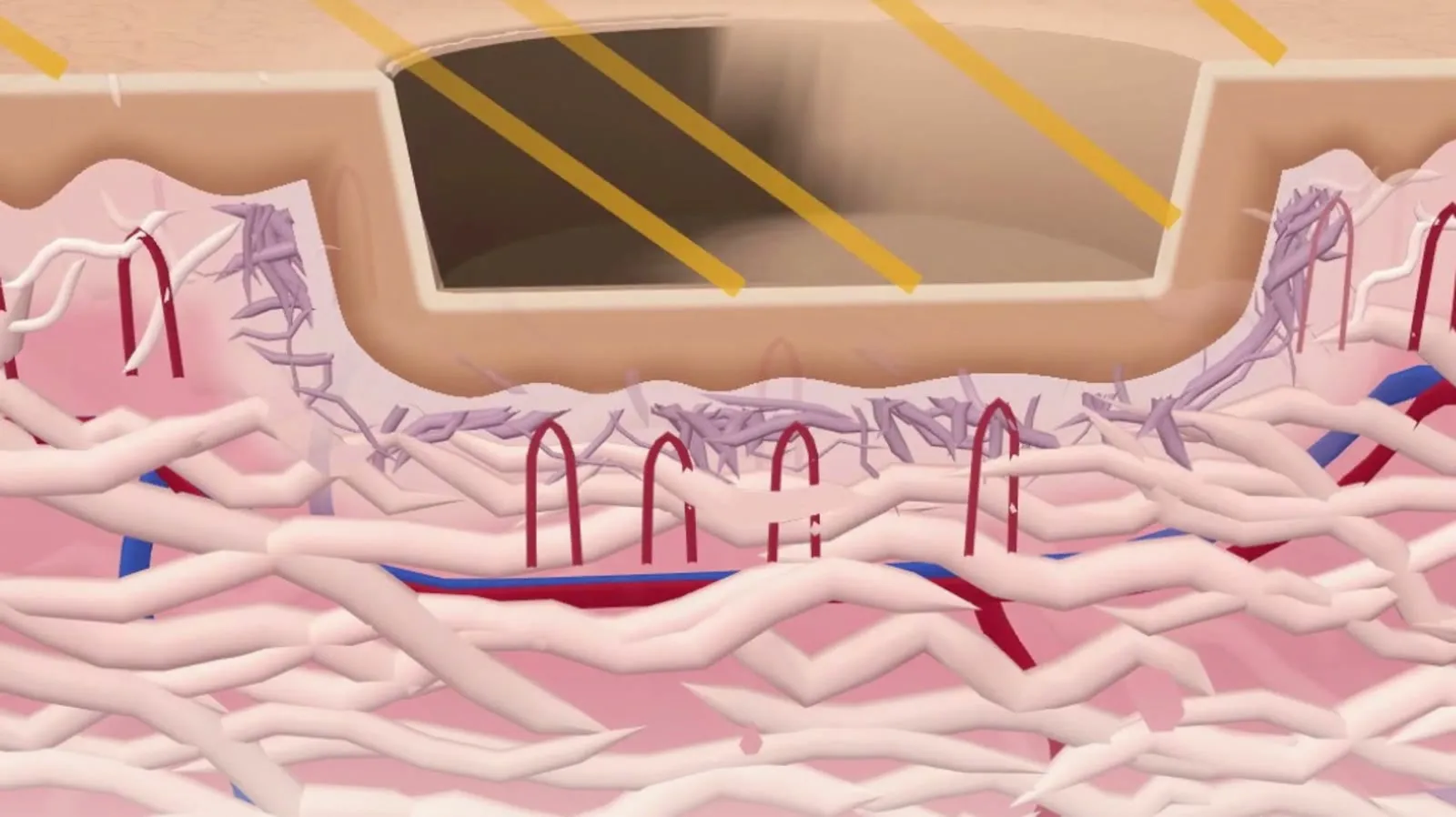
This shadow is an explanation of light and shape that I use to help you picture it. It is not a value that research has measured directly for boxcar scars. It is the reason I never look only at how deep a scar is. I always look at how steep the edge is too.
What can microneedle RF do for a scar, and what can’t it do?
Microneedle RF uses many tiny needles that go under the skin and release radiofrequency (RF) energy at a set depth. The heat forms small points in the dermis, and the top of the skin is hardly removed at all.
Over about 10 weeks to 3 months, these heated points are gradually replaced by new collagen and elastin, so the dermis becomes thicker. It is like adding volume from underneath, and that is the strength of microneedle RF.
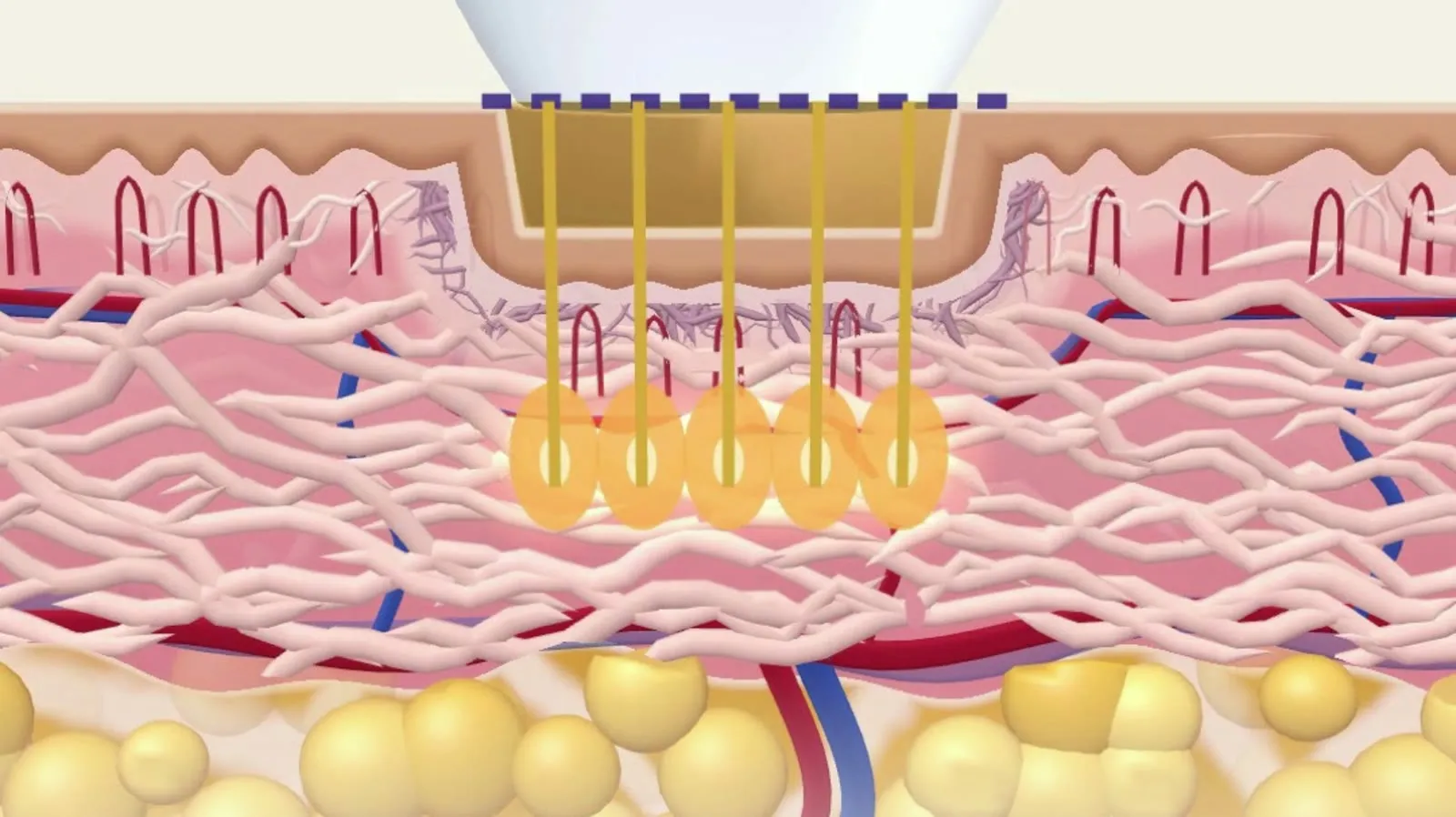
There are two things microneedle RF does not do.
- It does not change how steep the edge is. The energy stays under the skin, so the angular corner at the rim of the scar is still there.
- It does not cut fibrous bands. Releasing the bands that pull on a scar is the job of subcision. A split-face study found that microneedle RF with subcision gave better results than microneedle RF alone.
So when the remaining scars have a problem at the edge, adding more energy or more needles may not be aimed at the right spot.
How do Er:YAG and CO2 help with the edge of a scar?
An ablative laser is a laser that actually removes the top layers of tissue. I use it to smooth around the rim of the scar, one thin layer at a time. The target is the high side of the step, not the floor of the scar. As the steep edge slowly slopes down, there is less shadow and the scar looks shallower.
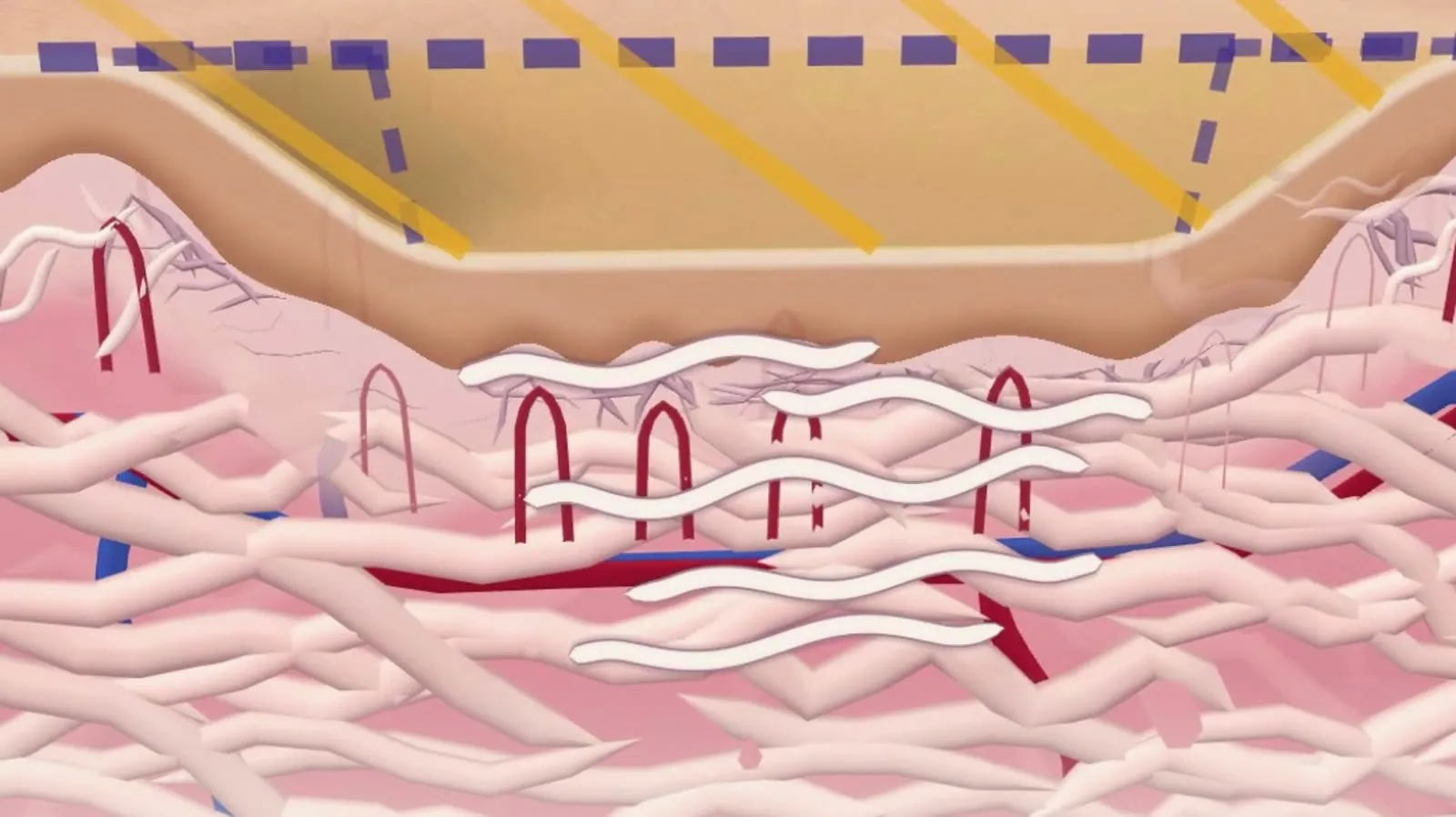
Er:YAG, at a wavelength of 2,940 nm, is almost completely absorbed by water in the tissue at the very top layer. Each pulse removes a very thin layer and leaves little residual heat, which suits edge work that has to be controlled a little at a time. Using Er:YAG to shape the edges of shallow boxcar scars has been published since the 2001 acne scar classification paper, and there are reports in Fitzpatrick IV–V skin as well.
CO2, at 10,600 nm, is also absorbed by water, but it leaves more heat around each point. The collagen there tightens slightly and keeps remodeling for several months. There are also reports of CO2 used directly on the shoulder of a scar.
Neither one is better in every case. I choose according to each person’s scar type, skin tone and risks. For more on how the machines differ, read Types of lasers for acne scars and Microneedle RF vs ablative laser.
Why combine microneedle RF with a laser that smooths the edge?
One scar can have problems at several layers. A laser that smooths the edge does not lift the floor, and microneedle RF does not reduce the steepness of the edge. Each works at a different position.
- Underneath: microneedle RF fills in tissue and helps build collagen.
- On top: an ablative laser smooths the edge so it slopes down gradually.
- If there are fibrous bands pulling: subcision releases them.
- If ice pick scars are mixed in: TCA CROSS is another option.
Used together to fit the shape of the scars, treatment can improve scars more completely than one device. But I have to be honest that treating scars makes them shallower. It does not make the skin perfectly smooth, and deep boxcar scars usually respond less than shallow ones.
What should you expect after the edges are smoothed?
Smoothing with an ablative laser is a deliberate shallow wound, so you should know what it involves before you decide.
- After Er:YAG edge work, brown scabs the size of each laser point stay for about 7 days. Do not pick them.
- Thai skin can develop temporary dark marks after lasers, so use sunscreen consistently.
- Changes take months. You will not see all of it straight away.
If you would like to see real examples before you decide, look at the results page.
Frequently asked questions
Q: If the scar gets shallower when I pull my cheek, is microneedle RF alone enough? A: We cannot conclude that yet. A scar that gets shallower on pulling is often a rolling scar, which may have fibrous bands pulling on it, and microneedle RF does not cut fibrous bands. I need to look at the actual scar first.
Q: If a scar does not get shallower at all when pulled, is it definitely a boxcar scar? A: Not definitely. It is often a boxcar scar with a sharp edge, but a narrow boxcar scar is hard to tell apart from an ice pick scar. Pulling the cheek is only a first observation.
Q: Why use the laser on the edge and not down at the floor of the scar? A: The edge is steep because the skin around the rim sits higher than the floor. Taking off the high part one thin layer at a time makes the edge slope down gradually. Firing down at the floor would not give that effect.
Q: Which is better for smoothing the edge, Er:YAG or CO2? A: There is no single answer for everyone. Er:YAG removes tissue in thin layers and leaves little heat, while CO2 leaves more heat and can tighten collagen. I choose according to each person’s scar shape and skin.
Try the cheek pull, then talk to me
Try pulling your own cheek. If you are not sure whether the scar gets shallower, or you want to know which plan suits your scars, message us on LINE @clarityclinic any time. You can also read about how we assess acne scars in Bangkok.
You can watch the original clip for this article on TikTok and Instagram.
References
Outcomes vary by individual; this article is educational, not a substitute for in-person medical assessment.
- Jacob CI, Dover JS, Kaminer MS. Acne scarring: a classification system and review of treatment options. J Am Acad Dermatol. 2001. PubMed
- DermNet. Acne scarring. DermNet
- Tan MG, Jo CE, Chapas A, Khetarpal S, Dover JS. Radiofrequency microneedling: a comprehensive and critical review. Dermatol Surg. 2021. PubMed
- Faghihi G, Poostiyan N, Asilian A, et al. Efficacy of fractionated microneedle radiofrequency with and without adding subcision for the treatment of atrophic facial acne scars: a randomized split-face clinical study. J Cosmet Dermatol. 2017. PubMed
- Chathra N, Mysore V. Resurfacing of facial acne scars with a new variable-pulsed Er:YAG laser in Fitzpatrick skin types IV and V. J Cutan Aesthet Surg. 2018. PMC
- Koo SH, Yoon ES, Ahn DS, Park SH. Laser punch-out for acne scars. Aesthetic Plast Surg. 2001. PubMed
- Manuskiatti W, et al. Efficacy and safety of a carbon-dioxide ablative fractional resurfacing device for treatment of atrophic acne scars in Asians. J Am Acad Dermatol. 2010. PubMed
Read the full overview: Acne scar treatment: the complete guide