Does Deeper Microneedle RF Make Acne Scars Worse? Which Scars Suit It
Microneedle RF set too deep can reach the fat layer and make acne scars worse. I explain what the right depth is and which scars suit this device.
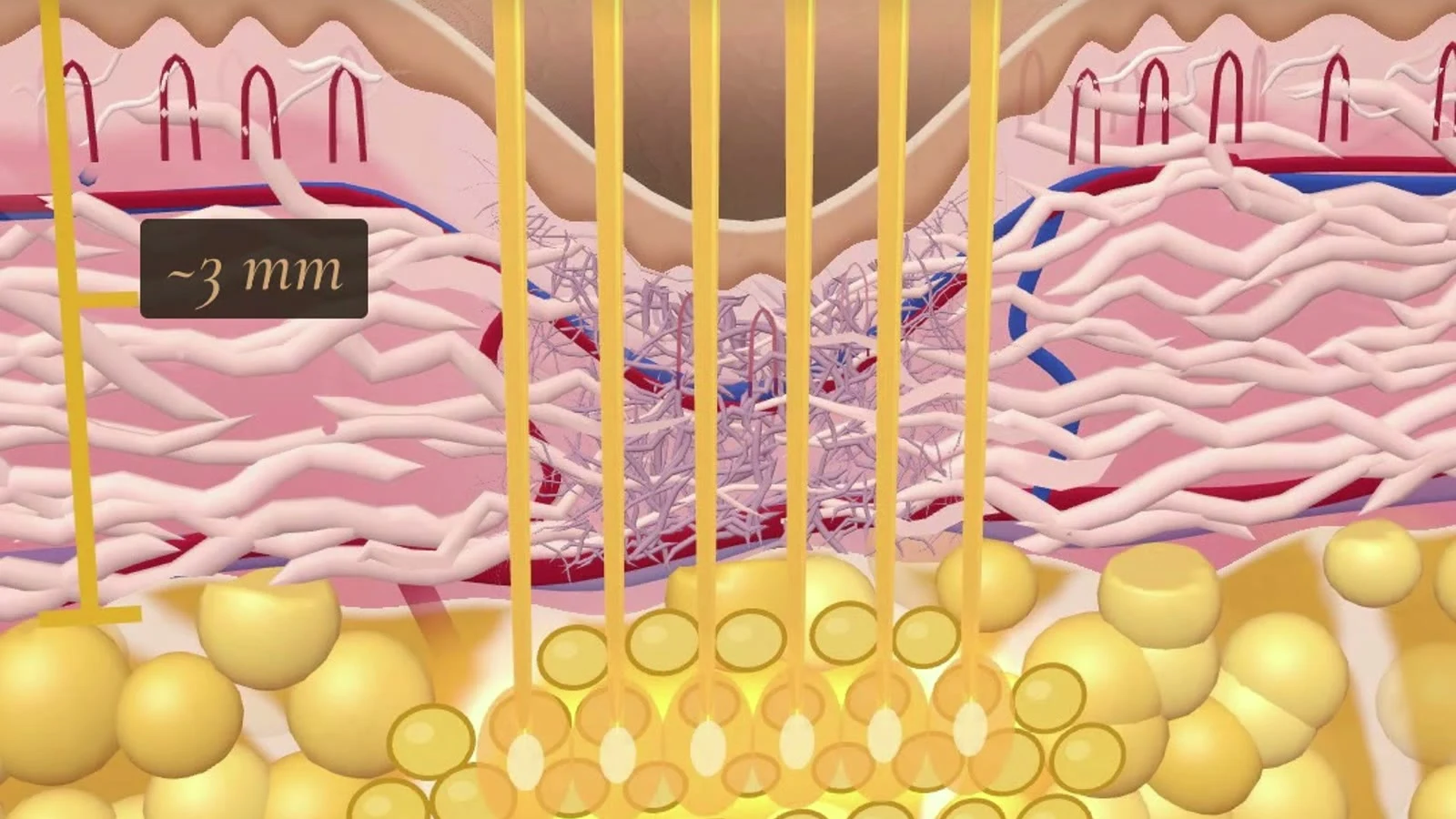
Quick answer: With microneedle RF, deeper is not better. If the needle goes so deep that the heat damages the fat layer, the fat there may shrink, the skin above sinks with it, and the scar can end up worse than before. The scars that suit this device are rolling scars with no fibrous bands pulling on them, with the depth set to reach the dermis under the scar but not the fat layer.
Many people think a longer needle sends heat deeper and so makes the scar shallower. In reality, depth is a setting that has to fit each person’s skin and scar. It is not a number to keep turning up. This article expands on my clip about why going too deep is risky, which scars should get this device, and what I look at when I set it.
Watch this clip on TikTok or Instagram
Why can scars get worse if microneedle RF goes too deep?
Skin is arranged in layers. Under the dermis is the fat layer, which helps hold up the skin above it. On the cheek, the fat layer sits about 3 millimeters down, but this is not the same for everyone.
The problem happens in this order:
- The needle goes deep enough that heat reaches the fat layer.
- The heat damages the fat there.
- The fat in that spot may shrink.
- The skin above, with nothing holding it up, sinks down with it.
The result is that a scar you meant to make shallower can end up worse than before. This is why I do not treat the deepest setting as the strongest treatment.
Devices of this type can set the needle depth from about 0.5 to 3.5 millimeters, so the range the machine can reach goes past the fat layer in some people. That the machine can go that deep does not mean every scar should be treated at that depth.
Which scars suit microneedle RF?
Rolling scars that no longer have fibrous bands pulling on them.
These scars are wide with sloping, not sharp, edges. The main problem is not the shadow at the edge. It is the tissue underneath that has been lost, which is what microneedle RF does well: it stimulates collagen in the dermis under the scar so that it fills out.
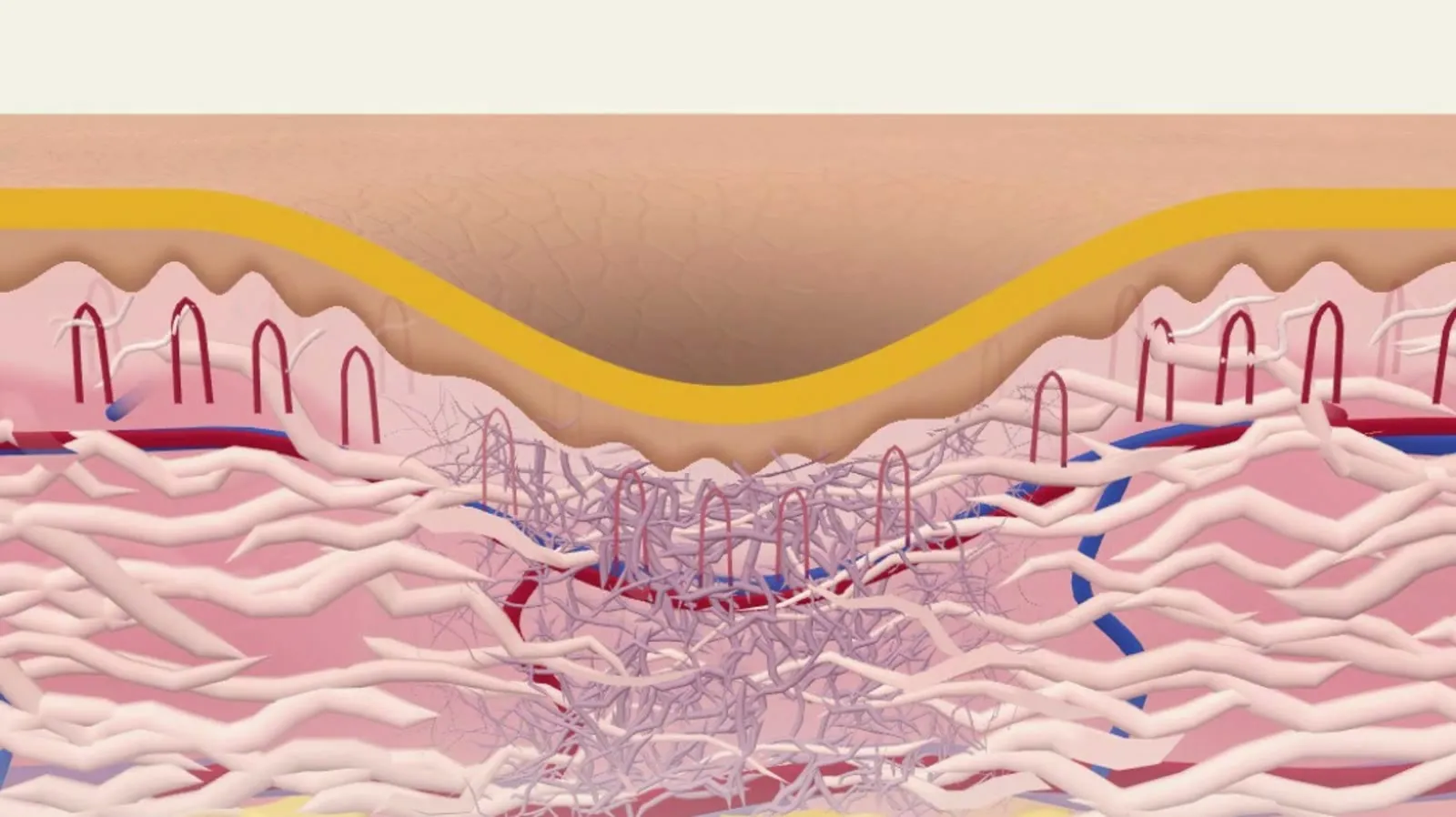
When the needle reaches the dermis and releases radiofrequency energy, small points of heat form under the skin. These points are replaced by new tissue over about 10 weeks to 3 months, so the change is gradual. You will not see all of it straight after treatment.
If you want to compare the shapes of each scar type first, read types of acne scars.
If a scar still has fibrous bands, what should be done first?
If a scar still has fibrous bands pulling on it, the bands need to be cut first. Fibrous bands are fibers that anchor the dermis down to the layer under the skin, and there is no tissue-level evidence yet that microneedle RF cuts or releases them. The method that releases them directly is subcision.
A split-face study found that the side treated with subcision plus microneedle RF improved more than the side treated with microneedle RF alone. For why I do not treat with a single method, read Is subcision alone enough?
You have had many sessions and the scars are not shallower. Is it about depth?
It may have nothing to do with depth. Sometimes the scar is simply not held back by a problem this device can fix, such as a sharp edge or fibrous bands that are still there. Going deeper is not the answer, and it may add risk to the fat layer.
Before turning anything up, go back and look at what the scar is held back by. The details are in why scars are not shallower after many microneedle RF sessions. If you want to compare it with a laser that works on the edge of a scar, read How microneedle RF and ablative laser differ.
What is the right depth, and what do I adjust it by?
My rule has two sides that have to be met together.
- Deep enough to stimulate the dermis under the scar.
- Not so deep that it damages the fat layer.
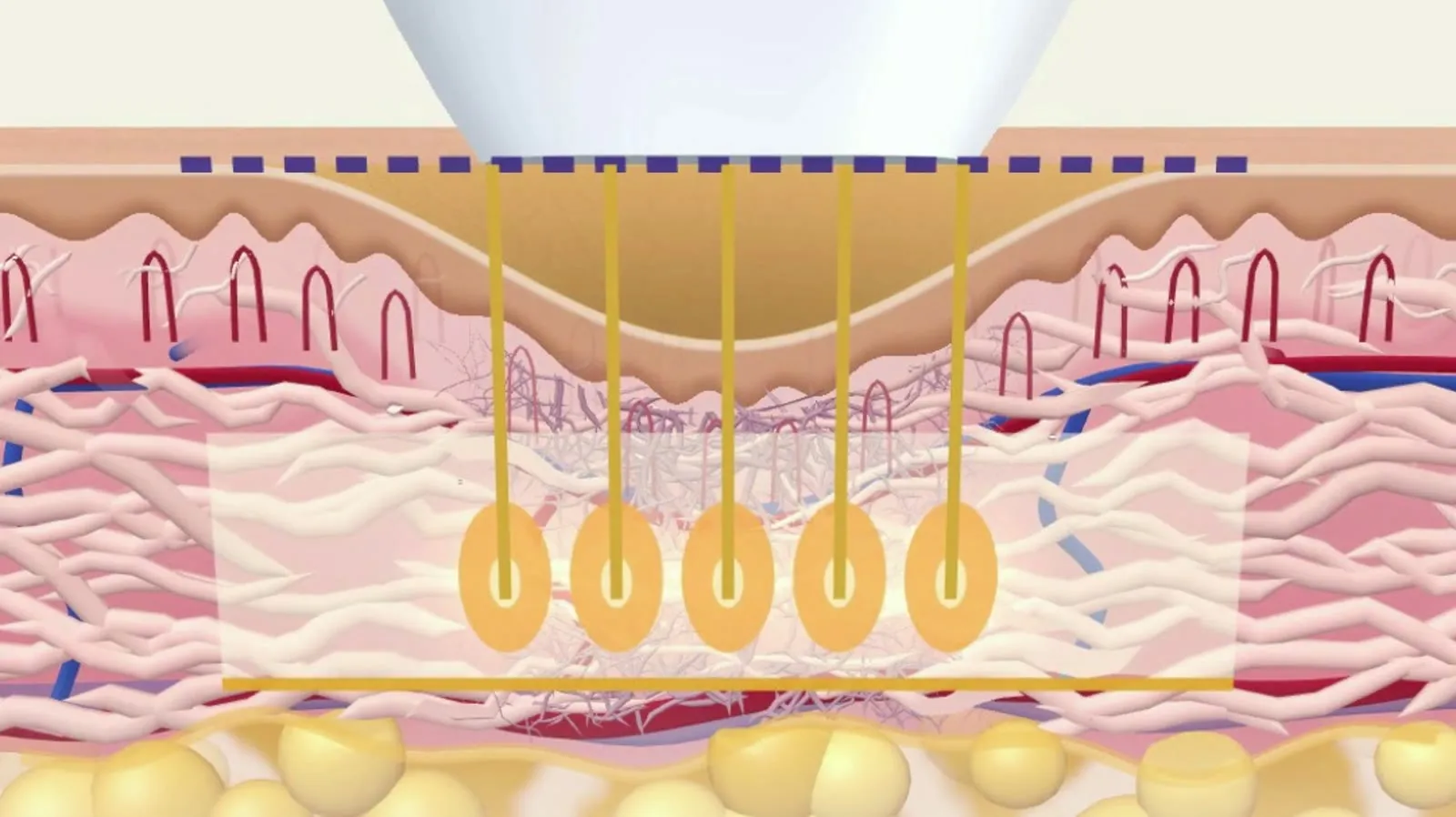
There is no single number that works for everyone, because the depth of the fat layer differs from person to person. So I adjust 3 things to fit each person’s skin.
- Technique: how to fire so that it matches the shape of the scar.
- Energy: the right amount of energy makes the skin build collagen, which adds volume so the scar fills out.
- Depth: deep enough to reach the target, but not past it into the fat layer.
In some spots I also need to stack passes at several depths: going deep first, then coming up to a shallower level, so the heat points are spread across several layers of the dermis.
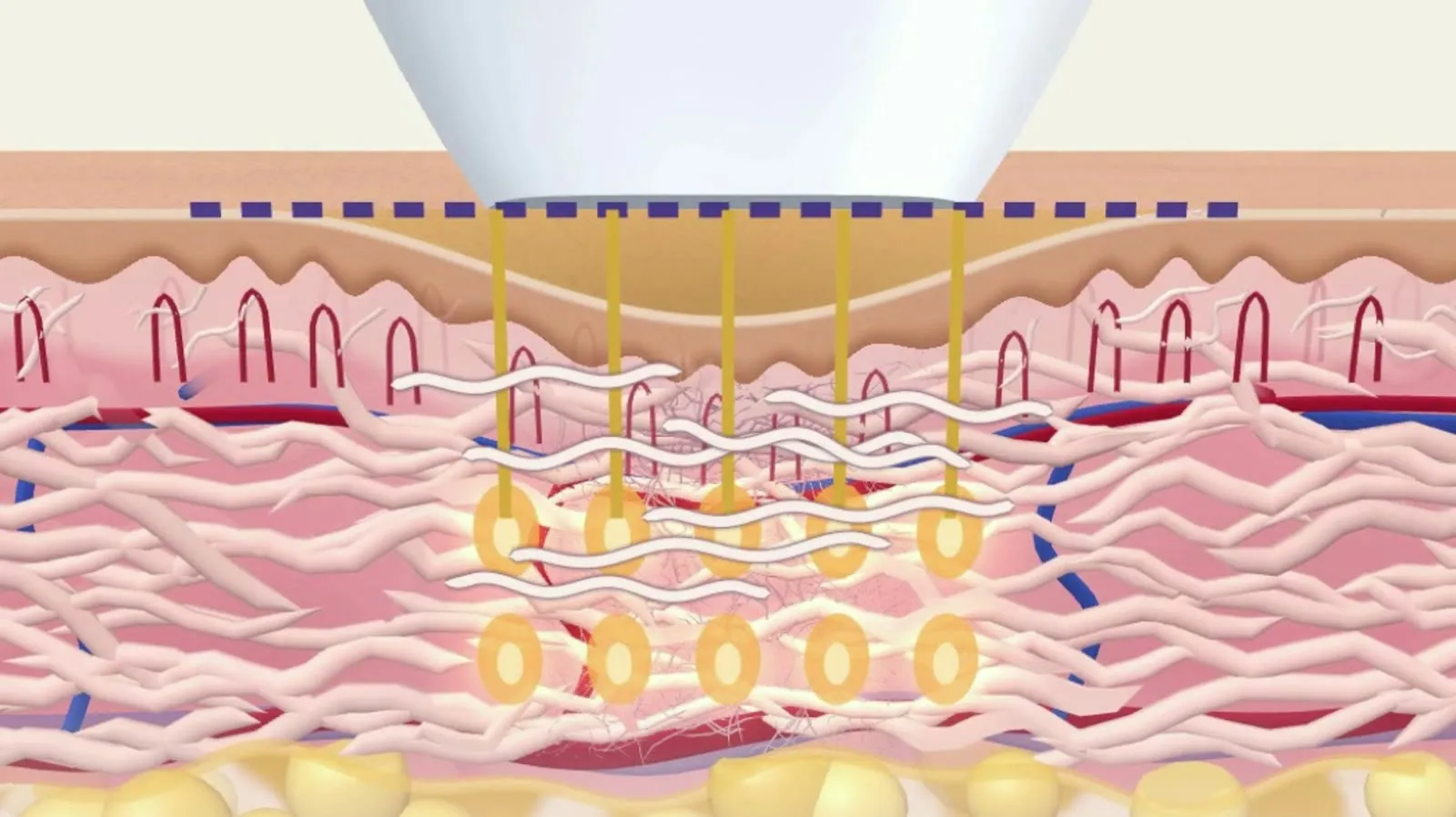
Only when it is set to fit the scar like this does the result come out worthwhile. If you want to see examples of real treatment, look at the results page.
Frequently asked questions
Q: Is deeper microneedle RF always better? A: No. If it goes so deep that the heat damages the fat layer, the fat may shrink and the scar can get worse. The depth has to fit each person’s skin.
Q: How deep is the fat layer on the cheek? A: About 3 millimeters, but it differs from person to person, so one number cannot be used for everyone.
Q: Which scars suit microneedle RF? A: Rolling scars with no fibrous bands pulling on them. The edge is not sharp, and the main problem is the tissue lost underneath, which matches stimulating collagen in the dermis.
Q: Can a rolling scar that still has fibrous bands go straight to microneedle RF? A: I cut the bands first, because there is no tissue-level evidence yet that microneedle RF releases them. A doctor should examine the scar before planning.
Want to know if your scars suit this device?
If you are not sure what type of scar you have, or you have had treatment and it has not improved, message us on LINE @clarityclinic and send me photos in normal light so I can take a look.
References
Outcomes vary by individual; this article is educational, not a substitute for in-person medical assessment.
- Jacob CI, Dover JS, Kaminer MS. Acne scarring: a classification system and review of treatment options. J Am Acad Dermatol. 2001. PubMed
- Tan MG, Jo CE, Chapas A, Khetarpal S, Dover JS. Radiofrequency microneedling: a comprehensive and critical review. Dermatol Surg. 2021. PubMed
- Faghihi G, Poostiyan N, Asilian A, et al. Efficacy of fractionated microneedle radiofrequency with and without adding subcision for the treatment of atrophic facial acne scars: a randomized split-face clinical study. J Cosmet Dermatol. 2017. PubMed
- Review of radiofrequency for acne scars. PMC
- Published multi-depth microneedle RF protocol. PMC
Read the full overview: Acne scar treatment: the complete guide