Why Do Acne Scars Look Worse With Age?
Why do old acne scars look deeper as you age? Dr. Big explains how collagen and cheek fat under a scar change, and what restores the support.
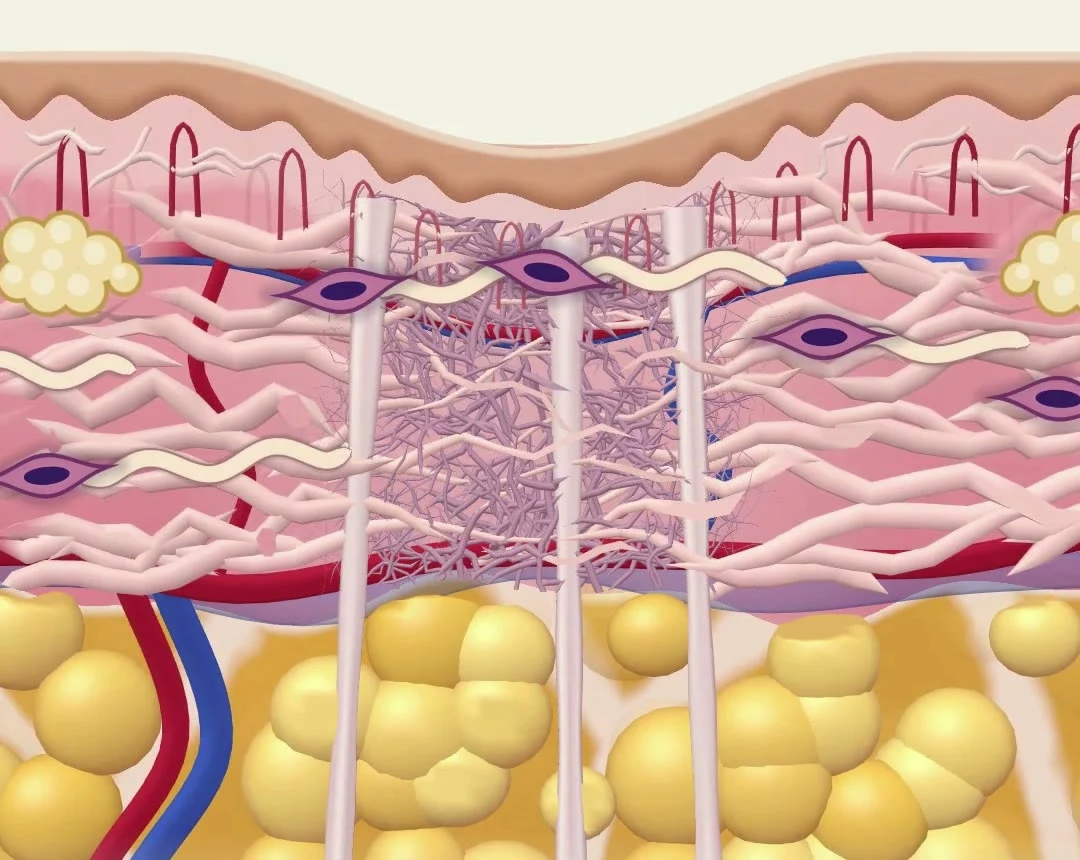
Quick answer: Old acne scars really can look deeper as you age, because two layers under the scar change. The first is the dermis: after about 30, skin collagen falls every year, the skin thins and the scar floor sinks with it. The second is the fat under the cheek, which shrinks, so the skin above loses its support. Rolling scars, held down by fibrous bands, get pulled further in. What helps is giving back that support from below, with a biostimulator and filler.
Many patients tell me they have had no new acne at all, yet their scars look deeper than in their mid-twenties. You are not imagining it. In this article I explain what changes under the scar, and what can help.
Layer one: collagen in the dermis falls every year
The dermis contains cells called fibroblasts, which make collagen, the framework that keeps skin thick and firm. After about 30, the amount of collagen in the skin drops each year, and older fibroblasts also make less of it. The dermis slowly gets thinner.
A scar floor that used to be held up by collagen now sits lower. The scar is the same, but the shadow inside it is stronger.
Layer two: cheek fat shrinks and the skin loses support
Under the dermis is the fat layer. With age, some of the fat compartments in the cheek shrink and shift downward, so the skin above has less to rest on.
Rolling scars are hit hardest, because fibrous bands tie the skin to the layers below. When the layer below sinks, those bands pull the skin down with it, and the scar looks wider and deeper. You can read how the scar types differ in acne scar types.
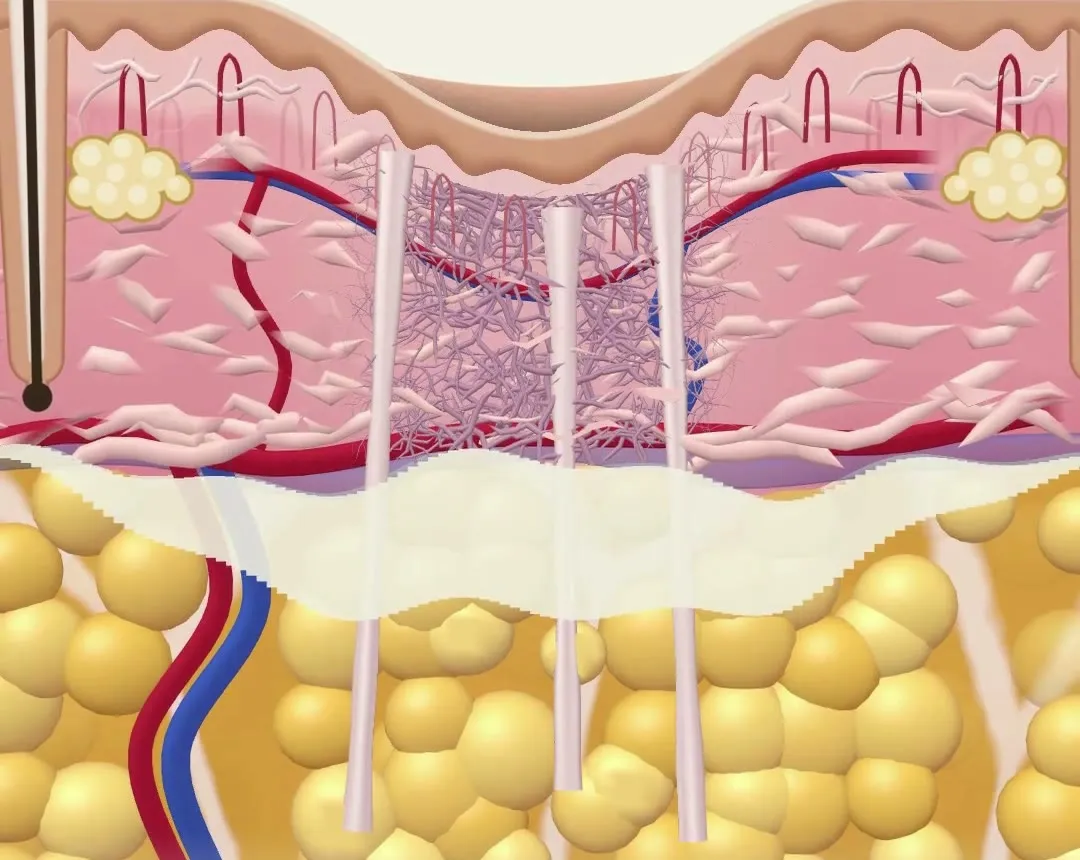
This is a problem of volume underneath, not only of the skin surface. More on these two dimensions in acne scars: texture vs volume.
What can give the support back?
If the problem is lost support underneath, the fix is to put support back. I use two main tools.
The first is a biostimulator, injected under the scar to prompt fibroblasts to make new collagen. Collagen slowly returns and the tissue under the scar gradually thickens. Read more in collagen stimulator injections.
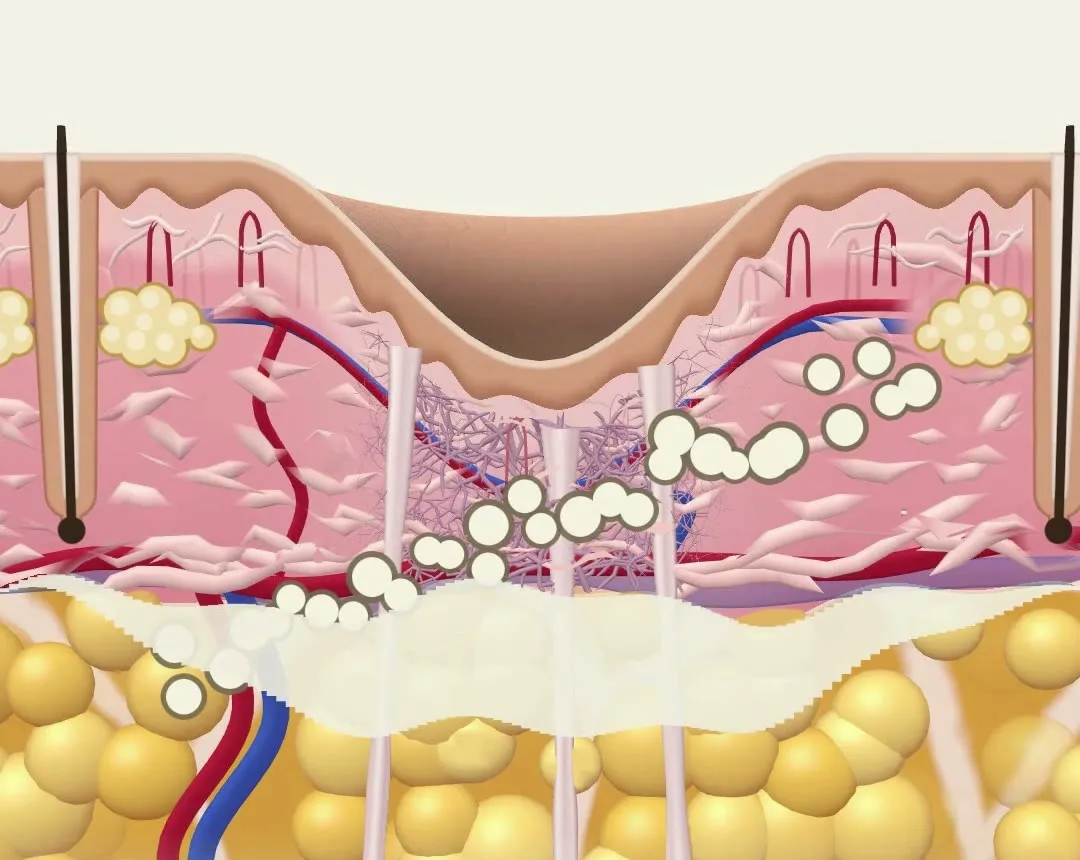
The second is filler, placed right where the volume has gone, to lift the skin back up at that exact spot. In rolling scars held by fibrous bands, I usually release the bands with subcision as well. See filler vs subcision for acne scars.
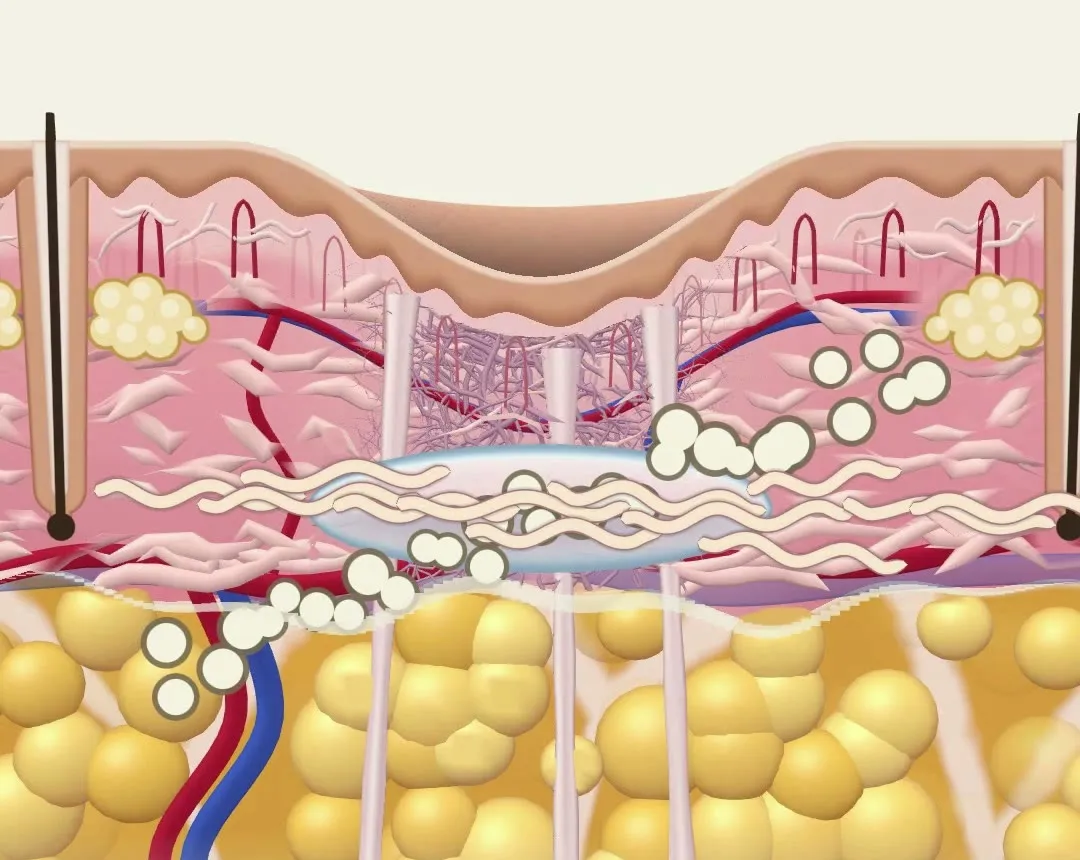
Once there is support underneath, a rolling scar can become shallower. Which tool, and how much, depends on the type of scar and how much has sunk below it. See examples of treatment approaches on our results page.
If your scars seem to have deepened with age, message us on LINE @clarityclinic and send a photo so I can take a look. The original clip is on TikTok and Instagram.
Frequently asked questions
Q: Can acne scars really get deeper without new acne? A: Old scars can look deeper, yes. Collagen in the dermis falls and cheek fat shrinks with age, so there is less holding the scar floor up.
Q: Which scars are most affected by ageing? A: Rolling scars, because fibrous bands tie the skin to the layer below. When that layer sinks, the skin is pulled down with it.
Q: How do a biostimulator and filler differ? A: A biostimulator prompts the skin to build new collagen itself, so results come gradually. Filler adds volume directly where it has been lost.
Q: Is laser alone enough if my scars deepened with age? A: Lasers work on the upper skin but do not restore support underneath. If a lot has sunk below, volume needs to be assessed too.
References
- Shuster S, Black MM, McVitie E. The influence of age and sex on skin thickness, skin collagen and density. Br J Dermatol. 1975. DOI
- Varani J, et al. Decreased collagen production in chronologically aged skin. Am J Pathol. 2006. PubMed
- Gierloff M, et al. Aging changes of the midfacial fat compartments: a computed tomographic study. Plast Reconstr Surg. 2012. PubMed
- Jacob CI, Dover JS, Kaminer MS. Acne scarring: a classification system and review of treatment options. J Am Acad Dermatol. 2001. PubMed
- Hession MT, Graber EM. Atrophic acne scarring: a review of treatment options. J Clin Aesthet Dermatol. 2015. PMC
Outcomes vary by individual; this article is educational, not a substitute for in-person medical assessment.
Read the full overview: Acne scar treatment: the complete guide