How Many Acne Scar Treatments? Look at the Deepest Scar
How many acne scar treatments do you need? Dr. Big explains why the count follows your deepest scar, not how many scars you have.
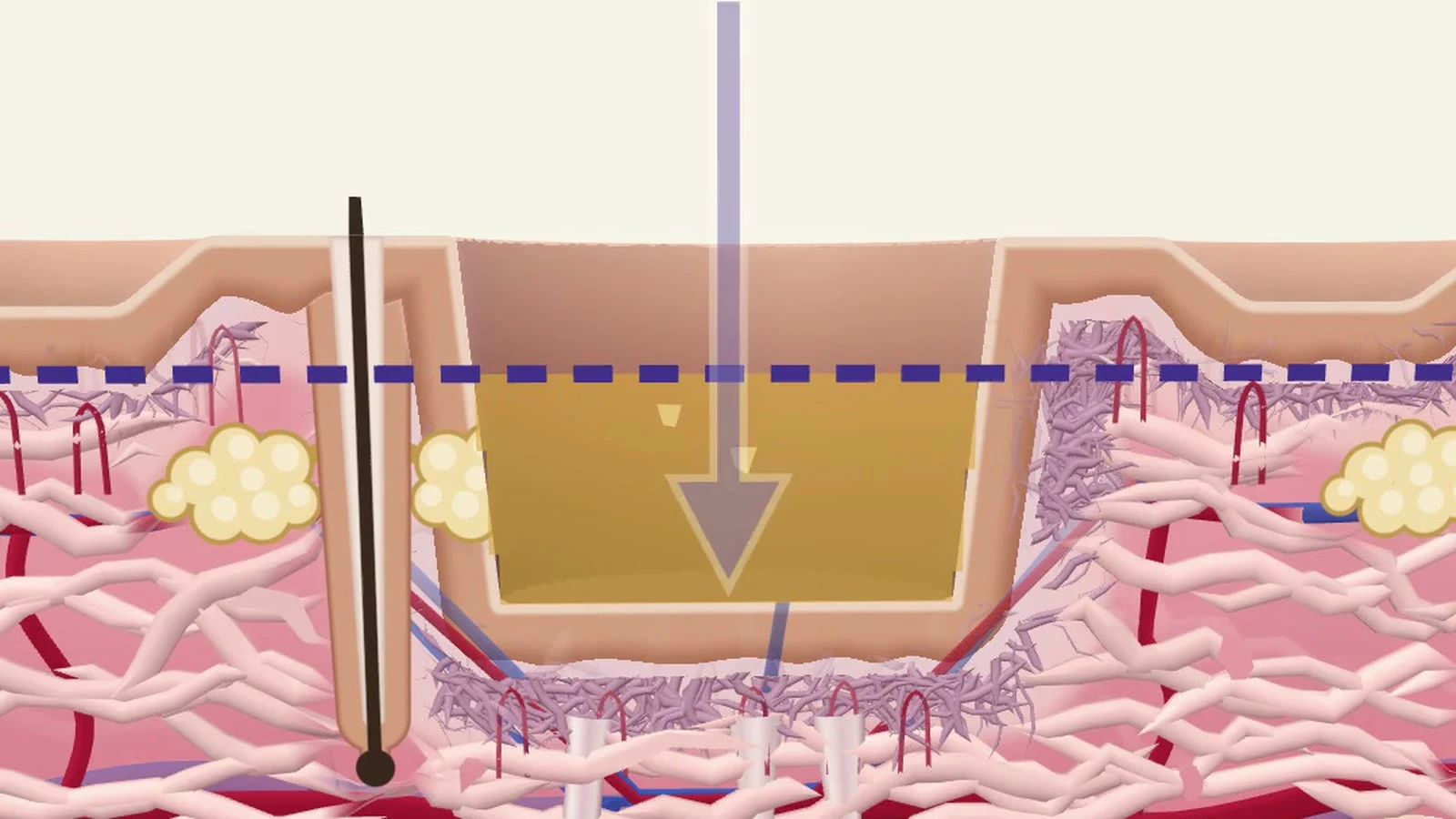
Quick answer: The number of acne scar treatments does not depend on how many scars you have. It depends on the deepest scar on your face. An ablative laser can only go so deep, so scars deeper than that have to be lifted first, one session at a time. Shallow scars, even a hundred of them, can be treated together.
Patients often ask me how many treatments they will need, and many assume that more scars means more sessions. It sounds logical, but in practice it is often the other way round. Someone with a great many scars may need less time than someone with only a few deep ones. In this article I explain why.
Why can an ablative laser only remove so much skin?
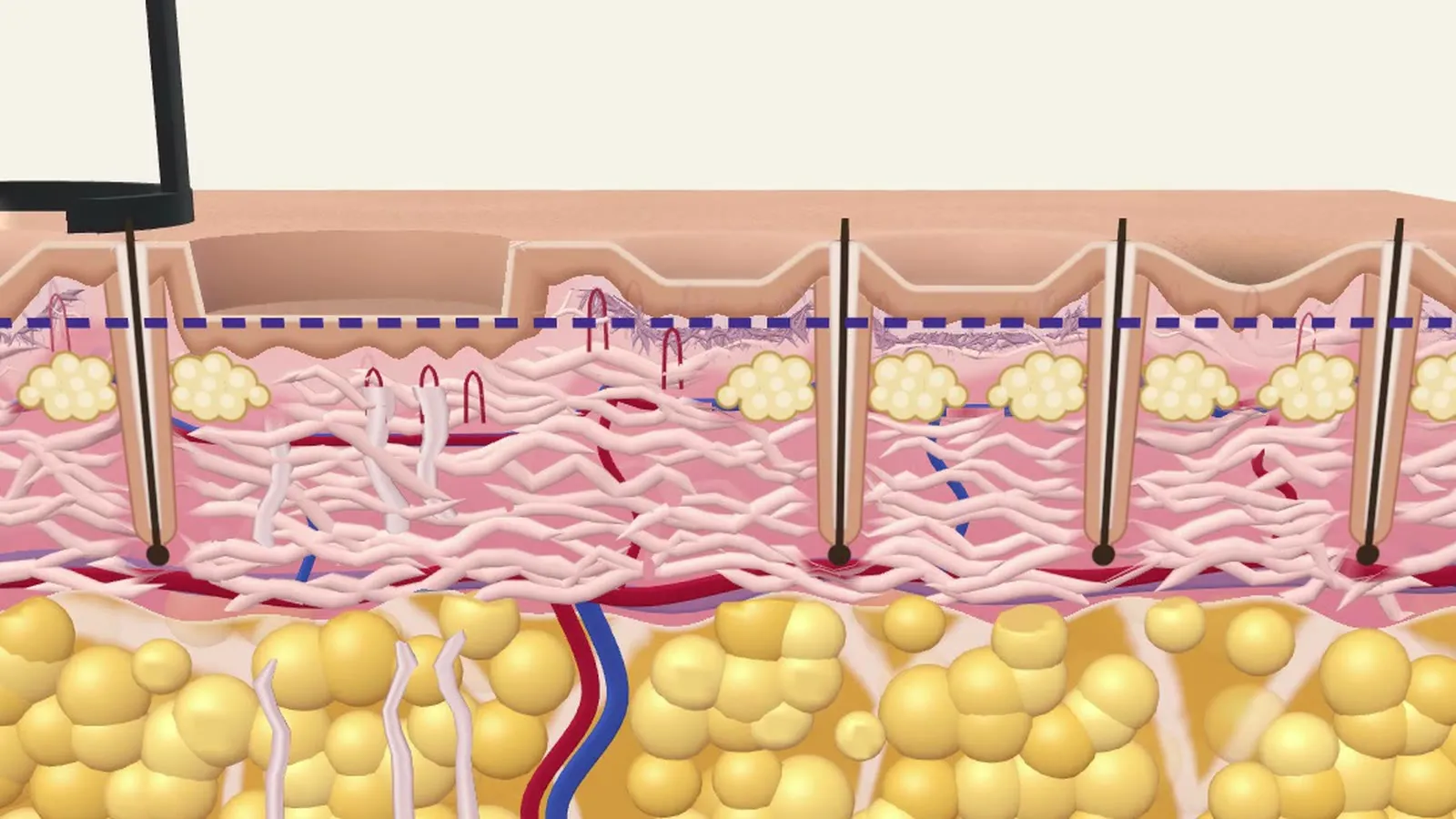
An ablative laser, such as CO2 or Er:YAG, actually removes the top layer of skin. It can go as deep as the epidermis down to the upper dermis, and no deeper. The reason is that new skin does not mainly grow in from the wound edge. It grows back up from the hair follicles, oil glands and sweat glands that remain underneath.
If I ablate too deep, those follicles and glands are removed too. Nothing is left to rebuild the skin, the wound closes slowly, and the risk of scarring rises. That depth works like a dividing line, and I plan every treatment around it.
You can read more about the different lasers in acne scar laser types.
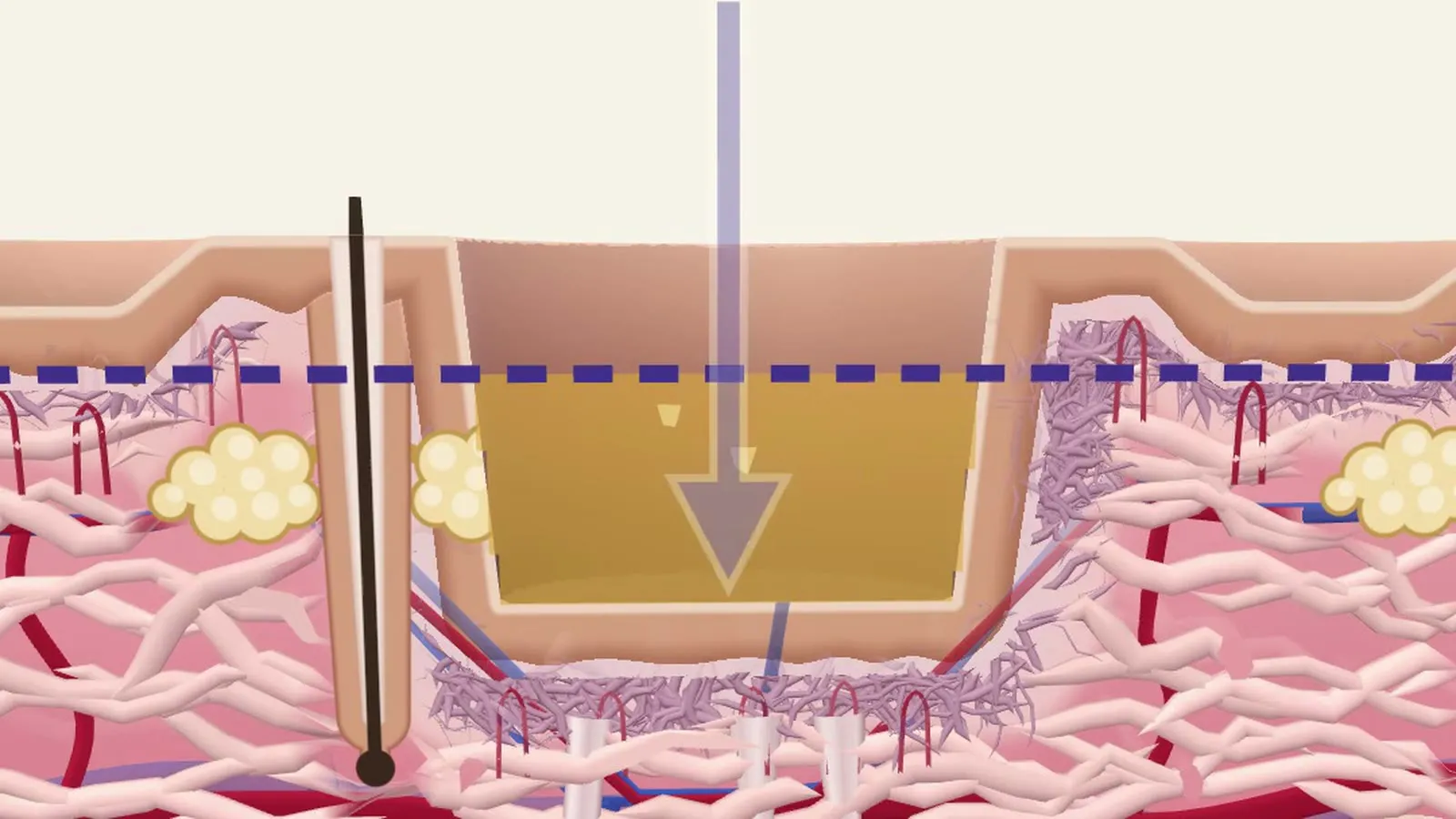
Why does a scar deeper than that line stay, however many passes?
Because the floor of the scar sits below the depth the laser reaches. However many times I ablate, the surrounding skin only comes down to the line, while the floor of the scar is still lower than the skin around it, so the scar is still visible. Deep ice pick and boxcar scars are often like this: their floor lies deeper than resurfacing reaches.
If you are not sure whether your scars are deep or shallow, see deep vs shallow acne scars.
How are deep scars lifted first?
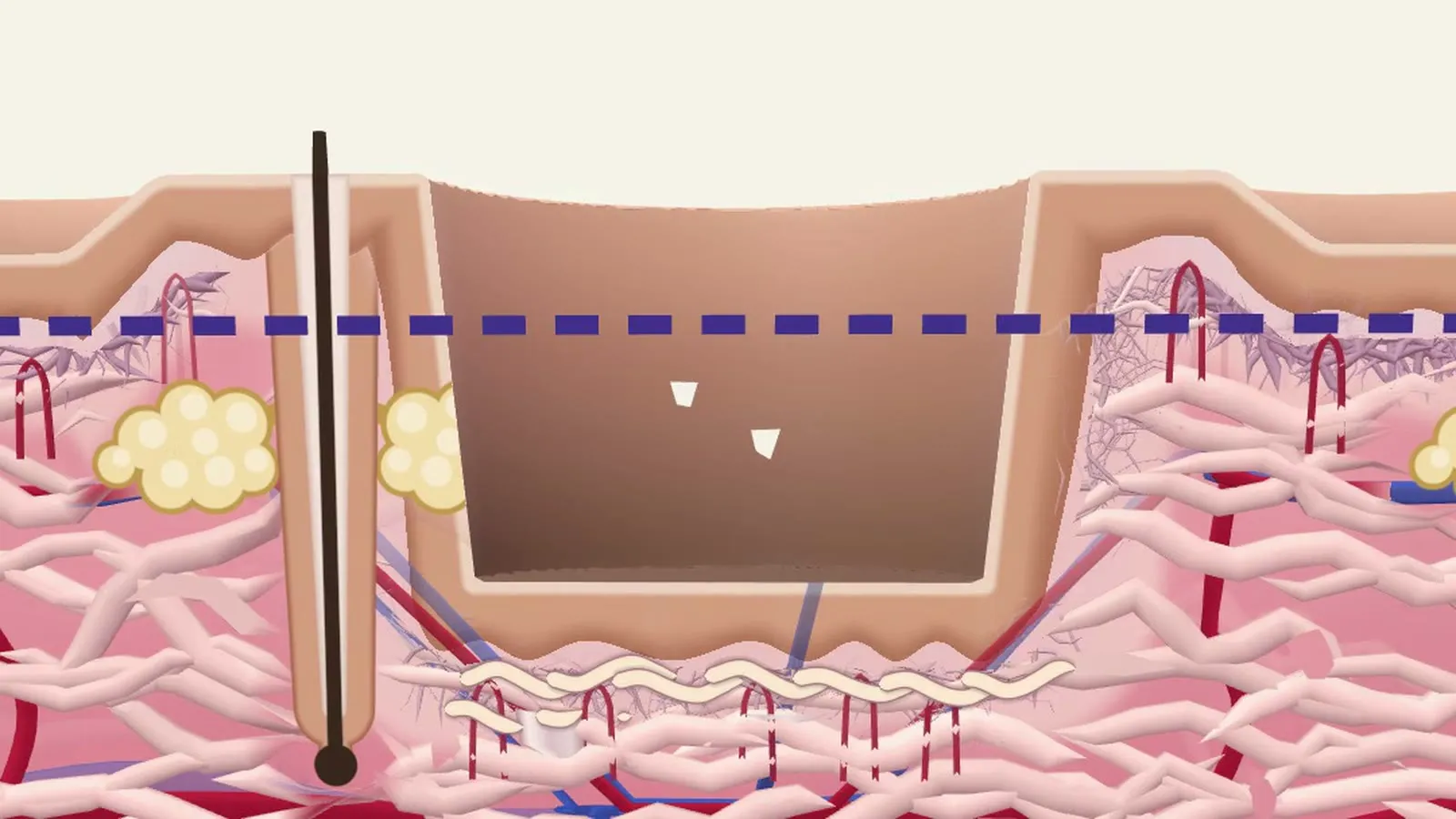
A deep scar has to have its floor lifted first, with TCA CROSS or subcision. Neither method lifts the scar by itself. Each creates a small, controlled injury under the scar so that fibroblasts, the cells that make collagen, lay down new collagen beneath it.
- TCA CROSS places concentrated acid only inside the scar, so that spot switches into repair mode. Details are in TCA CROSS for acne scars.
- Subcision passes a needle or cannula under the scar to release the fibrous bands tethering its floor. More in subcision explained.
Why does a deep scar need several sessions?
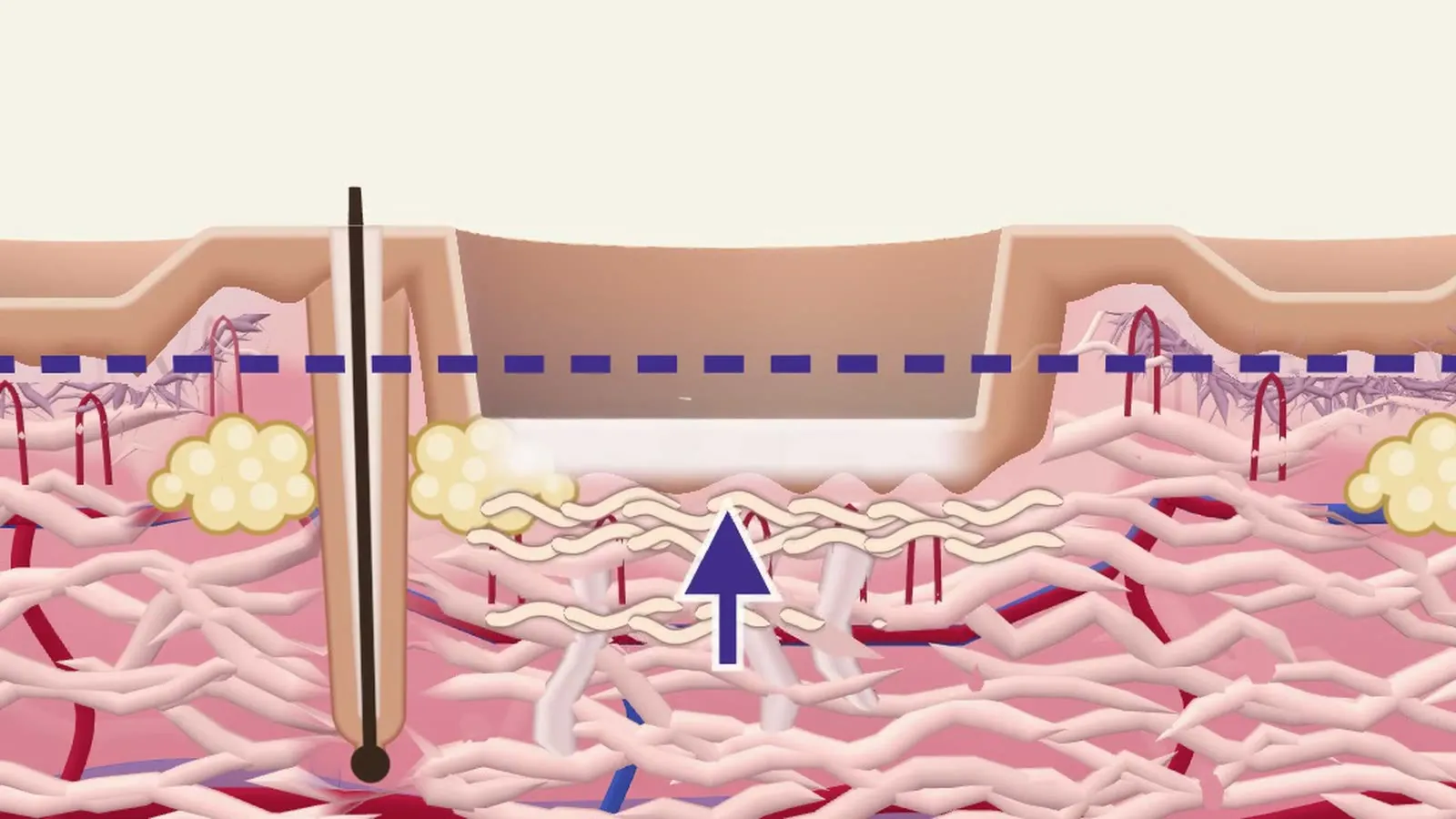
Because building and organising new collagen takes months. After each session the scar becomes shallower only in part; it does not fill in one go. So I leave time between sessions for collagen to form, then lift further in the next session.
The deeper the scar, the more sessions it takes for its floor to reach the depth an ablative laser can handle. That is why the deepest scar on the face decides how many treatments you need, not the number of scars. More on how new collagen matures in baby vs mature collagen.
A hundred shallow scars: how many treatments?
The answer may be the opposite of what many people expect. Scars that are already shallower than the depth an ablative laser reaches can, even if there are a hundred of them, all be resurfaced together in a single full ablative session across the area.
So a face with many shallow scars may need less time than a face with only a few deep ones. My approach is to lift the deepest scars up to that level first, then do full ablative once. You can see this order applied to deep boxcar scars in how to treat deep boxcar scars.
The number of treatments for each person therefore has to be judged on the actual face: how deep the deepest scar is, and what type it is. See examples of treatment approaches on the results page.
Want to know what kind of scar is the deepest on your face? Message us on LINE @clarityclinic and send a photo so I can assess it. The original clip is on TikTok and Instagram.
Frequently asked questions
Q: If I have many acne scars, do I need more treatments? A: Not necessarily. The number of treatments depends on the deepest scar. Shallow scars, however many, can be resurfaced together in one session.
Q: Why can’t the laser just go deep enough to reach the floor of the scar? A: Because new skin has to grow back from the follicles and glands left underneath. Going too deep removes them, so the wound closes slowly and the risk of scarring rises.
Q: Why isn’t one session enough to lift a deep scar? A: Because TCA CROSS and subcision rely on new collagen formed under the scar, which takes months. Each session makes the scar shallower only in part.
Q: How will I know how many treatments I need? A: A doctor needs to see how deep your deepest scar is and what type it is, so the number differs from person to person.
References
- Jacob CI, Dover JS, Kaminer MS. Acne scarring: a classification system and review of treatment options. J Am Acad Dermatol. 2001. PubMed
- Re-epithelialisation from eccrine glands and pilosebaceous units after CO2 laser wounds in human skin. PMC
- Procollagen rises after CO2 resurfacing and stays elevated for at least six months. PubMed
- Lee JB, et al. Focal treatment of acne scars with trichloroacetic acid: chemical reconstruction of skin scars method. Dermatol Surg. 2002. PubMed
- Orentreich DS, Orentreich N. Subcutaneous incisionless (subcision) surgery for the correction of depressed scars and wrinkles. Dermatol Surg. 1995. PubMed
Outcomes vary by individual; this article is educational, not a substitute for in-person medical assessment.
Read the full overview: Acne scar treatment: the complete guide