Collagen Stimulator Injections Done, Skin Still Uneven: Why
Collagen stimulator injections help volume, but steep scar edges and dark or red marks are texture. Dr. Big explains why laser is added for smooth skin, with a clip.
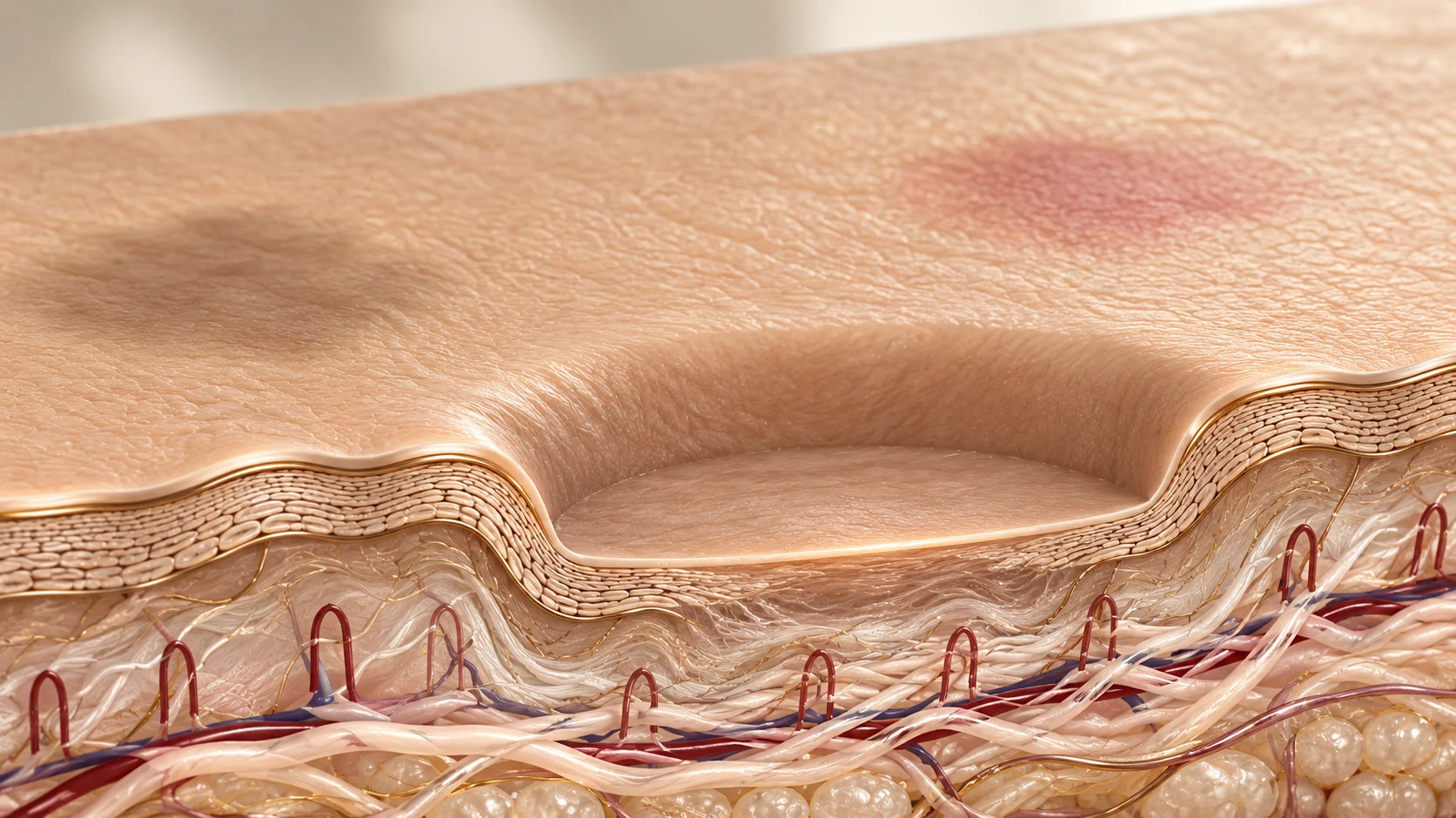
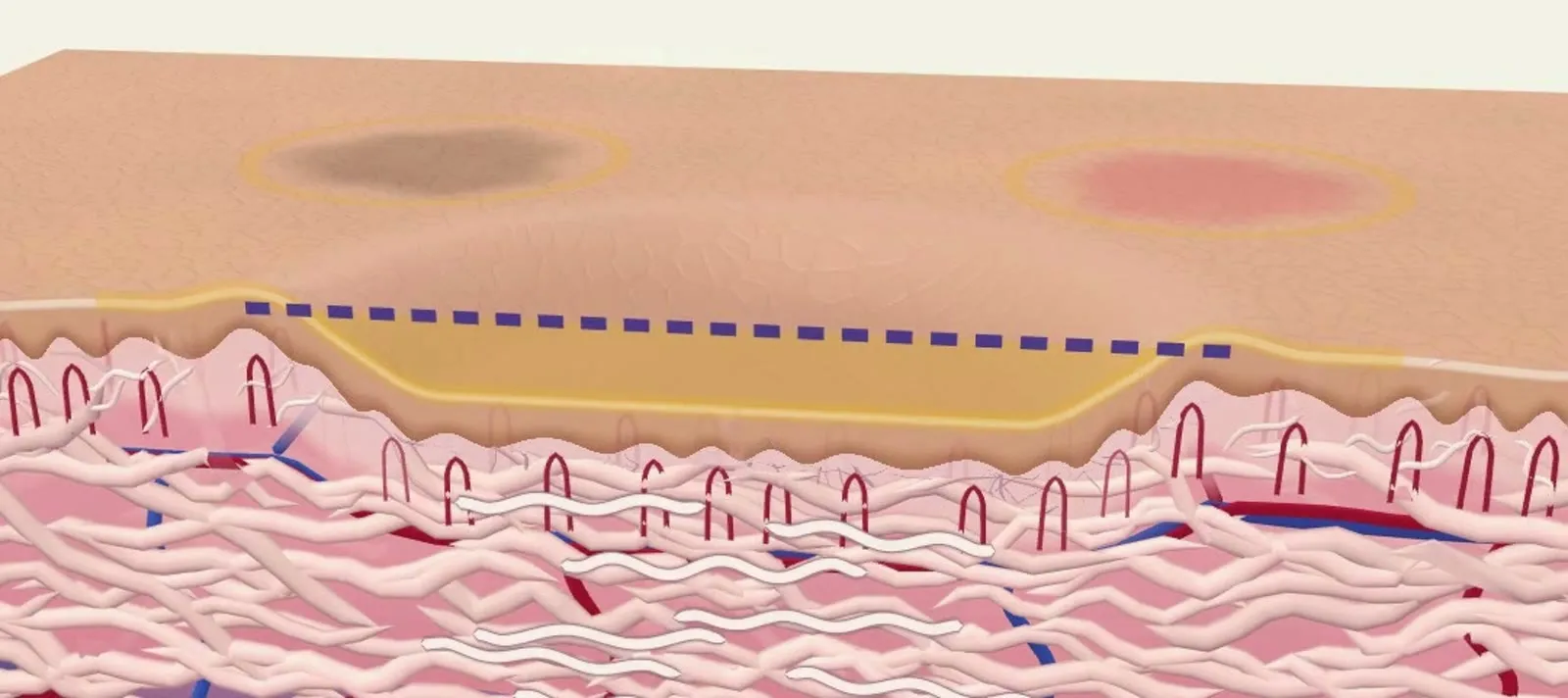
Quick answer: Collagen stimulators help with volume, meaning they thicken the tissue under the skin. But steep scar edges and dark or red marks are texture, and injections do not fix that. If you want smooth skin, I also have to treat it with laser. Injection alone fixes only one of the two problems.
I see this case often. A patient has had collagen stimulator injections many times and has looked after their skin carefully, but in the mirror the skin is still not smooth. Many wonder whether they did not have enough, or how many more injections they need. The problem may not be the number of injections, because what you see on the skin and where the injection reaches are in two different places.
You can watch this clip on TikTok at @mhorbig.clarity.
How do collagen stimulators work?
Collagen stimulators, the biostimulator group, are injected under the skin so that the body makes its own collagen. Examples in use are PLLA and PDLLA, which are poly-lactic acid materials.
With PLLA, the body sees the particles as foreign, so cells gather around them and call in fibroblasts, which build collagen little by little. Because the result builds up gradually, the target of this kind of injection is the tissue under the skin, not the top layer. Put simply, it helps with volume, making the tissue under the skin thicker.
If you are not sure how volume and texture differ, read first What texture and volume mean in acne scars.
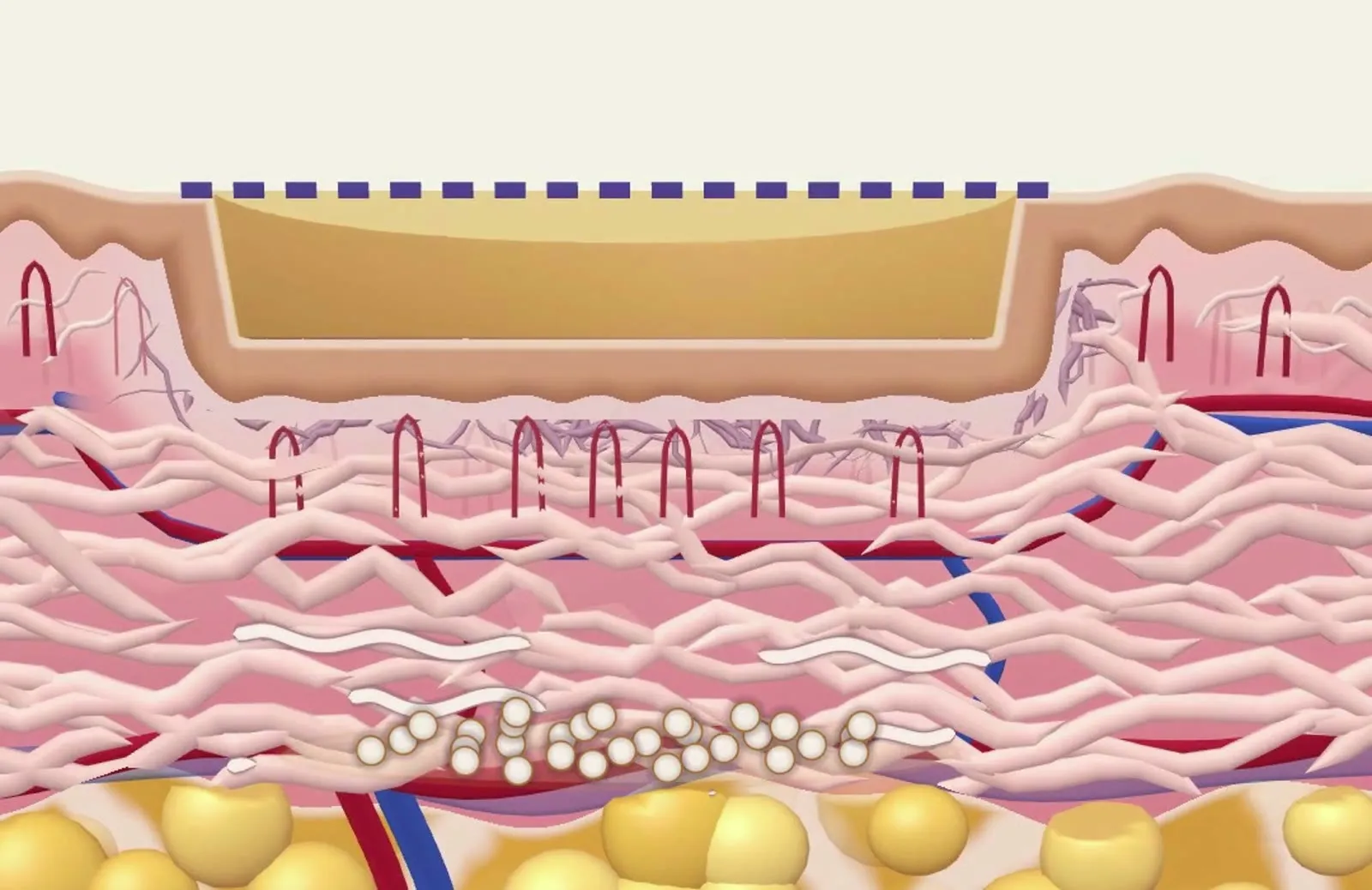
Why is the scar edge still steep after injections?
Because the scar edge is at the top of the skin. Some scars, especially boxcar scars, have a steep edge and a flat floor. Adding tissue from underneath can lift the floor, but it does not directly change the shape of the edge.
From caring for patients, I explain this as texture, and injection does not fix that part at all. This reasoning is my own framework, not a direct conclusion from research. One randomized trial that used PLLA together with a fractional CO2 laser reported that rolling scars improved more than boxcar scars, and both improved more than ice pick scars, which fits the picture that each type of scar responds differently. You can read about each type of scar in Acne scar types: how to tell them apart.
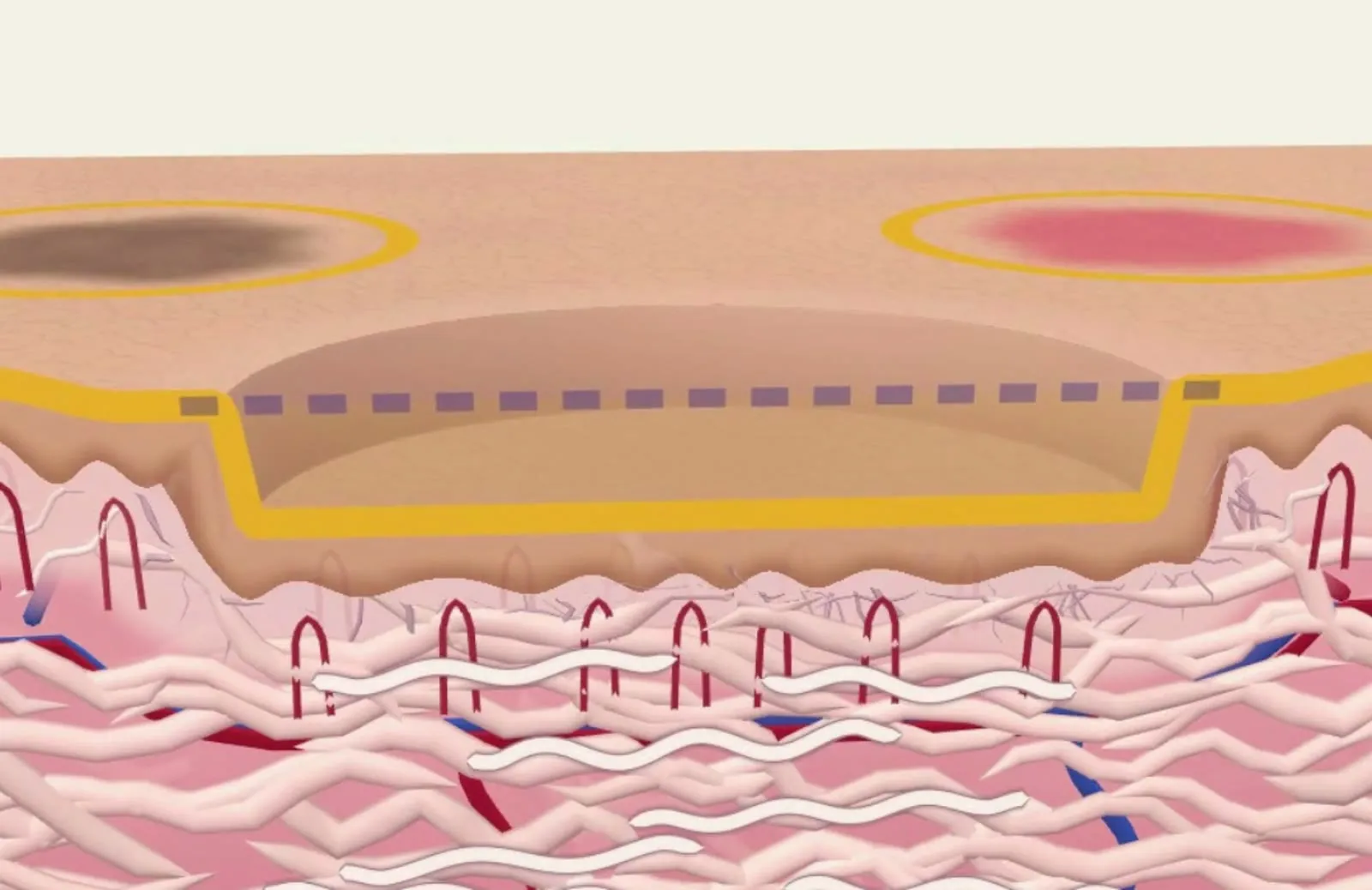
Why do dark and red marks stay the same?
Dark and red marks are colour on the skin, not tissue missing under the scar. Dark marks after acne come from inflammation that prompts the skin to make more pigment. So the problem is a different matter from the collagen under the scar. Adding tissue underneath does not make the colour on top fade.
You can read more about marks versus scars in Dark marks after acne vs acne scars.
Will more injections make the skin smoother?
If what remains is the scar edge and the colour marks, more injections may not be on target, because injection still treats the same thing as before, volume. A doctor should check whether the scar is still missing tissue, or whether what you see is now a matter of the top layer of the skin.
This group of materials is also not suited to every scar. Injectables are usually used for scars that lift when the skin is stretched, such as rolling scars and shallow boxcar scars, and there are reports advising against PLLA for ice pick scars. I could not find published work that directly compares HA filler, biostimulators and PN in acne scars. So the choice has to be made person by person. To read about adding volume, see Filler for acne scars vs subcision.
What do I do if you want smooth skin?
If you want smooth skin, I have to treat texture as well. I use laser to work on the scar edge, and then I treat the colour marks.
- Scar edge. The medical literature describes using ablative lasers such as Er:YAG or CO2 at the scar edge so that the edge slopes down and blends with the skin around it.
- Dark marks. Lasers that work on pigment, such as pico laser, are another tool used to treat colour marks. The doctor chooses based on the type of mark.
You can read an overview of each laser in Acne scar laser types.
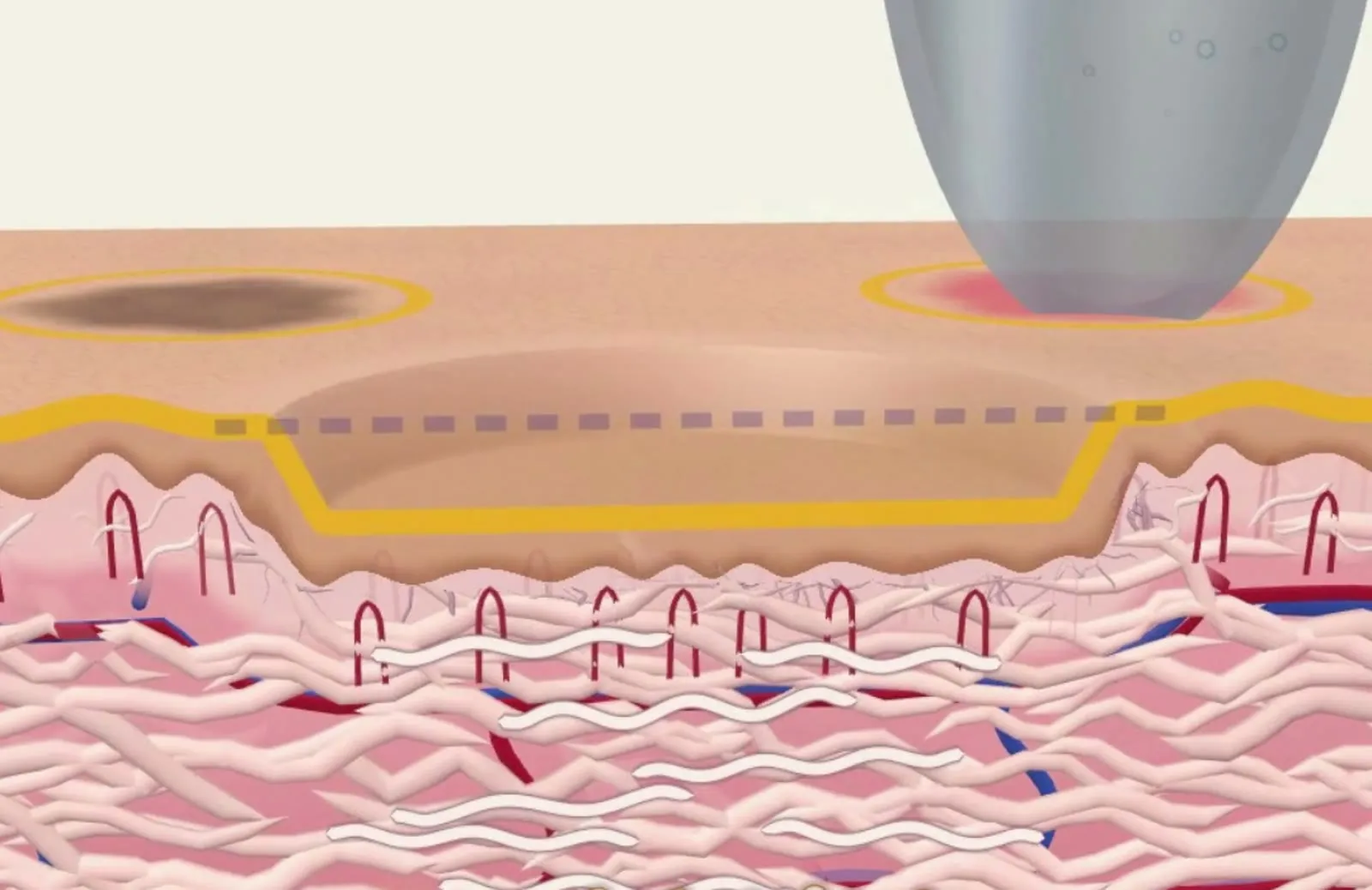
Do both problems have to be treated together?
I treat both. Injection alone fixes only one of them. Injection takes care of the tissue under the skin, and laser takes care of the top layer. Every scar is missing these two things in a different proportion, so the plan has to come from the actual scar, not only from counting injections.
Where should I start if the skin is still uneven after injections?
First separate out what bothers you. If the scar is still sunken, it may still be missing volume. If the scar is shallower but the edge is still sharp, the skin is still rough, or there are still dark or red marks, what remains is texture. Then have a doctor assess what to do next. You can see the approach on the results page.
If you have had injections and the skin is still uneven and you would like me to look, message us on LINE @clarityclinic, tell me your story and send photos.
Frequently asked questions
Q: What do collagen stimulators help with? A: They help with volume, making the tissue under the skin thicker, as the body gradually makes its own collagen.
Q: Why is my skin still uneven after many injections? A: Steep scar edges and dark or red marks are texture at the top of the skin. Injection does not fix that part, so I also treat it with laser.
Q: Would more injections help? A: It depends on what remains. If volume is still missing, injection may still help, but if only the scar edge and colour marks remain, more injections may not be on target. Have a doctor assess first.
Q: Can collagen stimulators be used for ice pick scars? A: There are reports advising against PLLA for ice pick scars, and this group of injectables is usually discussed for scars that lift when the skin is stretched. So the doctor has to check the type of scar first.
References
Outcomes vary by individual; this article is educational, not a substitute for in-person medical assessment.
- Stein P, et al. The biological basis for poly-L-lactic acid-induced augmentation. J Dermatol Sci. 2015. PubMed
- Goldberg D, et al. Single-arm study for the characterization of human tissue response to injectable poly-L-lactic acid. Dermatol Surg. 2013. PubMed
- Zhou C, et al. Poly-L-lactic acid combined with CO2 fractional laser for the treatment of acne scars. J Cosmet Dermatol. 2025. PMC
- Sadove R. Injectable poly-L-lactic acid: a novel sculpting agent for the treatment of dermal fat atrophy after severe acne. Aesthetic Plast Surg. 2009. PMC
- McGoldrick RB, et al. Lasers and ancillary treatments for scar management Part 2: keloid, hypertrophic, pigmented and acne scars. Scars Burn Heal. 2017. PMC
- Chathra N, Mysore V. Resurfacing of facial acne scars with a new variable-pulsed Er:YAG laser in Fitzpatrick skin types IV and V. J Cutan Aesthet Surg. 2018. PMC
- Auffret N, et al. Acne-induced post-inflammatory hyperpigmentation: from grading to treatment. Acta Derm Venereol. 2025. PMC
- Jacob CI, Dover JS, Kaminer MS. Acne scarring: a classification system and review of treatment options. J Am Acad Dermatol. 2001. PubMed
Read the full overview: Acne scar treatment: the complete guide