Acne Scars: What Texture and Volume Mean and Why Both Need Fixing
An acne scar has two problems stacked together: uneven surface texture and lost volume under the skin. Dr. Big explains why fixing only one improves a scar only partway.
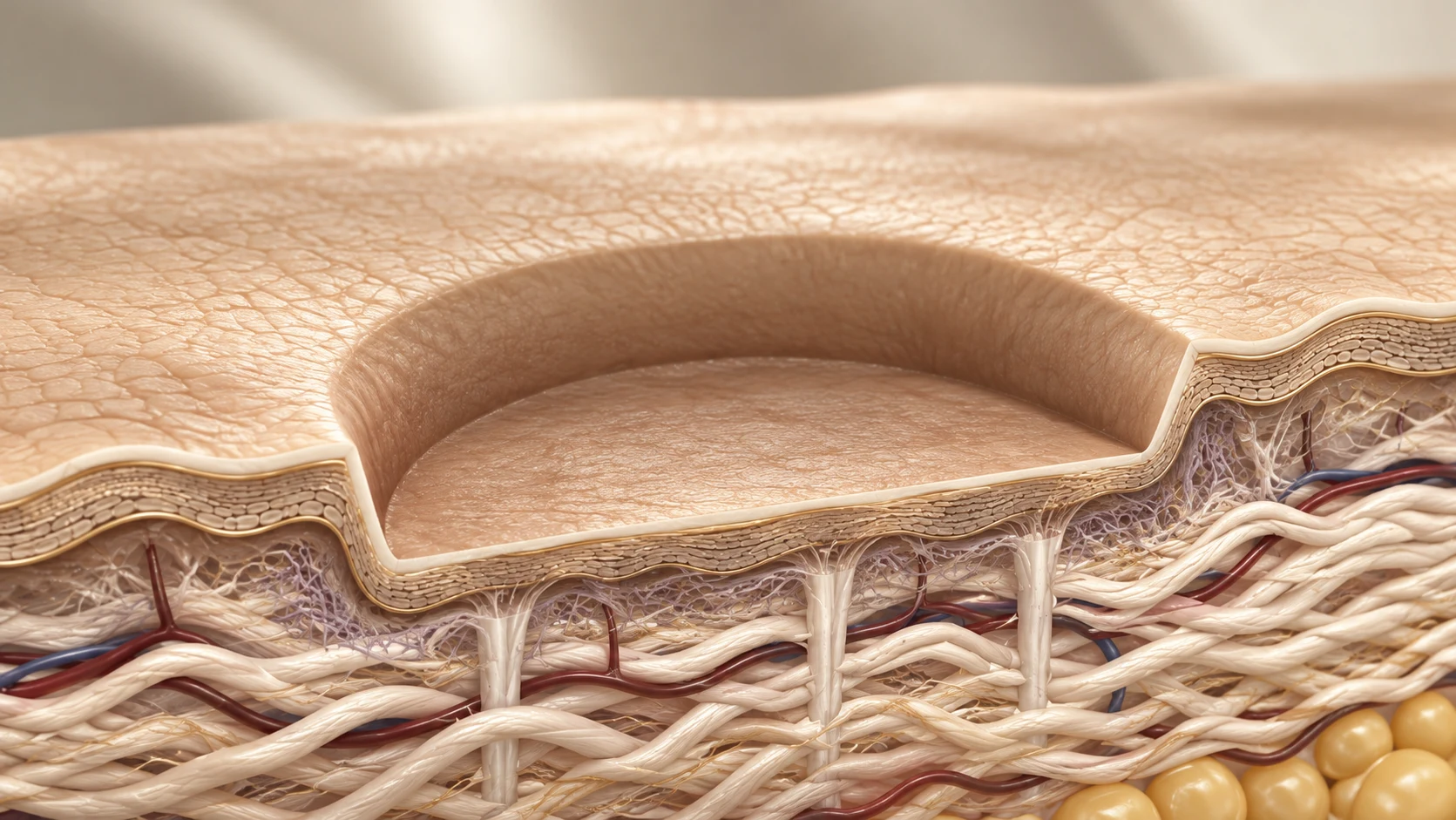
Quick answer: One acne scar has two problems stacked together: texture, which is the uneven surface of the skin, and volume, which is the tissue under the skin that has been lost. If only one of them is fixed, the scar improves only partway. So I plan to fix both at the same time.
Many people see acne scars as a single problem and ask for the one method that fixes everything. But when you look at a scar in cross-section, you can see that one scar has both a surface problem and a problem with the tissue underneath, and these are in different places. If you have had treatment and the scars have not improved as much as you expected, look at whether so far you have fixed only one of them.
You can watch this clip on TikTok at @mhorbig.clarity
How do acne scars form, and why are there stacked problems?
Acne scars do not form only at the surface. The inflammation of acne starts under the skin, deep in the hair follicle. When the wall of the follicle ruptures, enzymes and inflammatory substances damage the structures deeper down. The depth and spread of the inflammation decide how much scarring there will be.
As the scar settles, the contraction of the scar pulls the upper skin down, and if the inflammation went very deep, it can reach the fat layer under the skin as well. The result is a scar with a changed surface on top and lost tissue below. The two problems come from the same process but sit at different layers. You can read the full mechanism in what causes acne scars.
What is texture in an acne scar?
The first problem is texture, which is the uneven surface of the skin: steep scar edges and a rough surface.
Steep edges are clearest in boxcar scars, which are round or oval dips with straight edges and a flat floor. Roughness is skin that is not smooth compared with the skin around it.
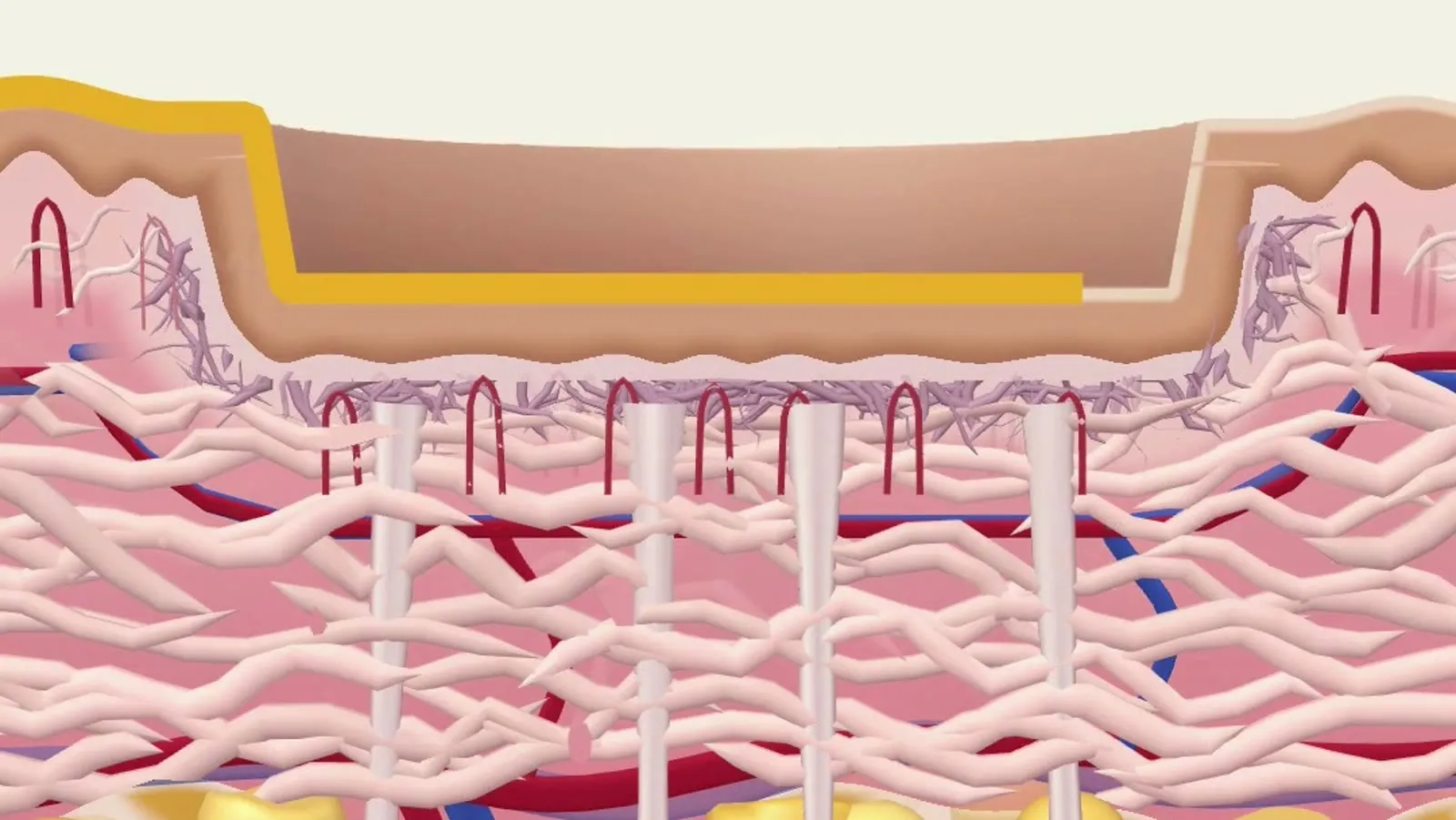
What is volume in an acne scar?
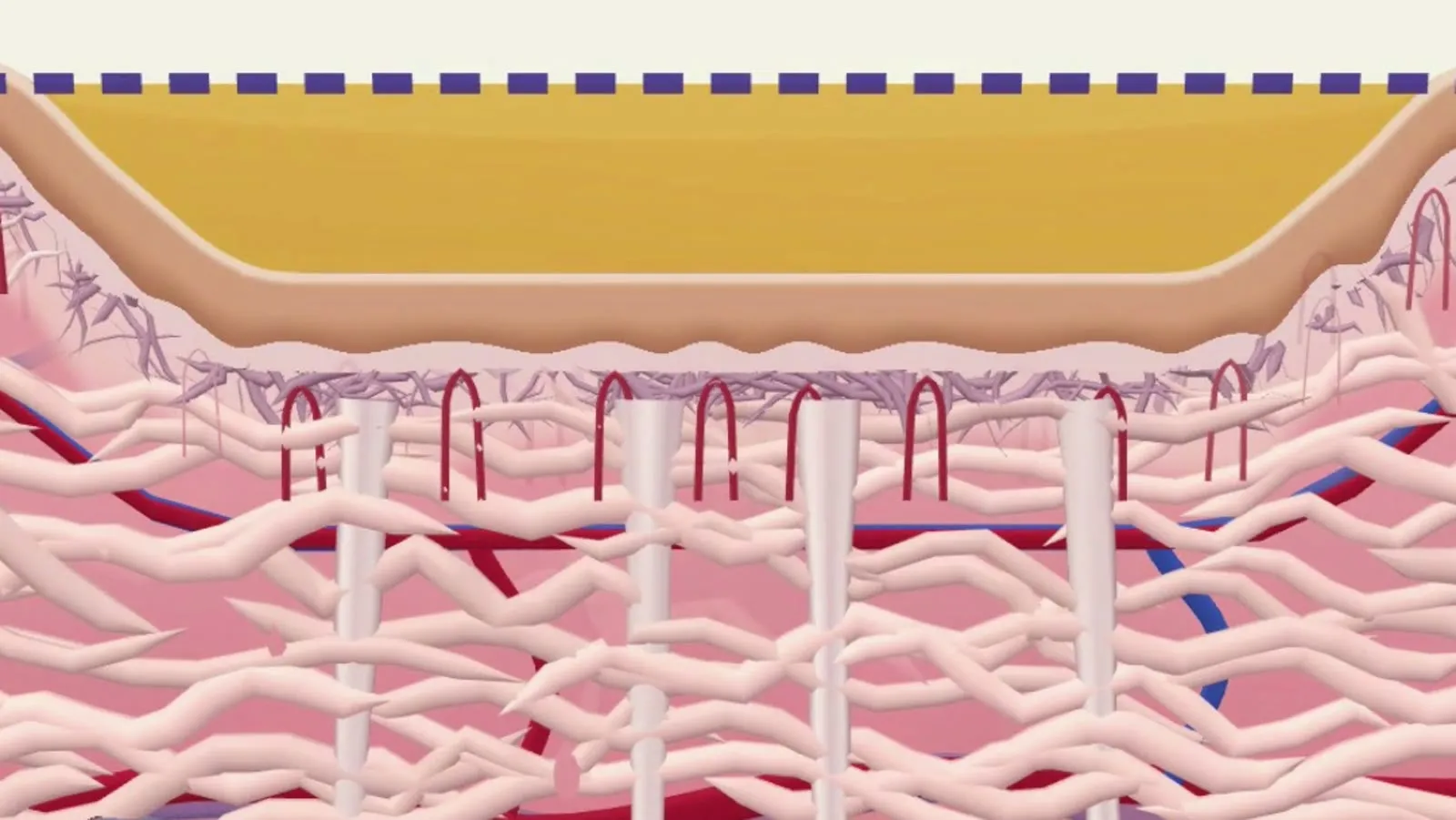
The second problem is volume, which is the tissue under the skin that has been lost, and there may also be fibrous bands pulling the skin down.
Picture the original skin level as a straight line. The gap between that line and the floor of the scar is the part that is missing. With nothing under the skin to support it, the skin above sinks, and if fibrous bands anchor the skin to the layer below, it is pulled down even more. This is clearest in rolling scars, which are wide scars where the skin looks normal but is anchored from beneath the dermis. A point of anchoring that deep cannot be fixed from the surface. You can read about the shapes of each scar in how to tell acne scar types apart.
Why does the scar stay dipped if you only use a laser?
Patients who use only a laser get better texture, with smoother scar edges, but the scar is still dipped, because the volume has not been fixed.
A laser works from the surface, so it suits the edge of the scar. But the missing part under the scar and the fibrous bands pulling from below are still where they were. For an overview of each type of laser, read lasers for acne scars.
Why is the skin still not smooth if you only add volume?
For patients who only add volume, the tissue under the skin does get thicker, but the surface of the skin is still not smooth.
Fixing from underneath helps lift the floor of the scar, but it does not change the shape of the edge or the surface. The scar may get shallower while the edge is still steep and the surface still rough. This is the flip side of using only a laser.
How do I fix both problems?
When I treat, I fix both problems at the same time.
- For volume, I cut the fibrous bands and then stimulate collagen.
- For texture, I use a laser to smooth the edge of the scar.
Cutting the fibrous bands means releasing the skin that is anchored down. You can read the details in What is subcision, and the reason I do not do it on its own in Is subcision alone enough?
Each scar has a different width, depth and shape, and these tell us which treatment can reach it. So planning has to be based on each person’s actual scars.
How are texture and volume fixed differently?
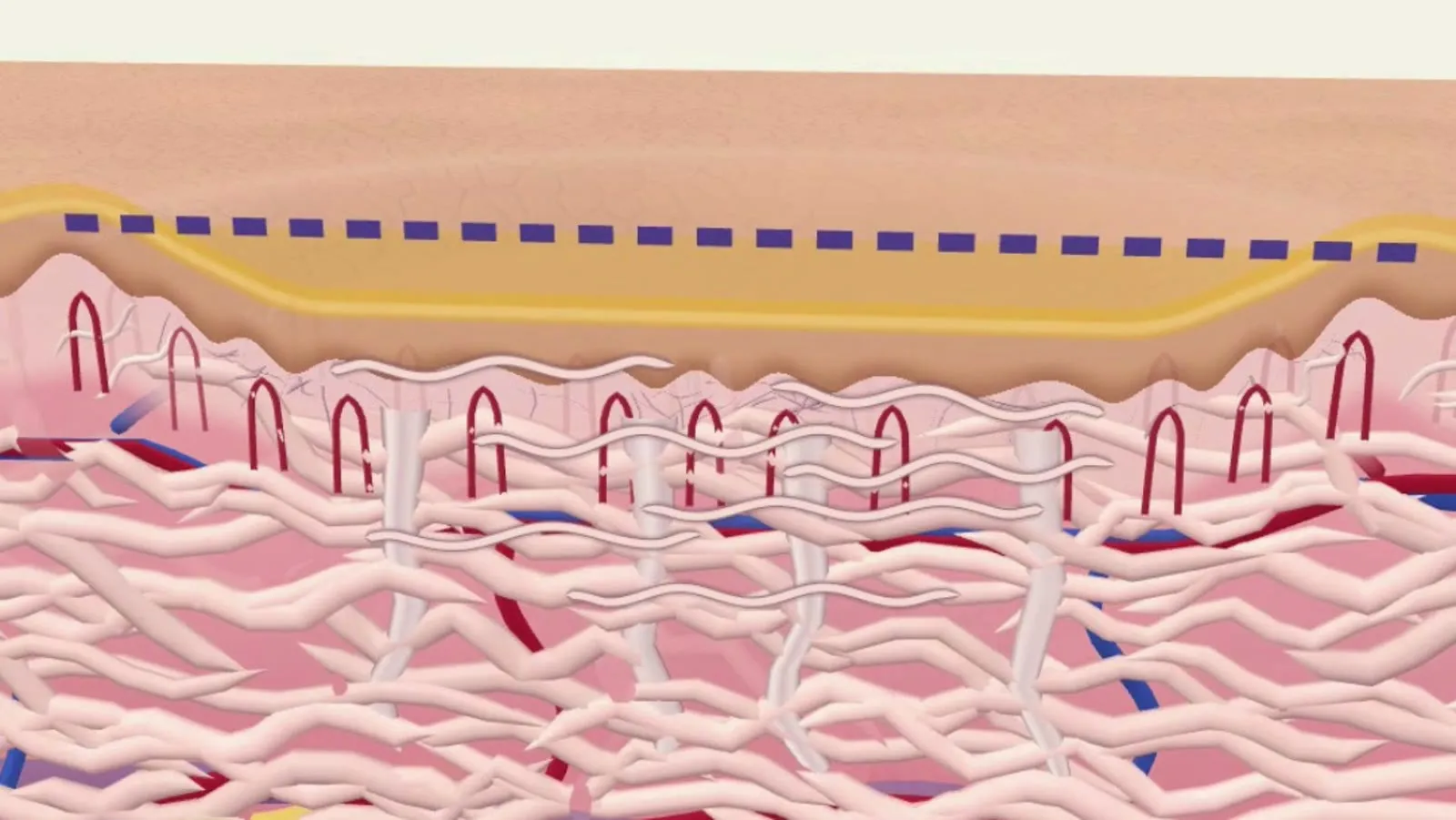
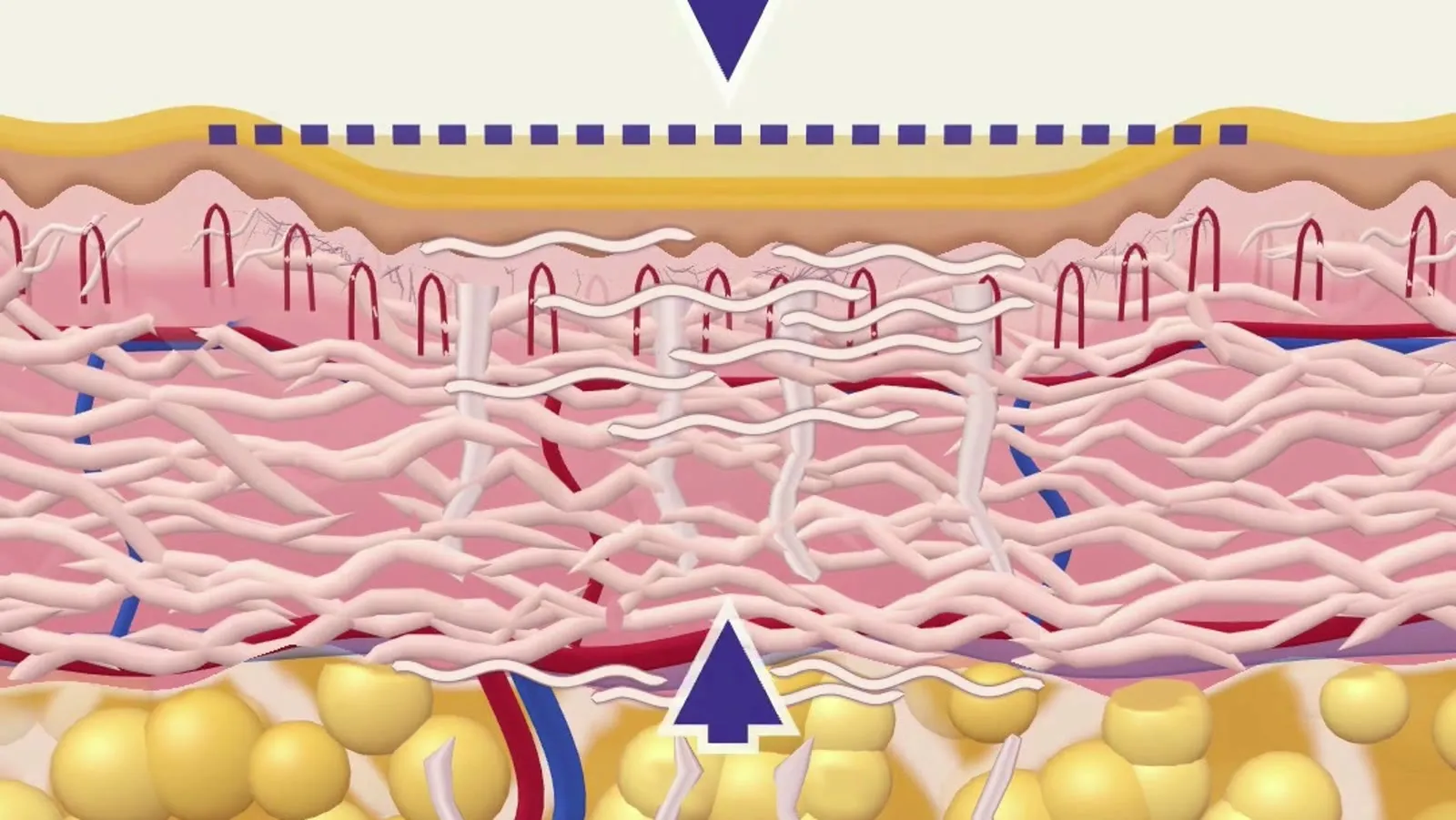
Texture and volume are fixed in different ways because they are in different places. Texture is fixed from above and volume is fixed from below, and both have to be done.
You can watch this clip on TikTok at @mhorbig.clarity
Fixing texture from above. Texture is the upper skin. For steep scar edges, I use a laser to smooth them so they slope down. For rough skin and dark or red marks, I also use a laser to refine the upper skin so it looks smoother.
Fixing volume from below. Volume is what lies underneath. If fibrous bands are pulling, I have to cut them first, and then I stimulate collagen so that the tissue under the skin becomes thicker. The scar then slowly gets shallower.
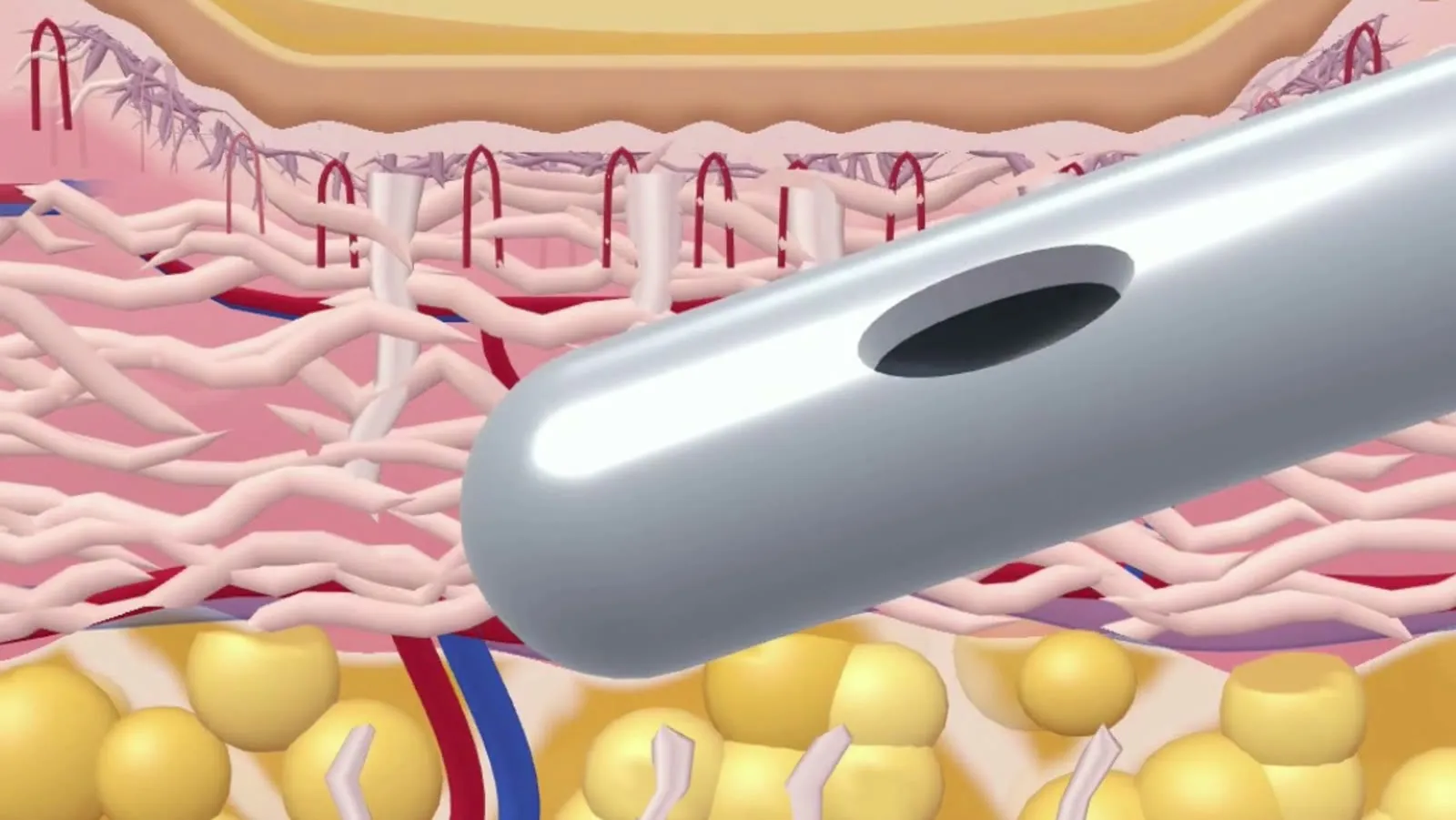
The order matters because if the bands are still anchoring the skin, the tissue under it is still pulled down. So cutting the bands comes before stimulating collagen. Refining the upper skin is a separate route that is done alongside.
If you have had treatment and it has not improved, what should you look at next?
For acne scars to improve, both problems have to be fixed. If so far you have had only lasers, look at whether the scar is still dipped. If so far the focus has been filling or injecting under the scar, look at whether the edge is still steep and the surface still rough. You can see the approach on the results page.
If you would like me to look at which problem your scars are missing, message us on LINE @clarityclinic and send photos any time.
Frequently asked questions
Q: How are texture and volume in acne scars different? A: Texture is the uneven surface of the skin, including steep scar edges and a rough surface. Volume is the tissue under the skin that has been lost, and there may also be fibrous bands pulling the skin down.
Q: Why is the scar still dipped after a laser? A: A laser helps texture, so the scar edges become smoother, but if the volume under the scar has not been fixed, the scar is still dipped.
Q: Is adding volume alone enough? A: The tissue under the skin does get thicker, but the surface of the skin is still not smooth. So I also smooth the edge of the scar with a laser.
Q: Is the plan the same for every scar? A: No. The width, depth and shape of a scar tell us which treatment can reach it, so a doctor has to look at the actual scars before planning.
Q: Can texture and volume be fixed with the same method? A: No, they are fixed differently. Texture is fixed from above with a laser, and volume is fixed from below by cutting fibrous bands and stimulating collagen.
References
Outcomes vary by individual; this article is educational, not a substitute for in-person medical assessment.
- Jacob CI, Dover JS, Kaminer MS. Acne scarring: a classification system and review of treatment options. J Am Acad Dermatol. 2001. PubMed
- Goodman GJ. Post-acne scarring: a short review of its pathophysiology. Australas J Dermatol. 2001;42:84–90. Full text
Read the full overview: Acne scar treatment: the complete guide