Is Subcision Alone Enough? Why I Rarely Do It on Its Own
Is subcision alone enough? Nearly every rolling scar has volume loss under the skin, so I combine subcision with filling or a laser. Dr. Big explains, with a clip.
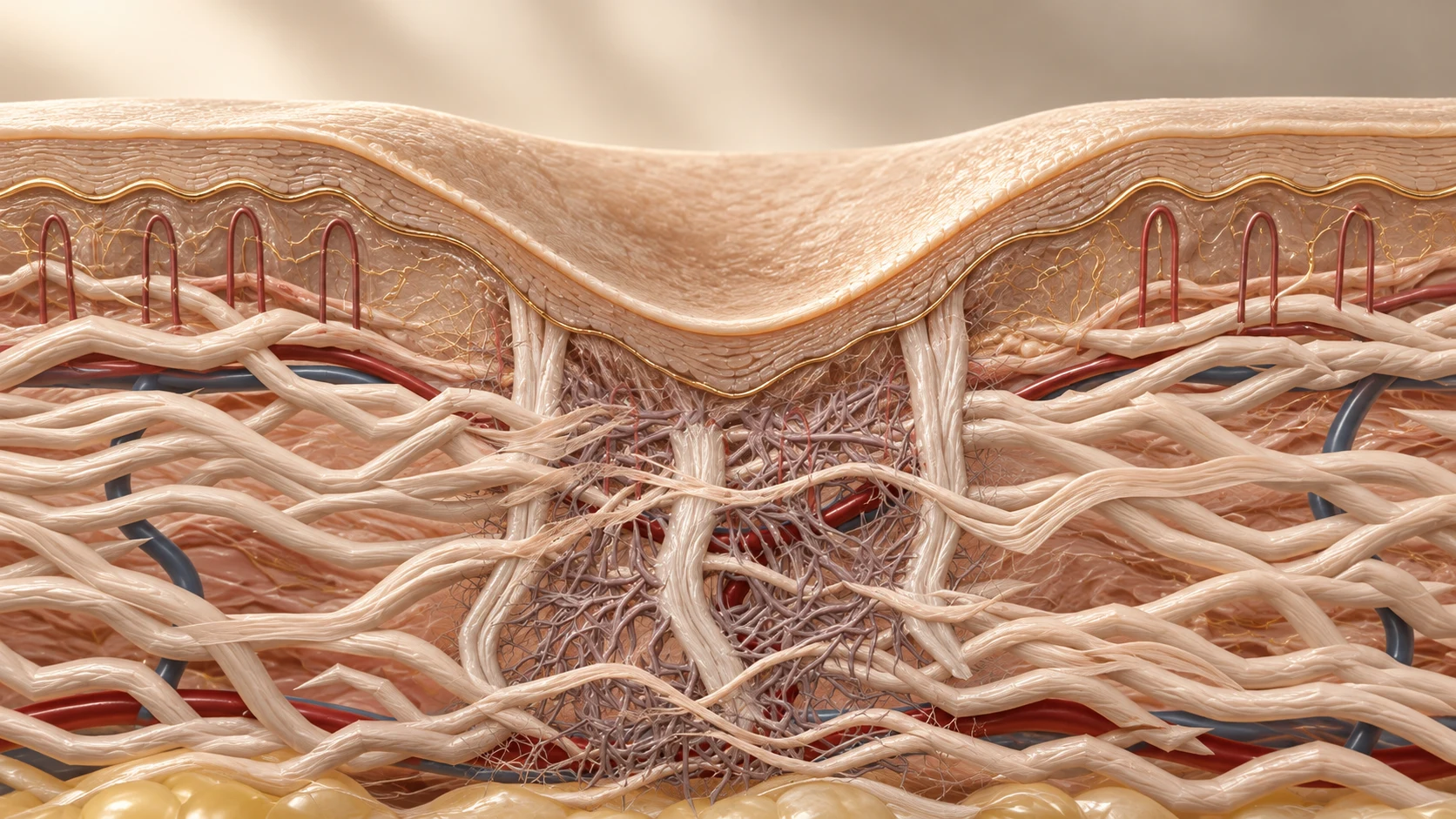
Quick answer: Mostly no. Nearly every rolling scar has volume loss under the skin as well, and only some also have fibrous bands pulling on them. Subcision fixes only the part that is fibrous bands. So I almost never do subcision on its own. I always combine it with filling under the scar or with a laser.
Patients ask me whether I have ever done subcision alone. In fact I almost never have. This answer may go against what many people understand, because subcision is often described as the way to cut fibrous bands so a scar lifts. That is true as far as it goes, but a rolling scar does not have only one problem.
What causes rolling scars, and why is it not only fibrous bands?
I usually do subcision on rolling scars, and a rolling scar is first a problem of volume loss under the skin, and only after that a problem of fibrous bands pulling.
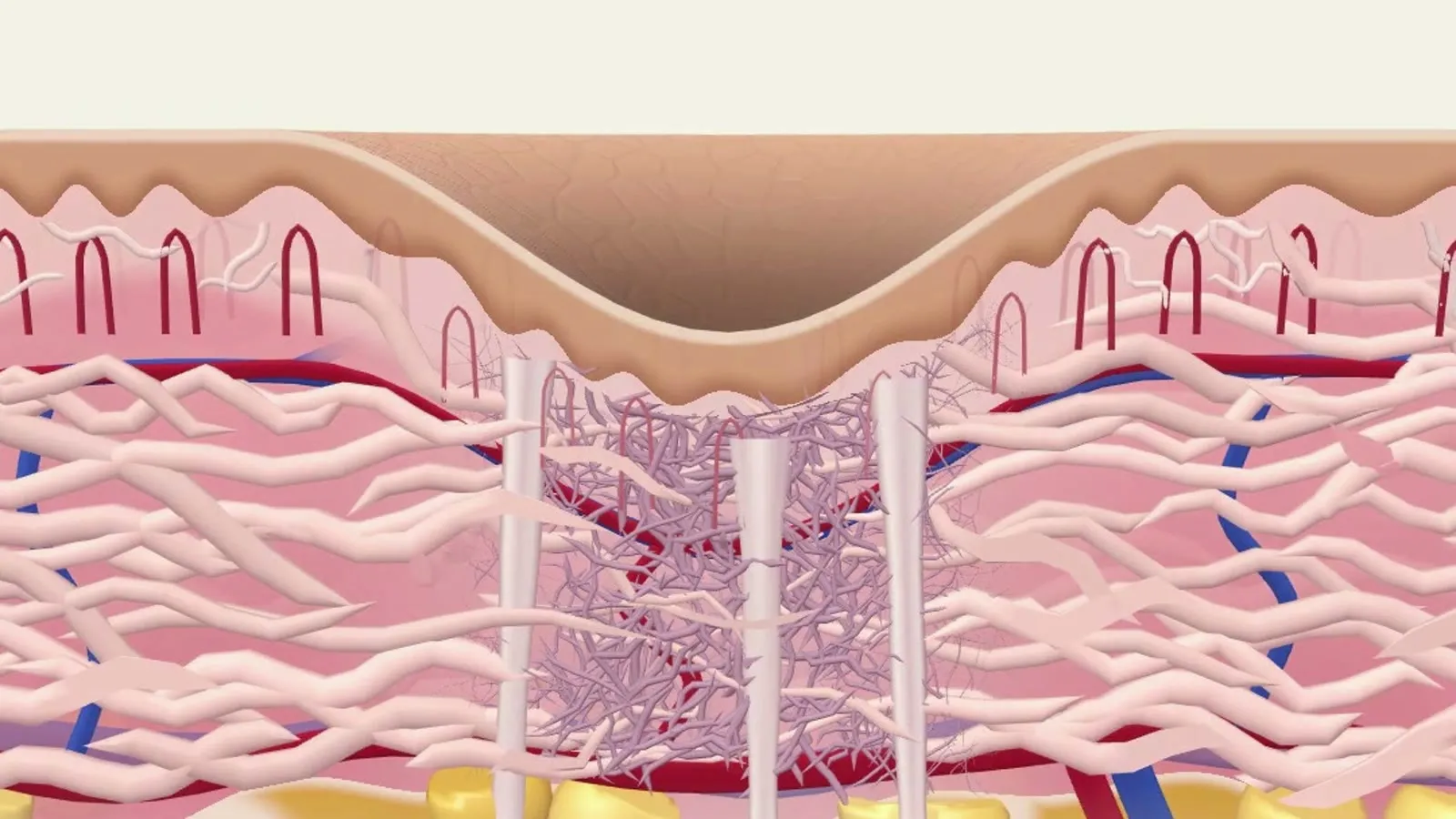
Volume loss is the tissue under the skin that has been lost, so the skin above has nothing to support it and sinks into a dip. Fibrous bands are strands of tissue that anchor the skin down to the layer below. Both make the scar look like a dip, but they work by different mechanisms, so they have to be fixed in different ways.
In my experience, nearly every rolling scar has volume loss under the skin as well, and only some also have fibrous bands pulling on them. If you are not sure which type your scars are, read how to tell acne scar types apart.
What can subcision fix, and what can’t it fix?
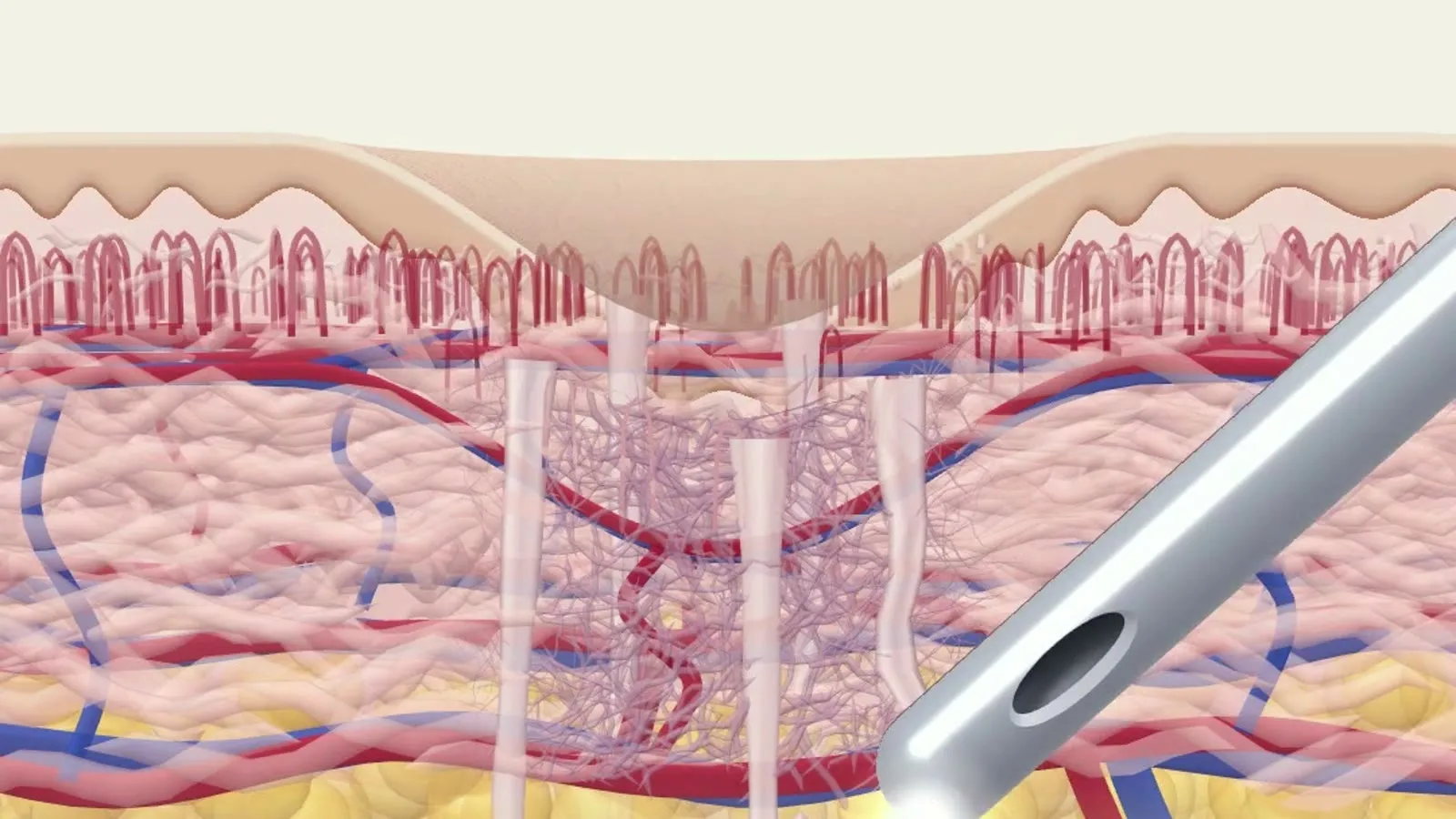
Subcision means passing an instrument under the skin to cut the fibrous bands that pull on the scar, so the anchored skin is freed more. You can read the details of this procedure in What is subcision.
So if you do subcision alone, you fix only the part with fibrous bands, and the volume loss is still there as before. Put another way, subcision releases part of the pull from below so that the next step, heat or filling, works better. It does not directly add the tissue that has been lost.
Cases where subcision alone solves the problem are very few. This is the reason I almost never do it on its own.
If not on its own, what do I combine it with?
I always combine subcision with something else, and the type of subcision depends on what comes next.
- If I am filling, I use needle subcision.
- If I am doing a laser, I use cannula subcision.
Which one I choose depends on each person’s scars. There is no single formula that works for every face.
How does filling under the scar help?
When I fill, I make a space under the scar and fill it, which fixes the volume loss directly.
A review of treatment with subcision says that using filler after subcision adds to the result and can reduce the chance of the scar sinking back. The evidence comparing different materials in acne scars is still limited, so the choice has to be made case by case. You can read a further comparison in filler for acne scars versus subcision.
What if there is a lot of volume loss?
If there is a lot of volume loss, I may bring in the group of products called biostimulators to help fill under the scar. This depends on the doctor’s assessment of how much tissue the scar has lost and what kind of filling suits it.
How is a laser with subcision different from filling?
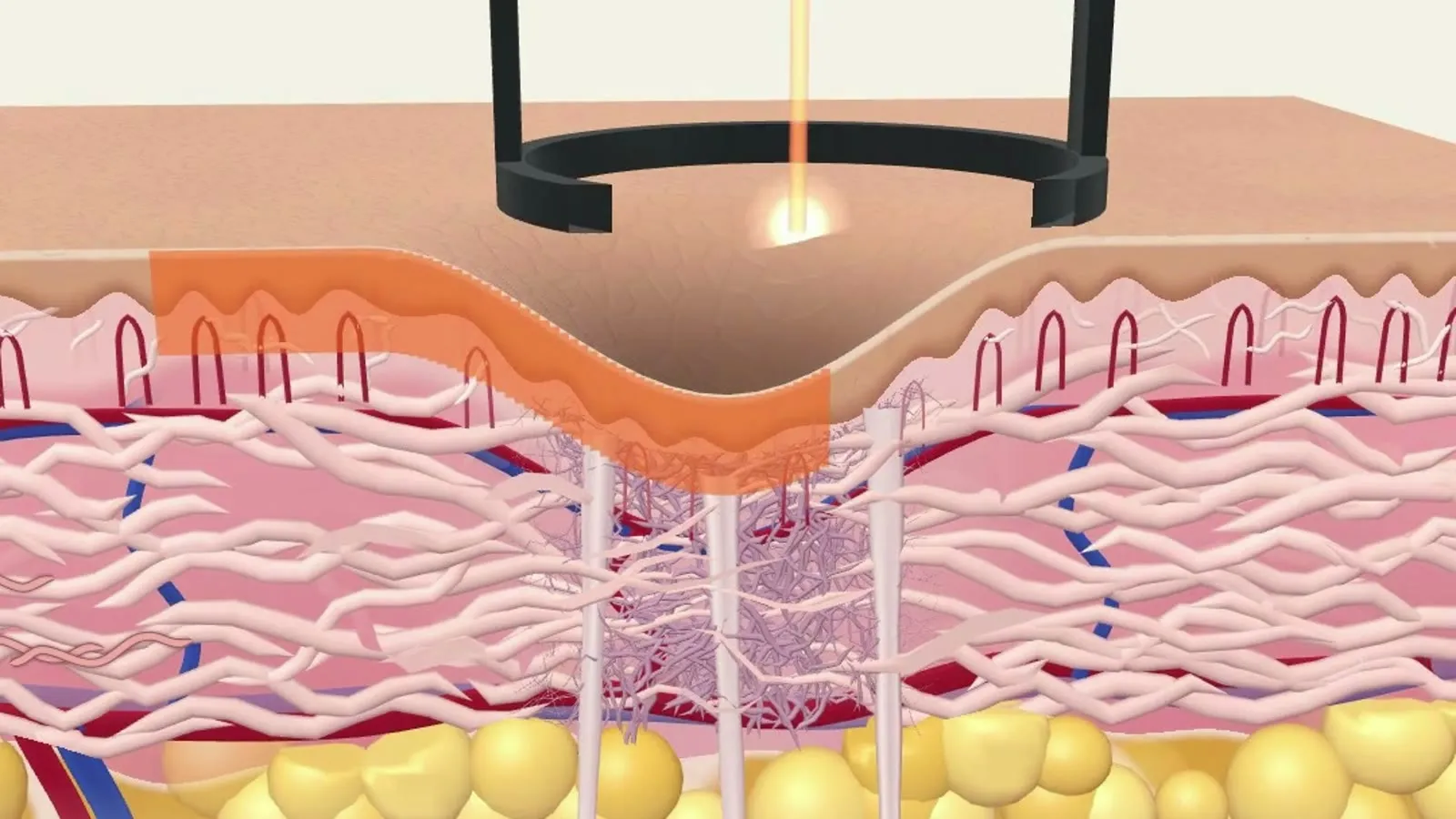
When I do a laser, I cut the fibrous bands from below and then apply heat from above, so that the laser can tighten the skin fully.
If the bands are still anchoring the skin, the skin cannot tighten fully with the heat. Releasing from below first lets the laser above work better. For an overview of each type of laser, see lasers for acne scars.
Where should you start if you have rolling scars?
The first step is to have a doctor assess what problems your scars have: how much volume loss there is and whether there are fibrous bands pulling. Then plan what to combine. You can see examples of the approach on the results page.
If you would like me to look at your scars, message us on LINE @clarityclinic and send photos any time. And if you have a friend who thinks subcision alone is enough, you can send them this article.
Frequently asked questions
Q: Is subcision alone enough? A: For most rolling scars, no, because nearly every one also has volume loss under the skin. Subcision fixes only the part with fibrous bands. Cases where it alone solves the problem are very few.
Q: How are needle subcision and cannula subcision different in the plan? A: In my approach, if I am filling I use needle subcision, and if I am doing a laser I use cannula subcision.
Q: What is volume loss? A: It is the tissue under the skin that has been lost, which makes the skin above sink into a dip. It is fixed by filling under the scar, for example with filler, and where a lot has been lost I may add the group of products called biostimulators.
Q: Why cut the fibrous bands before a laser? A: Releasing the anchoring from below lets the skin tighten more fully from the heat of the laser above.
References
Outcomes vary by individual; this article is educational, not a substitute for in-person medical assessment.
- Orentreich DS, Orentreich N. Subcutaneous incisionless (subcision) surgery for the correction of depressed scars and wrinkles. Dermatol Surg. 1995. PubMed
- Jacob CI, Dover JS, Kaminer MS. Acne scarring: a classification system and review of treatment options. J Am Acad Dermatol. 2001. PubMed
- Albargawi S. Synthetic Dermal Fillers in Treating Acne Scars: A Comparative Systematic Review. J Cosmet Dermatol. 2025. PMC
- Abdel Hay R, et al. Interventions for acne scars. Cochrane Database Syst Rev. 2016. PubMed
Read the full overview: Acne scar treatment: the complete guide