Why Acne Scars Stay Deep After Many Sessions of Microneedle RF
Acne scars still deep after several microneedle RF sessions? A scar has texture, volume and fibrous bands. Dr. Big explains what this device helps and what it does not.
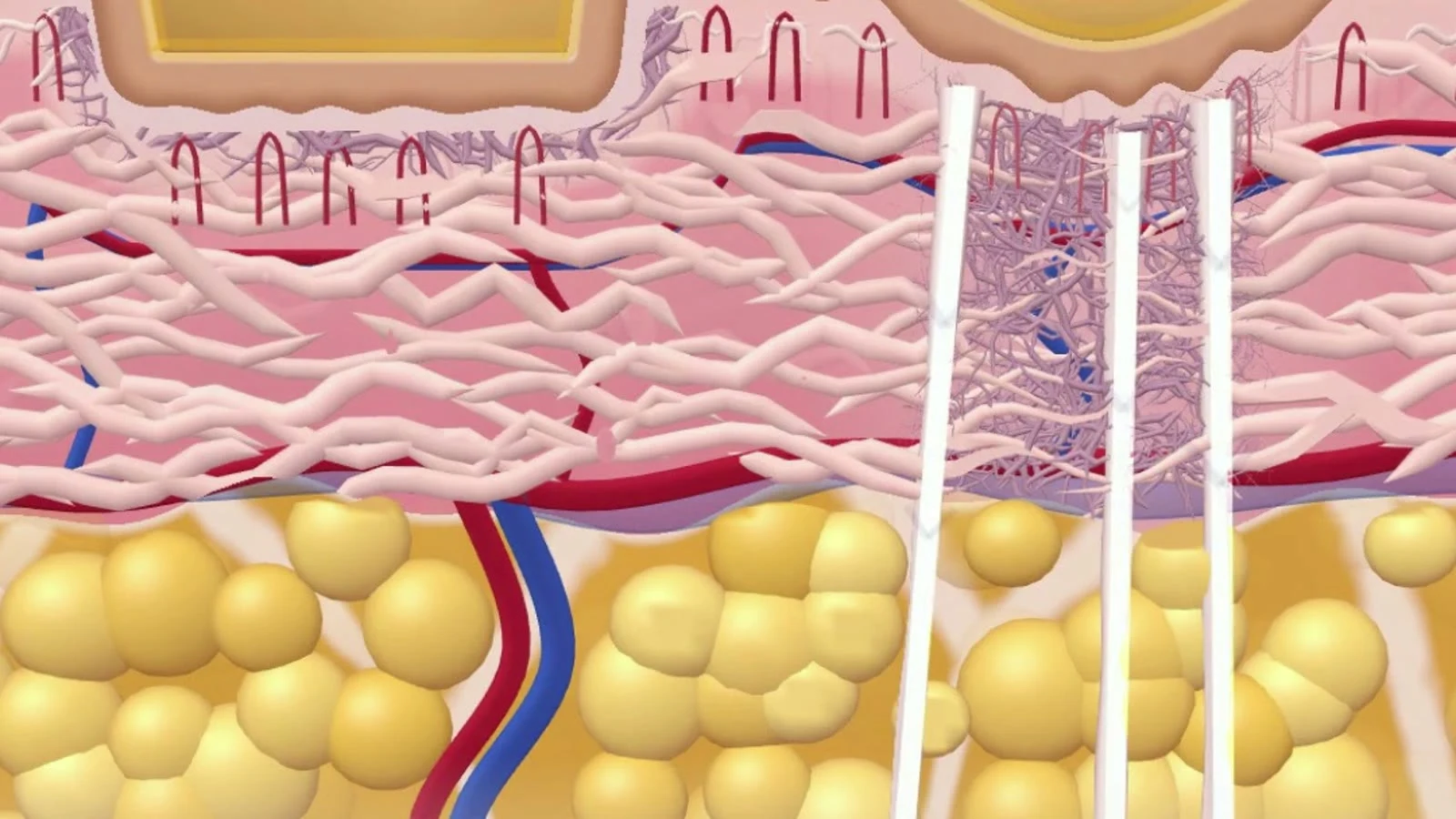
Quick answer: If acne scars are still not shallower after many microneedle RF sessions, it is usually because each scar has three problems stacked together: texture, volume and fibrous bands. Microneedle RF mainly helps with volume. A sharp scar edge needs an ablative laser, and fibrous bands need to be cut with subcision.
Some patients come to me with the same question: they have had this type of device many times, so why are the scars still there? This does not mean the device is bad, or that your skin does not respond. A single device works within its own limits. If the main problem of a scar lies outside those limits, firing again and again still will not reach the right target.
Watch this clip on TikTok or Instagram
What problems are stacked together in one acne scar?
When I look at an acne scar, I do not see a single dent. I split it into 3 problems that sit together in one scar.
- Texture is the uneven surface of the skin, including a sharp scar edge.
- Volume is the tissue underneath that has been lost.
- Fibrous bands are sheets of fibers that pull the scar down from underneath.
Each one sits at a different layer of the skin, so each needs a different tool. Some scars lean heavily toward one problem, and some have all three. One patient often has several scar types mixed together. If you want to understand the first two terms in more detail, read acne scars: texture versus volume.
What does microneedle RF help with in acne scars?
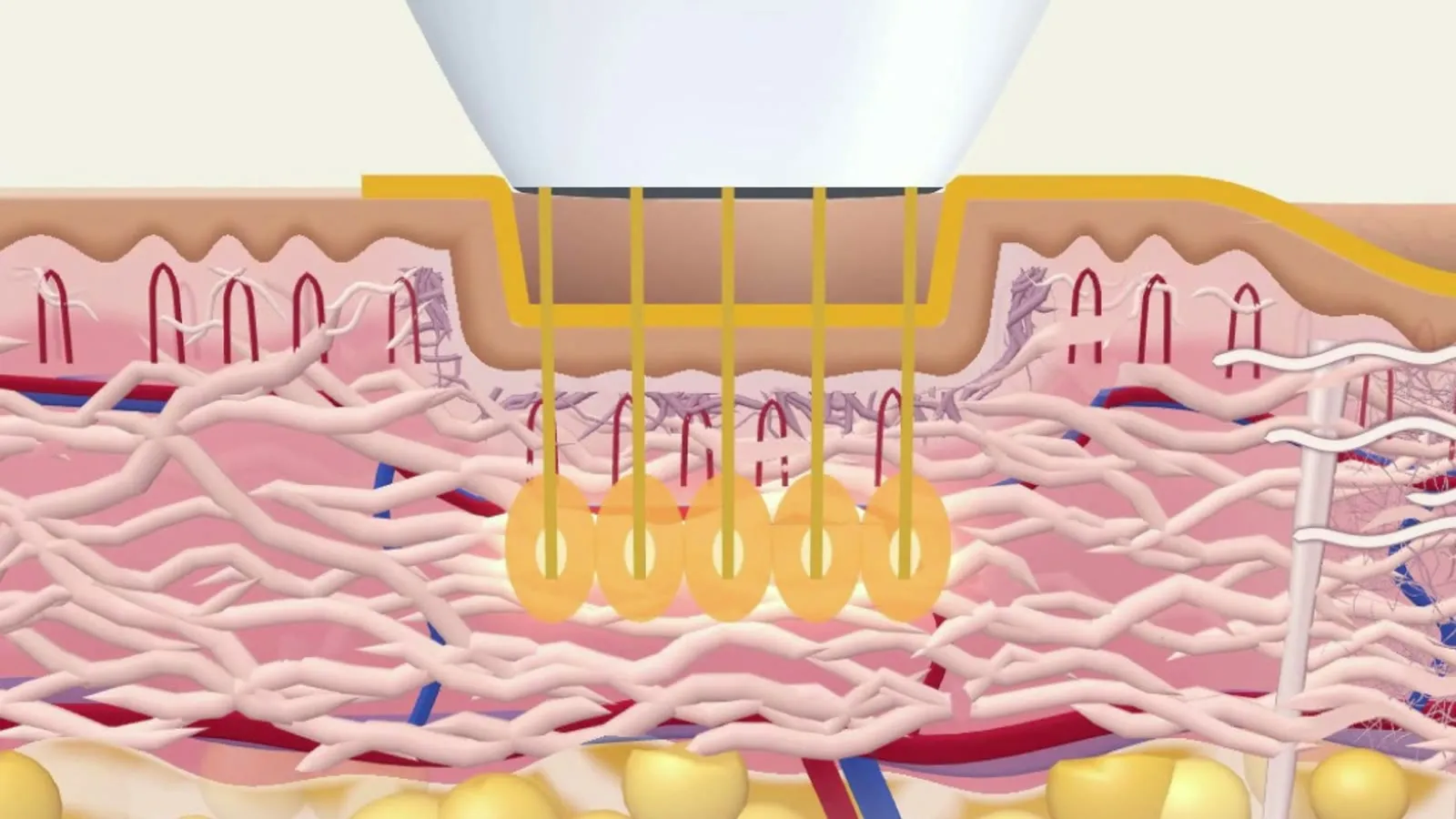
Microneedle RF uses small needles to carry radiofrequency energy into the dermis. Heat forms around each needle under the skin, and the body gradually builds new tissue to replace that area.
So the main job of this device is one thing: building collagen underneath, which helps with volume. A scar that has lost tissue underneath is the kind of job this device suits. But if the main problem of the scar is not here, repeating the treatment still leaves the other problems behind.
Why does a sharp scar edge need an ablative laser?
A sharp, uneven surface at the edge of a scar needs a laser that removes skin, called an ablative laser, such as Er:YAG or CO2. The laser removes the top layer of skin one thin layer at a time at the edge of the scar. The once-sharp edge slowly slopes down, and new skin forms in its place.
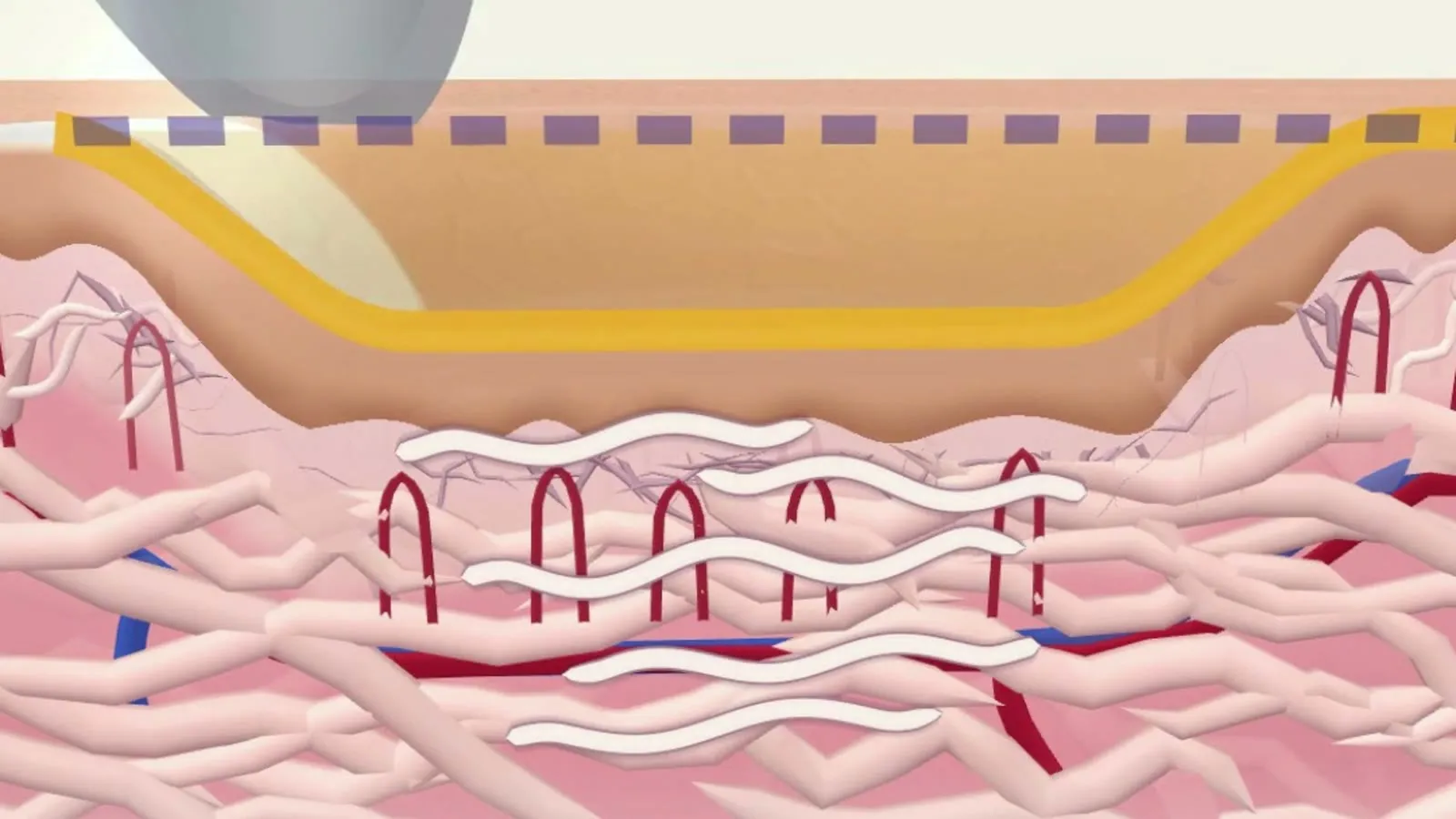
Microneedle RF cannot do this, because the heat stays under the skin and the surface is hardly removed. A scar with a sharp edge may still cast a shadow even after the tissue underneath has been stimulated.
If you want to know how the different lasers compare, read how microneedle RF and ablative laser differ.
If a scar has fibrous bands, why do you need subcision?
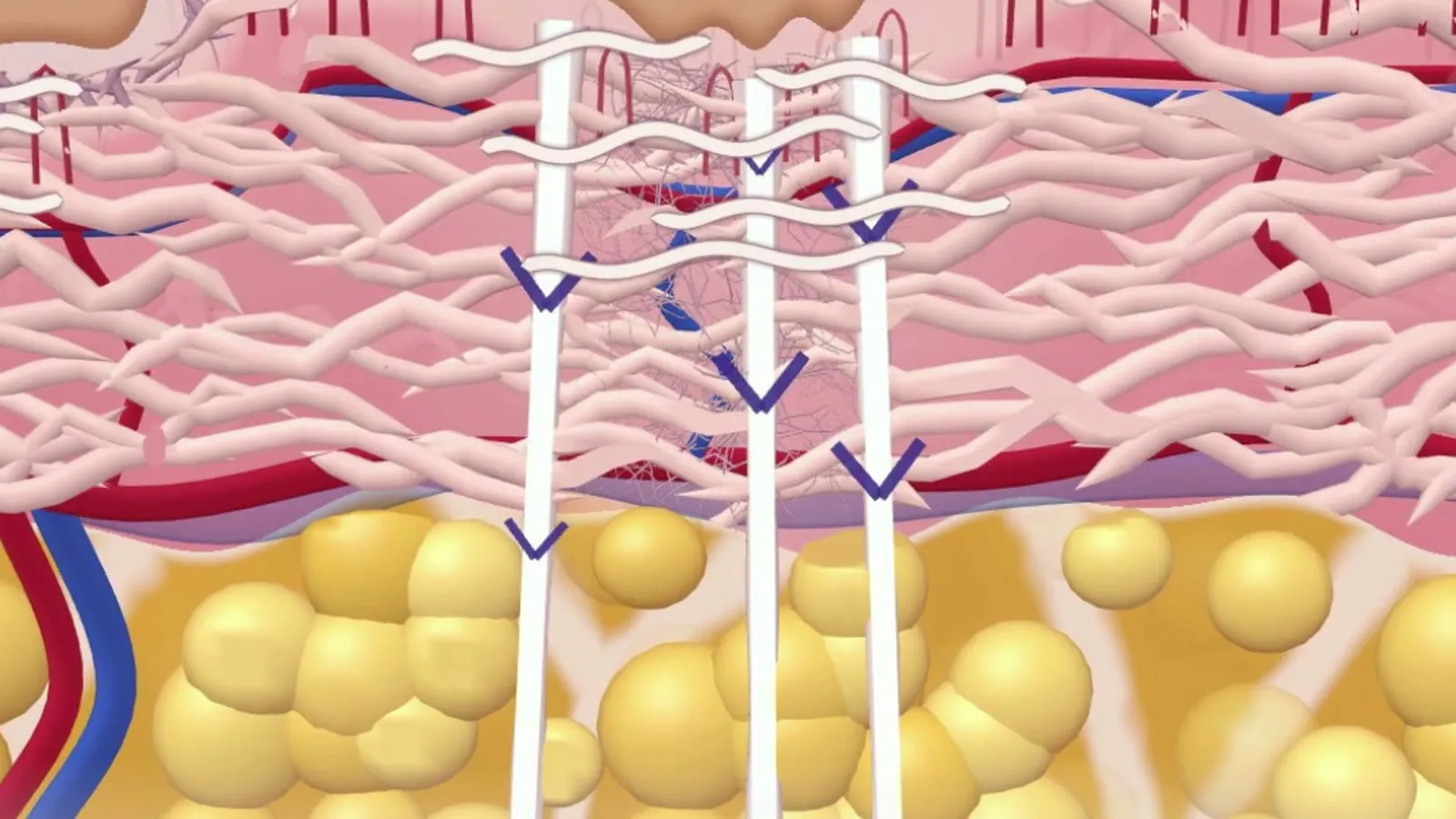
Rolling scars come from fibers that anchor the dermis to the layer below the skin. Fibrous bands sit deeper than the dermis, so they cannot be treated from the surface, and there is no tissue-level evidence yet that microneedle RF cuts or releases these bands.
The way to release the bands directly is subcision, where an instrument is passed under the scar to cut the fibers that are pulling. A randomized split-face study found that the side treated with subcision plus microneedle RF improved more than the side treated with microneedle RF alone.
You can read the details of cutting fibrous bands in What is subcision, and the reason I do not rely on one method alone in Is subcision alone enough?
You have already had many sessions. What should you do next?
If you have had many sessions and the scars are still not shallower, I suggest stopping before you fire again. First look at what each scar is held back by, then match each problem to a tool, one at a time.
- Texture and a sharp scar edge: an ablative laser
- Lost volume: microneedle RF
- Fibrous bands: subcision
With one device alone, scars cannot improve as far as they could, because it only deals with some of the problems. You can see examples of treatment on the results page. If you are not sure which problem your scars have, message us on LINE @clarityclinic and send me photos in normal light so I can take a look.
Frequently asked questions
Q: Can microneedle RF be used for acne scars? A: Yes, but it mainly helps by building collagen under the scar, which is a volume problem. The scar edge and fibrous bands need other methods alongside it.
Q: Will more microneedle RF sessions make my scars shallower? A: It depends on what is holding the scar back. If the main problem is a sharp edge or fibrous bands, more sessions are still not aimed at the right target. A doctor should assess the scars first.
Q: Can microneedle RF cut fibrous bands? A: There is no tissue-level evidence yet that it can. The method that releases fibrous bands directly is subcision.
Q: How is an ablative laser different from microneedle RF? A: An ablative laser removes the top layer of skin one thin layer at a time, so it can work on the edge of a scar. Microneedle RF puts heat under the skin, and the surface is hardly removed.
References
Outcomes vary by individual; this article is educational, not a substitute for in-person medical assessment.
- Jacob CI, Dover JS, Kaminer MS. Acne scarring: a classification system and review of treatment options. J Am Acad Dermatol. 2001. PubMed
- Randomised split-face trial of subcision followed by microneedle RF versus microneedle RF alone. PubMed
- Review of subcision for rolling acne scars. PMC
- Review of radiofrequency for acne scars. PMC
Read the full overview: Acne scar treatment: the complete guide